
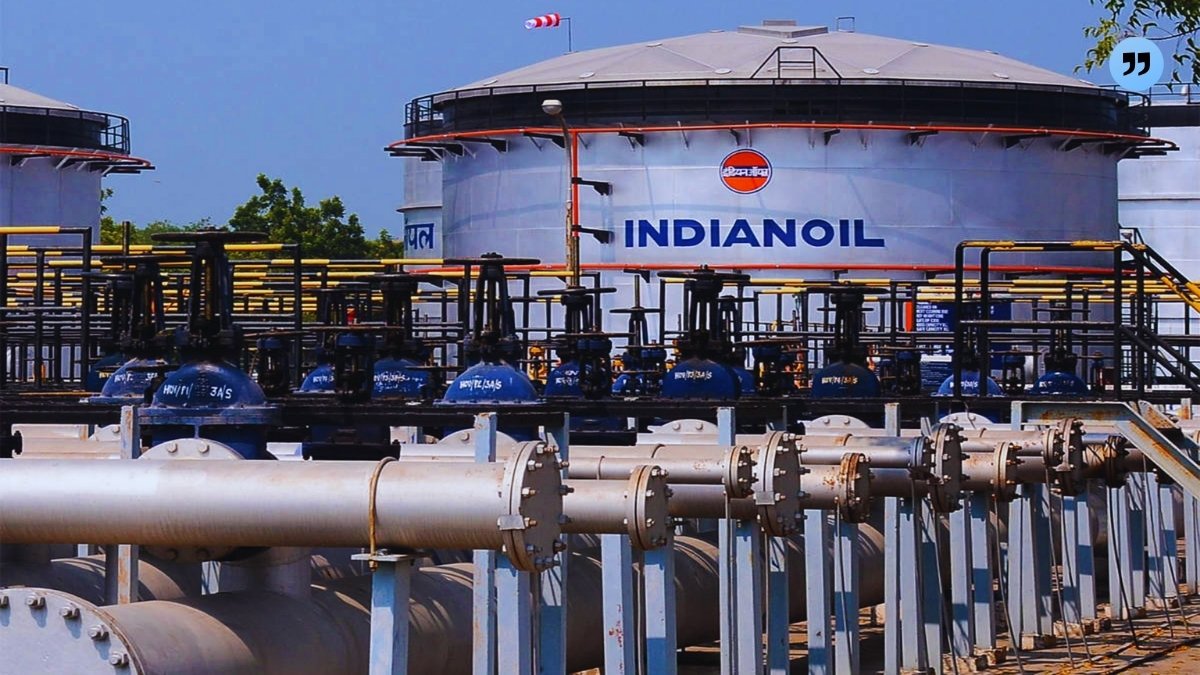
13/03/26: While the world wrestles with an energy crisis, India appears to be doing something unusual, staying calm. And IndianOil just showed exactly what that looks like.
Indian Oil Corporation Ltd offered a quiet but powerful signal on Friday: fuel supply in India remains stable.
The company posted a real-time snapshot from one of its flagship fuel stations in Mumbai. The message was simple. Almost boring, in fact.
“Normal day. Normal supply. Normal operations.”
The image came from the COCO BKC outlet in Mumbai during peak morning hours around 10 AM. Vehicles moved through the station in an orderly manner. No queues. No panic buying. No signs of stress.
Just routine fuel refilling.
Normal day. Normal supply. Normal operations.
While the world faces its worst energy crisis in modern history — this is what an IndianOil fuel station looks like today.
📍 COCO BKC, Mumbai
Shot at 10 AM — peak morning hoursNo panic. No rush. Just business as usual.
Global… https://t.co/2clkEqG24k
— Indian Oil Corp Ltd (@IndianOilcl) March 13, 2026
That’s exactly the point IndianOil wanted to make.
While headlines around the world scream about tightening energy supplies and geopolitical shocks, the country’s largest oil company chose to display something refreshingly dull: operational normalcy.
Global Crisis. India Delivers.
IndianOil’s social media message didn’t hide the broader reality.
The company acknowledged that the world is facing one of the worst energy crises in modern history. Energy markets remain unstable, supply chains face disruption, and oil prices continue to swing sharply.
Yet the image from Mumbai told a different story.
At one of the city’s busiest business districts, fuel pumps continued operating like any other morning. Commuters arrived. Tanks filled. Cars moved on.
Business as usual.
IndianOil summarized the moment with a simple line: “Global Crisis. India Delivers.”
Behind that statement sits a much larger system — one built over decades.
India’s Fuel Security Infrastructure
India’s fuel distribution network is vast. It stretches across refineries, pipelines, storage terminals and retail outlets serving millions of vehicles every day.
IndianOil sits at the center of that ecosystem.
The company operates thousands of fuel stations nationwide and plays a major role in ensuring steady petrol and diesel availability across the country.
That logistical backbone matters during times like these.
Energy shocks rarely announce themselves politely. They arrive through geopolitical tensions, supply disruptions, or sudden price spikes.
When those pressures hit, a nation’s energy infrastructure either absorbs the shock — or it cracks.
So far, India’s system appears to be holding.
The quiet activity at the Mumbai fuel station may seem like a small snapshot. But it reflects something larger: planning, reserves, and distribution networks working exactly as designed.
Oil Market Volatility Is Rising
Still, calm fuel stations do not mean calm global markets.
A recent report from UBS Global Research highlighted increasing risks for India’s state-owned oil marketing companies as crude price volatility rises.
Geopolitical tensions in West Asia are pushing energy markets into uncertain territory again.
According to UBS, the current conditions resemble the turbulence seen during the 2022 oil market shock.
The brokerage noted that recent increases in crude prices and refining margins are creating pressure points for oil companies worldwide.
For Indian oil marketing companies, the challenge runs deeper.
How Oil Prices Pressure Indian OMCs
State-owned oil companies like Indian Oil Corporation, Bharat Petroleum Corporation Limited, and Hindustan Petroleum Corporation Limited operate under a unique constraint.
Their profitability relies heavily on fuel marketing margins.
When crude oil prices rise sharply, those margins shrink — especially if retail fuel prices remain stable for consumers.
And in India, retail fuel pricing is not always fully flexible.
Government influence often limits how quickly companies can pass rising crude costs to customers.
The result?
Higher crude prices directly squeeze profits.
UBS highlighted that integrated margins for these companies could face pressure if crude continues climbing while domestic fuel prices stay largely unchanged.
That creates a delicate balancing act.
On one side sits global market volatility. On the other sits the need to protect consumers from sudden price spikes.
India’s Oil Price Forecast
UBS has already revised its short-term crude oil forecasts upward.
The brokerage estimates that crude prices could average around USD 71 per barrel during the second quarter of 2026.
For the full year, prices could hover near USD 72 per barrel.
That level is not extreme by historical standards. But it still creates challenges for oil marketing companies whose profitability depends on stable pricing spreads.
Geopolitical disruptions remain the biggest wildcard.
Tensions in West Asia — a critical oil-producing region — could quickly push crude prices higher if supply disruptions occur.
Markets are watching closely.
India’s Energy Strategy Under the Spotlight
India sits in a complicated position within the global energy landscape.
The country is one of the world’s largest oil consumers but relies heavily on imported crude.
That dependency means international market swings inevitably ripple through the domestic economy.
Yet India has spent years strengthening its resilience.
Strategic petroleum reserves, diversified crude sourcing, refinery expansion, and a massive fuel distribution network all play a role.
The goal is simple: stability for consumers even when global markets wobble.
IndianOil’s quiet snapshot from Mumbai may not look dramatic. No flashing graphics. No urgent warnings.
Just cars moving through pumps on an ordinary morning.
But sometimes the most important signal is the absence of chaos.
In a world grappling with energy shocks, “normal” suddenly becomes impressive.
And for now, India’s fuel pumps appear to be delivering exactly that.
Let’s be honest. Energy crises usually reveal weaknesses fast.
Long queues at fuel stations. Panic buying. Government emergency measures. We’ve seen the script play out globally more than once.
That’s why the IndianOil snapshot matters.
It shows the system working.
India’s oil marketing companies operate under tough constraints — global crude volatility on one side and domestic price stability expectations on the other. Managing both simultaneously requires strong logistics, reserves, and policy coordination.
Is the system immune to global shocks? Of course not.
But the absence of chaos during rising global energy tensions suggests something important: India’s fuel distribution backbone is far more resilient than many assume.
Stability in energy supply may not make flashy headlines. Still, it quietly keeps an entire economy moving.
And sometimes, boring is exactly what you want at the fuel pump.
