
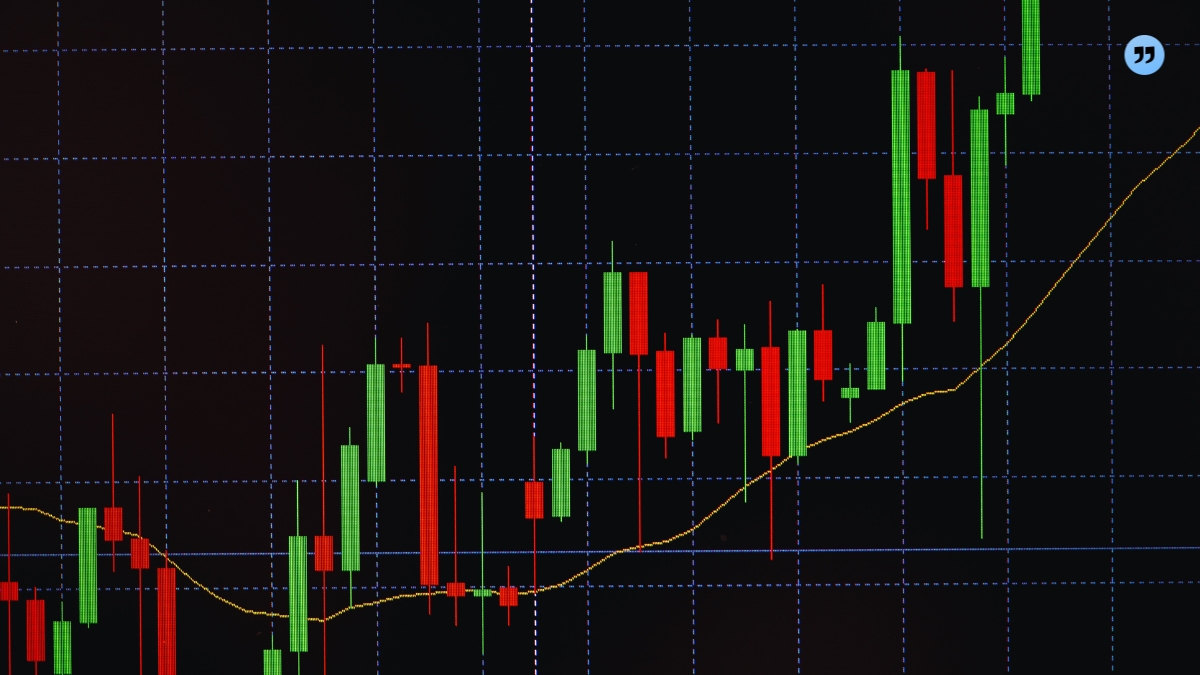
08/04/26: Dalal Street woke up bullish. Really bullish.
The Indian stock market surge pushed the Sensex and Nifty more than 3% higher, extending a powerful five-day rally.
The reason? A cocktail of geopolitics, oil prices, and global optimism suddenly turning friendly.
Markets are brutally honest machines.
They react to signals, not emotions.
Right now the signals are simple: lower oil prices, easing geopolitical tension, and improving global liquidity. That combination naturally pushes equities higher.
But investors shouldn’t confuse relief with certainty.
The ceasefire is temporary. Oil can spike again. Global politics can turn messy overnight.
So the rally makes sense. The optimism is logical. But blind euphoria would be foolish.
Smart investors do one thing during rallies.
They stay optimistic but remain prepared.
Because markets reward conviction, not complacency.
Let’s break down what actually moved the markets.
The Big Picture: Markets Add Massive Wealth
Wednesday morning trading saw a dramatic surge across Indian equities.

The Sensex jumped more than 2,600 points to touch an intraday high of 77,392. Meanwhile, the Nifty50 surged over 700 points to cross the 23,850 mark.
That move alone added around Rs 12.92 lakh crore to the market capitalisation of companies listed on the Bombay Stock Exchange.
Total market value now stands at roughly Rs 442 lakh crore.
Not a bad morning for investors.
The rally was broad-based. Large caps, midcaps, and smallcaps all joined the party.
Nifty Midcap 100 and Nifty Smallcap 100 indices both climbed more than 3%. On the NSE, nearly 2,677 stocks advanced while just 105 declined.
That’s not a rally. That’s a stampede.
Among Sensex stocks, IndiGo jumped nearly 10% and emerged as the top gainer.
Several heavyweights followed closely behind.
L&T, Adani Ports, Bajaj Finance, Bajaj Finserv, UltraTech Cement, Maruti Suzuki, Mahindra & Mahindra and Axis Bank climbed between 5% and 7%. HDFC Bank also joined the rally.
Tech Mahindra stood alone in the red with marginal losses.
Meanwhile, the India VIX, which measures market volatility, plunged nearly 19% to 19.90.
Translation: investors suddenly feel calmer.
So what flipped the switch?
Here are the five triggers behind the Indian stock market surge.
- US-Iran Ceasefire Brings Geopolitical Relief
Geopolitics can destroy markets overnight. But sometimes it does the opposite.
The biggest trigger behind the Indian stock market surge was the announcement of a temporary ceasefire between the United States and Iran.
US President Donald Trump confirmed that Washington agreed to pause attacks for two weeks after receiving a 10-point proposal from Iran.
Trump described the proposal as a workable basis for negotiations.
Iran also announced that ships would again be allowed safe passage through the Strait of Hormuz for the same two-week period.
That single announcement dramatically eased global fears of oil supply disruption.
Pakistan reportedly helped broker the talks, requesting a short diplomatic window for negotiations.
Formal discussions between Iran and the United States are expected to begin in Islamabad on April 10.
Markets love stability.
And even temporary stability is good enough.
- Oil Prices Crash Below $100
Oil is India’s biggest macro headache.
When crude rises, inflation rises. When inflation rises, interest rates rise. When interest rates rise, markets panic.
So when oil crashes, markets celebrate.
Following the ceasefire announcement and reopening of the Strait of Hormuz, crude prices dropped sharply.
Brent crude fell more than 13% to $94.98 per barrel.
WTI crude dropped over 15% to $95.95.
Just weeks earlier, crude had crossed the psychological $100 mark after Hormuz shipping routes were disrupted.
Lower oil prices immediately improve India’s economic outlook.
They reduce import costs, lower inflation pressure, and support corporate margins.
Which means better profits.
And markets price that in instantly.
- Bond Yields Fall, Money Flows Back to Equities
Another quiet but powerful trigger came from the global bond market.
US bond yields dropped sharply.
The benchmark US 10-year treasury yield declined to 4.24%. The 30-year bond yield slipped to 4.84%.
Even the two-year yield dropped to 3.73%.
Lower yields often push investors back toward equities.
Why? Because bonds become less attractive compared to stocks.
Earlier in March, rising yields had pulled global capital away from emerging markets like India.
But falling yields suddenly reverse that pressure.
For equity markets, that’s oxygen.
- Global Markets Rally Together
Markets rarely move in isolation.
When global markets rally, India usually joins the wave.
After the ceasefire announcement, Asian markets exploded upward.
Japan’s Nikkei surged more than 5%.
South Korea’s Kospi jumped over 6%.
Hong Kong’s Hang Seng rose nearly 3%.
China’s Shanghai Composite climbed around 2%.
Meanwhile, US futures signaled strong gains for Wall Street.
Dow Jones futures climbed more than 2% after the previous session ended almost flat.
Global optimism spilled directly into Dalal Street.
And once momentum starts, traders pile in fast.
- Rupee Strengthens Against the Dollar
Currency stability also played a role in the Indian stock market surge.
The rupee strengthened by around 50 paise to 92.56 per US dollar in early trading.
Just days ago, the currency had slipped past the psychologically critical 95 mark during the height of the Iran-US conflict.
But intervention by the Reserve Bank of India helped stabilise the situation.
The RBI restricted banks from offering rupee non-deliverable forwards and limited companies from rebooking cancelled forward contracts.
Those moves supported the currency.
A stronger rupee often improves investor confidence in emerging markets.
And that confidence shows up in stock prices.
But Wait. Not Everything Is Perfect.
Markets may be celebrating, but some caution still lingers.
Foreign institutional investors remain persistent sellers of Indian equities.
FIIs have now sold Indian shares for 25 consecutive sessions.
On Tuesday alone, foreign investors sold stocks worth roughly Rs 8,692 crore.
Domestic institutions have absorbed some of that selling pressure.
Still, sustained outflows from global investors remain a concern.
And there’s another obvious risk.
The ceasefire is temporary.
Two weeks, to be precise.
Geopolitical tensions can return overnight. Anyone who follows global politics knows how quickly narratives change.
So while markets are euphoric today, the underlying risk hasn’t vanished.
What Happens Next?
Market strategist VK Vijayakumar of Geojit Investments believes the ceasefire has significantly changed the short-term outlook.
The sharp fall in crude prices strengthens the bullish case for equities.
Lower oil prices reduce inflation risks and ease pressure on the Indian economy.
According to Vijayakumar, the RBI is now likely to keep interest rates unchanged while maintaining a neutral policy stance.
That balance allows the central bank to manage both inflation and growth risks.
A strengthening rupee could also slow foreign investor selling.
And if that happens, momentum in equities could accelerate further.
From a technical standpoint, Vijayakumar expects the Nifty to move toward the 24,000 level in the near term.
He also sees strong recovery potential in beaten-down financial stocks.
Several sectors could benefit from lower crude prices.
Refineries, aviation companies, capital goods firms with Gulf exposure, paint companies, and adhesives manufacturers may all gain.
In short, the market mood has shifted from fear to opportunity.
And traders are already positioning themselves for the next leg of the rally.
Leave a Mark