
02/05/2026: The Supreme Court EC counting supervisors ruling shuts down a late-stage challenge from the Trinamool Congress. The message is blunt. The Election Commission runs the show during polls.
This wasn’t a complicated case. It only looked like one because politics wrapped itself around procedure. The Supreme Court got it right by refusing to entertain hypothetical bias. If every administrative decision becomes a courtroom battle, the election process collapses under its own weight.
The real issue isn’t whether officers are from the Centre or the state. It’s whether the system has accountability and audit trails. That’s where energy should go. Standardise disclosure timelines. Extend CCTV retention in high-risk contests, if necessary. Make transparency boring and routine!
Because once trust erodes, even neutral systems start looking suspicious. And that’s far more dangerous than any staffing mix.

The Supreme Court refused to entertain a plea by the All India Trinamool Congress challenging the Election Commission of India’s directive on counting staff deployment. The directive is simple. At least one official at every counting table must be from the Central government or a Central PSU.
The timing mattered. Counting for the West Bengal Assembly results is scheduled for Monday. The court saw no urgency, no illegality, and frankly, no confusion worth intervening in.
A special bench of Justices PS Narasimha and Joymalya Bagchi dismissed the argument of bias. Their reasoning was clinical. During elections, every officer operates under the Election Commission’s control. Whether an official draws salary from the state or the Centre is irrelevant once polling machinery is activated.
That’s the spine of the Supreme Court EC counting supervisors position. Control lies with the Commission. Not with the source of employment.
The directive, the objection, and the counter
The April 13 order from the Election Commission specifies a dual-layer structure at each counting table. A counting supervisor and a counting assistant. At least one of them must be from the Central government or a PSU.
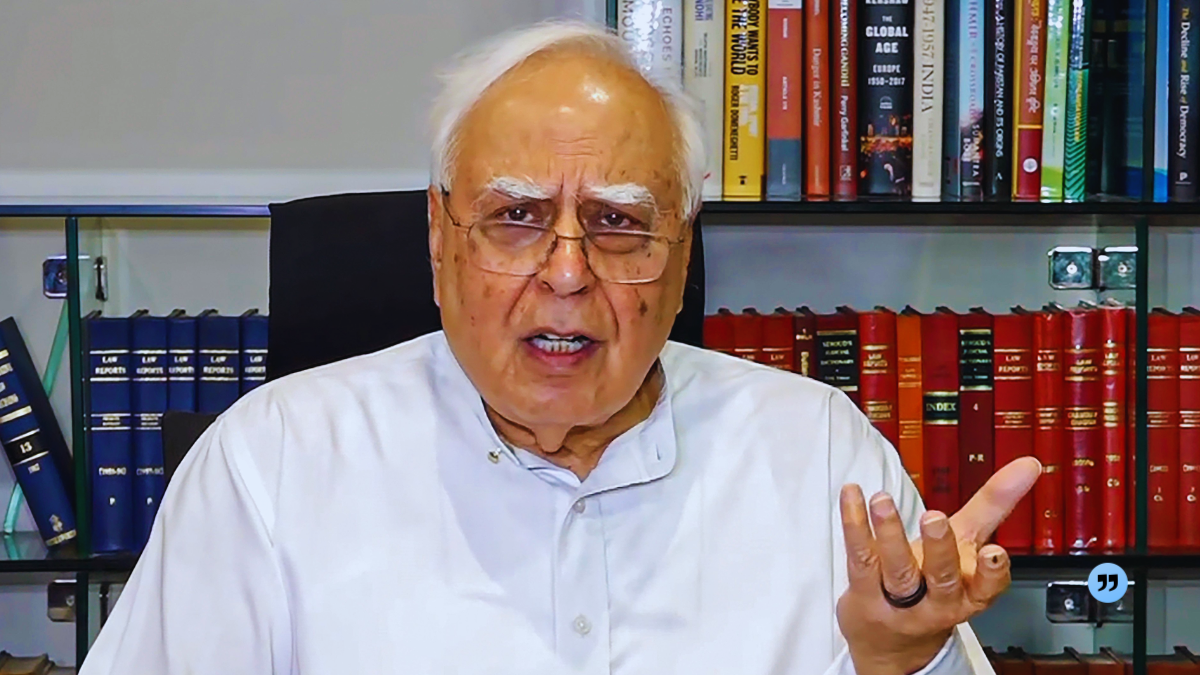
TMC, represented by senior advocate Kapil Sibal along with Meenakshi Arora, flagged what they called selective implementation. Their claim. If the Commission insists on Central representation, it must equally ensure a state government officer is present at each table.
Sibal’s core point was procedural fairness. He didn’t oppose the circular itself. He opposed what he described as inconsistent execution. According to him, micro-observers are already Central government officers. Adding another Central presence without ensuring state representation creates imbalance.
The Election Commission, represented by senior advocate Dama Sesadri Naidu, dismissed the concern outright. His response was direct. The system already ensures balance through randomisation. If one officer is from the Centre, the other is typically from the state. No bias. No deviation.
He added another layer. The Returning Officer, who oversees the entire counting process, is always a state government official. That alone, he argued, neutralises any allegation of skew.
Court’s stance: Control matters, not origin
The bench wasn’t interested in theoretical imbalance. It went straight to operational control.
“All officers discharging their duty are under the control of ECI.” That line defines the judgment.
The court made it clear that the Commission has the discretion to choose personnel from either pool. Central or state. That choice cannot be second-guessed unless there is a clear violation of law. None was demonstrated.
Then came a moment that cut through the argument. The bench pointed out the contradiction. TMC was challenging the circular while simultaneously asking for its proper implementation. That didn’t land well.
The court refused to stretch the matter further. Instead, it recorded the Election Commission’s assurance that the April 13 circular would be implemented in “true letter and spirit.” Case closed.
Timing, disclosure, and the political undertone
TMC’s grievance wasn’t just about composition. It was about timing and disclosure.
The party argued that the directive was not communicated until April 29, despite being issued on April 13. That gap raised suspicion. Why the delay. Why now. Why just before counting.
Sibal went further. He suggested that the circular seemed to assume irregularities at every booth. That, in his framing, was an implicit distrust of the state machinery.
The court wasn’t convinced.
It responded with a broader institutional view. Political parties are not stakeholders in administrative consultations. They have representation through counting agents and election agents. The process already has multiple layers of oversight. Adding another layer of suspicion doesn’t change the structure.
There was also a subtle pushback against the idea that Central officers inherently carry bias. The bench called that assumption flawed. In an election framework, roles are defined by the Commission, not by perceived affiliations.
CCTV footage debate surfaces briefly
The hearing took a slight detour when Sibal raised the issue of CCTV footage retention. He questioned the standard practice of deleting recordings after 45 days.
Why not preserve them longer, he asked. Especially when disputes often take time to surface.
The Commission’s response was procedural. The 45-day retention is standard. However, if an election petition is filed, the footage is preserved. That safeguard, according to the Commission, is sufficient.
The court didn’t pursue the issue further.
High Court precedent and the legal trajectory
This wasn’t the first stop for the TMC. The Calcutta High Court had already dismissed the plea on April 30.
Its reasoning aligned closely with the Supreme Court’s stance. The Election Commission has the prerogative to appoint counting personnel. That authority is part of its constitutional mandate. Courts do not interfere unless there is a clear breach.
The High Court also labelled the apprehension of bias as “impossible to believe.” It suggested that any grievance should be pursued through an election petition after results are declared.
The Supreme Court, in effect, reinforced that line. No premature intervention. No speculative corrections.
What this means for the counting process
The Supreme Court EC counting supervisors ruling settles one thing decisively. The Election Commission retains operational autonomy over counting arrangements.
For West Bengal, it means the April 13 directive stays intact. Each counting table will have a mix of personnel, with at least one Central government or PSU officer. Randomisation continues. Oversight remains layered.
For political parties, the takeaway is sharper. Legal challenges to procedural decisions need hard evidence, not inference. Courts are unlikely to step in on the eve of counting unless something clearly violates statutory norms.
And for the broader system, it reinforces a principle that often gets lost in political noise. Elections in India are administered by an independent constitutional body. Once the process is underway, that body has the final word on execution.

Any Comments?