
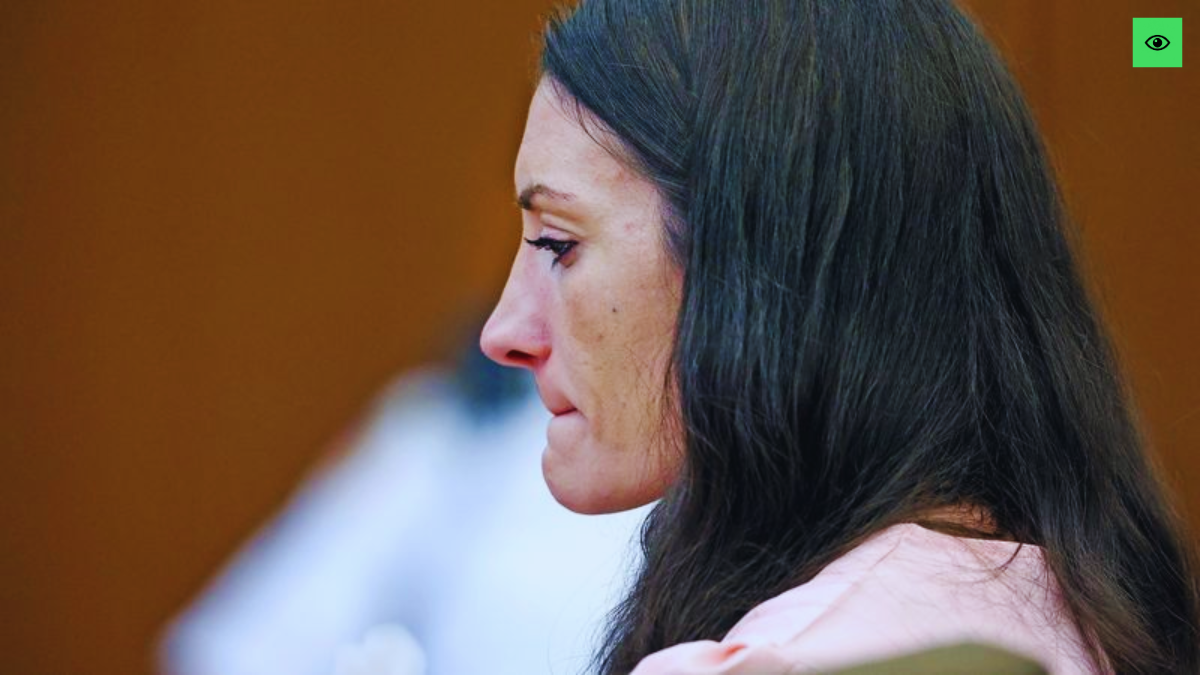
New Delhi 17/08/26: The Lindsay Clancy trial has become more than a courtroom battle over one devastating family tragedy. It has also put a rare and severe postpartum psychiatric condition under an unforgiving spotlight, with doctors and advocates warning that the illness can be missed until a crisis is already unfolding.
The trial centres on Lindsay Clancy, a Massachusetts mother accused of killing her three young children in January 2023. Her attorneys do not dispute that she caused their deaths. Instead, they argue that she was suffering from severe mental illness, including postpartum psychosis and bipolar disorder, and should not be held criminally responsible.
Prosecutors tell a sharply different story. They argue that Clancy deliberately planned the killings, sent her husband, Patrick Clancy, out of the family home and then strangled the children with exercise bands.
The jury must ultimately decide the question of criminal responsibility. But outside the courtroom, the case has exposed a much broader problem: how easily postpartum psychosis can slip through the cracks of the healthcare system.
What Is Postpartum Psychosis?

Postpartum psychosis is rare. Several studies estimate that it affects roughly one to two women for every 1,000 births.
That figure is small compared with postpartum depression, which affects around 10% of mothers. Yet postpartum psychosis is a psychiatric emergency. It can involve paranoia, confusion, mania, hallucinations, severe agitation and a distorted sense of reality.
Dr. Susan Hatters Friedman, a reproductive and forensic psychiatrist at Case Western Reserve University, has described the condition as particularly frightening because symptoms can emerge rapidly, sometimes in women with no previous psychiatric history.
That speed matters.
A new mother may simply appear exhausted, unusually energetic, confused or irritable. Those signs can be mistaken for the ordinary chaos of caring for a newborn. They aren’t always ordinary.
Dr. Veerle Bergink, a psychiatrist and director of the Women’s Mental Health Center at Icahn School of Medicine at Mount Sinai, says the condition remains seriously under-recognised.
The problem isn’t just awareness among patients. Medical professionals can miss it too.
The Lindsay Clancy Trial Puts Misdiagnosis Under the Microscope
Clancy’s defense says she experienced insomnia, anxiety and depression before the killings and repeatedly sought medical assistance.
Her attorneys say she met psychiatrists and therapists, attended an outpatient hospital programme, visited an emergency room, called a suicide hotline and spent several days in psychiatric inpatient care.
She was also prescribed multiple psychiatric medications.
One provider testified that Clancy had been told she might have a mood disorder or an underlying bipolar disorder. According to the defense, however, postpartum psychosis was not identified.
Doctors who treat the condition say that pattern is not unusual.
Bergink was not involved in Clancy’s treatment or trial, but said the reported symptoms resemble cases she has encountered in her clinical and research work.
The defense also points to Clancy’s worsening condition despite treatment. Her attorneys and family argue that some medications were unsuitable for someone with bipolar disorder and that the changing medication regimen failed to stabilise her.
Prosecutors counter that Clancy had access to multiple forms of mental healthcare, but sometimes ignored medical advice or stopped taking prescribed medications.
Several providers who treated Clancy have testified that she never told them she had a plan to harm herself or her children. Prosecutors also say she did not display clear signs of psychosis or mania, although she did report suicidal thoughts.
That disagreement is now central to the trial.
A Mother’s Own Words Offer Another Window
Evidence presented in court has included searches from Clancy’s phone and computer.
Investigators said she searched for information about hallucinations, psychosis, bipolar disorder, insomnia, suicide methods, medication side effects and postpartum depression in the weeks before the killings.
She had also written a detailed note in October 2022 questioning her parenting decisions.
At the time, she was particularly worried about whether she was giving her youngest child enough attention compared with her older children.
Her note described an overwhelming fixation on parenting information and fears that she might make a mistake that harmed her children.
Those details have become part of a much larger argument about her mental state.
Messages between Clancy and her then-husband also show the mundane routines of family life. They exchanged updates about the children. Patrick Clancy reassured her that she was a good mother. She responded with a heart and smile emoji.
Then came January 24, 2023.
Patrick Clancy has testified about finding the children in the basement of the family’s home in Duxbury, Massachusetts. Clancy was found outside after jumping from a second-story window and remains paralysed from the waist down.
Her attorneys say she believed voices were ordering her to kill her children and herself.
Prosecutors say the evidence instead shows deliberate planning.
Why Doctors Say Training Needs to Change
One of the clearest lessons from the case is the need for wider medical training.
Postpartum psychosis isn’t currently listed as its own distinct diagnosis in the Diagnostic and Statistical Manual of Mental Disorders, or DSM. Instead, it is treated within other psychiatric categories that can occur after childbirth.
Postpartum Support International and other advocates have pushed for the condition to receive distinct recognition.
Researchers have also continued to examine whether postpartum psychosis should be understood as a condition with its own clinical identity while recognising links to the bipolar spectrum.
A 2025 consensus statement cited evidence supporting a distinct clinical understanding of postpartum psychosis.
For doctors, the practical issue is simpler.
They need to recognise what they are seeing.
Bergink says behaviours that seem dramatically out of character can be warning signs. A mother who suddenly becomes intensely energetic, paranoid, unusually driven or confused may not simply be coping badly with sleepless nights.
The distinction can be critical.
The Six-Week Checkup Is Not Enough
Traditionally, new mothers have a postpartum checkup with an OB/GYN around six weeks after giving birth.
But mental health symptoms do not follow appointment schedules.
Pediatricians, doulas and midwives may see mothers much earlier and more frequently. That makes them potentially important points of contact for identifying psychiatric emergencies.
Dr. Uruj Kamal Haider, medical director of the Massachusetts Psychiatry Access Program for Moms, argues that these providers need better education about postpartum psychosis.
The logic is straightforward. If the healthcare system is fragmented, build more bridges between the pieces.
Psychiatry residents also need specific training, Haider says.
Families matter too.
A mother does not need to report obvious voices or vivid visual hallucinations before someone takes her symptoms seriously. Paranoia, confusion, extreme irritability and rapidly changing behaviour can also be warning signs.
And severe sleep deprivation can make an already dangerous situation deteriorate quickly.
Treatment Can Only Work When the Illness Is Recognised
Postpartum psychosis is frightening, but it is treatable.
Cliffel, who experienced the condition in 2015 and later became a mental health advocate, says medication helped her reconnect with reality after a 12-day psychiatric hospitalisation.
She had initially believed people were following her and trying to harm her daughters. Her paranoia intensified after she returned home, where she became convinced that poisonous gas was coming from her refrigerator and that people on television were threatening her.
Eventually, police took her to a psychiatric ward after her husband called emergency services.
Two months later, she received a postpartum psychosis diagnosis.
That diagnosis mattered.
Research cited by doctors suggests lithium, sometimes combined with other medication, can be highly effective in treating postpartum psychosis. Electroconvulsive therapy has also demonstrated effectiveness, although access remains limited.
The central point is not complicated: recognition creates a path to treatment.
The Trial Is About Criminal Responsibility. The Health Lesson Is Bigger.
The Lindsay Clancy trial will determine whether she is criminally responsible for the deaths of her children.
If convicted of murder, she faces life in prison without parole. If found not criminally responsible because of mental illness, she would be committed to a state mental health facility.
Prosecutors have urged jurors not to turn the proceedings into a broader public debate about women’s mental health and the healthcare system.
That is their legal position.
But the public conversation is already happening.
For women who have experienced postpartum psychosis, the intense attention surrounding the trial has been deeply uncomfortable. Mental health advocates say some survivors have looked at the case and wondered whether a different intervention, diagnosis or treatment could have changed an outcome.
That question deserves serious attention without prejudging the jury.
The Clancy case cannot establish every fact about postpartum psychosis. It can, however, force a useful conversation about recognition, training, access and treatment.
The tragedy is already irreversible.
The healthcare lessons don’t have to be.
The Lindsay Clancy trial should not be reduced to a simplistic argument about whether mental illness excuses horrific violence. That framing is too easy, and frankly, it teaches us very little.
The harder question is whether the healthcare system is good enough at identifying severe postpartum psychiatric illness before a crisis becomes catastrophic.
The answer presented by doctors and advocates is uncomfortable: not always.

Any Comments?