
NEW DELHI, 29th Oct: The Congress has intensified its criticism of the Special Intensive Revision (SIR) of electoral rolls, alleging that the exercise threatens the voting rights of Indian citizens. The party has questioned the number of suspected foreign nationals identified during the process and demanded changes to the Election Commission’s approach.
The controversy centres on a straightforward but important question: what has the SIR actually achieved, and how transparent is the process used to revise India’s electoral rolls?
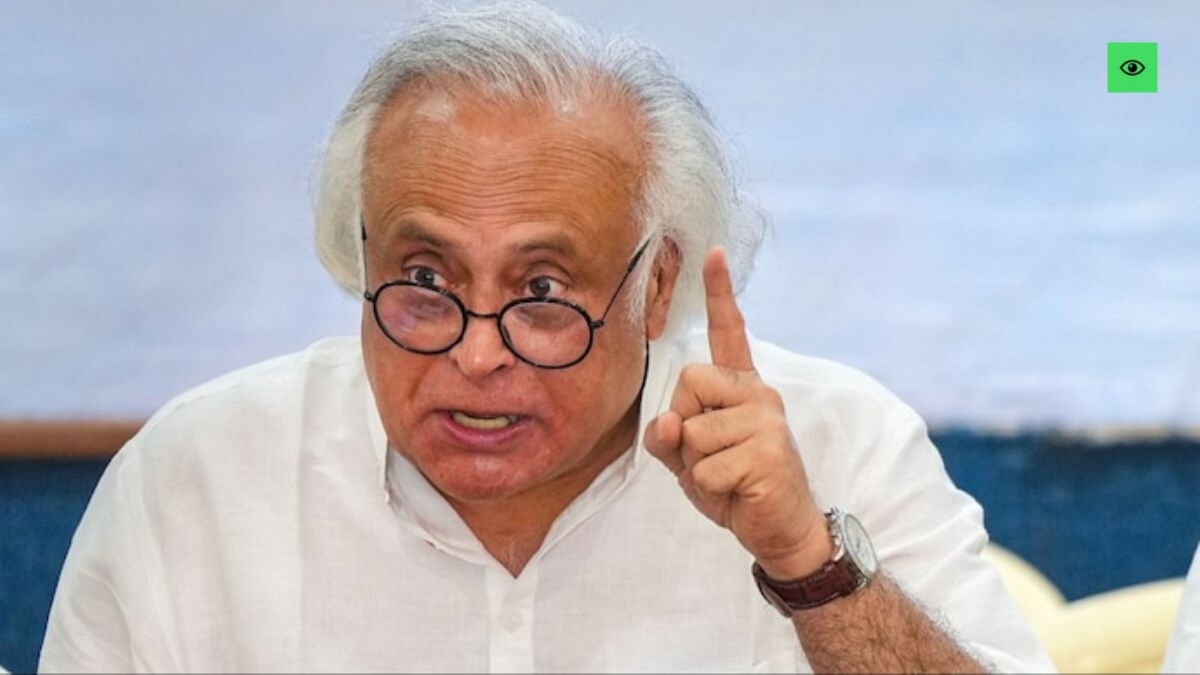
Congress general secretary in-charge of communications Jairam Ramesh has accused Prime Minister Narendra Modi, Union Home Minister Amit Shah and Chief Election Commissioner Gyanesh Kumar of orchestrating a process that, according to the party, could disenfranchise large sections of Indian voters.
These are serious political allegations, and the Election Commission has defended the legality of the exercise.
Congress SIR Allegations Focus on Six States
Jairam Ramesh questioned the results of the SIR in six states: Karnataka, Jharkhand, Meghalaya, Kerala, Goa and Mizoram.
Sharing a media report on X, Ramesh said approximately 1,600 foreign nationals had been detected and removed from electoral rolls across these states, where nearly 10 crore people had undergone the revision process.
He argued that the reported figure was small compared with the number of voters covered by the exercise.
Ramesh also said the Election Commission had not asked the remaining 20 states and Union Territories to collect comparable data on suspected foreign nationals. According to him, this raised questions about the evidence supporting the stated objectives of the revision.
The distinction matters. The figures cited by Congress concern reported detections across six states, not a comprehensive nationwide count. They also do not, by themselves, establish whether the broader exercise was justified or unjustified.
The party has used these figures to challenge the rationale and implementation of the SIR.
What Did Congress Say About the 3D Objective?
Ramesh referred to Home Minister Amit Shah’s stated description of the SIR’s objectives as detecting, deleting and deporting infiltrators.
He questioned the results against that stated objective, asking what the process had accomplished in identifying suspected foreign nationals.
According to Ramesh, the reported figures from the six states raised doubts about whether the exercise had delivered the results presented to the public.
However, the number of foreign nationals identified is only one measure of an electoral roll revision. Assessing the overall process also requires information about duplicate entries, deceased voters, shifted electors, incorrect records and eligible citizens whose names may have been removed.
Without a complete and comparable dataset, the figures cited by either side cannot settle every question surrounding the exercise.
That is precisely why transparent reporting matters.
Karnataka Figures Add to the Electoral Roll Debate
Karnataka has emerged as a significant part of the argument.
Ramesh said nearly 99.7 lakh names had been deleted from the state’s electoral rolls, while 716 foreign nationals were identified. Of those, he said, 545 were from Nepal.
These figures were cited by the Congress leader to question the relationship between the scale of deletions and the stated objective of identifying foreign nationals.
But the two numbers represent different categories. The total number of deleted entries cannot automatically be treated as the number of eligible Indian voters who lost their voting rights. Likewise, the number of foreign nationals identified does not establish the validity of every other deletion.
A meaningful assessment requires detailed information about why names were removed, how records were verified and what procedures were available to affected electors to correct errors or restore their registrations.
The debate therefore goes beyond the headline numbers. It concerns the quality of verification, the transparency of administrative decisions and the protection of eligible voters.
Congress Demands Gyanesh Kumar’s Exit and SIR Suspension
The Congress has called for three major changes: the removal of Chief Election Commissioner Gyanesh Kumar, suspension of the SIR exercise and a revamp of the ECINET portal.
Ramesh alleged that the revision was designed by Modi and Shah and implemented through the Election Commission under Kumar’s leadership. He also described ECINET as part of the process that, in the party’s view, required substantial reform.
These allegations remain the Congress’s position. They should not be confused with independently established findings about the motives behind the revision.
The demands nevertheless place the Election Commission’s procedures, digital systems and accountability under renewed political scrutiny.
For voters, the practical issue is whether electoral records remain accurate while eligible citizens retain a fair opportunity to register, verify their details and challenge incorrect deletions.
Election Commission Defends the SIR Process
The Election Commission has rejected key criticisms of the revision and defended its legal authority to conduct the exercise.
In its 248-page response before the Supreme Court, the poll body maintained that the SIR was authorised by law and that the relevant orders had received unanimous approval from its three members.
The Commission also rejected allegations that Form 6, the statutory form used for voter registration, had been amended. It stated that no changes had been made to the form.
These submissions are central to the legal dispute. The Commission’s defence addresses the legality of its procedures, while the Congress has raised broader concerns about the exercise’s purpose, implementation and consequences for voters.
Those are related questions, but they are not identical. An exercise can have a legal basis and still warrant scrutiny over its execution. Equally, political criticism alone does not establish that a statutory process is unlawful.
The Supreme Court proceedings provide a forum for examining the legal arguments and evidence.
Reported Objections Within the Election Commission
The controversy gained another dimension after The Indian Express reported that election commissioners Sukhbir Singh Sandhu and Vivek Joshi had recorded objections at least 14 times over the preceding 10 months.
According to the report, the objections primarily concerned decisions and orders related to the SIR process.
The report has added to questions about internal deliberations within the Election Commission. However, disagreement among commissioners does not, by itself, establish that an order is unlawful or that the institution’s decisions lack validity.
The Commission has responded that differing views and observations are part of deliberations within any institution. It has maintained that its orders carry full legal sanction and follow established statutory procedures.
The important distinction is between documented disagreement and proof of wrongdoing. The former can justify closer examination of how decisions were reached. The latter requires evidence that supports the specific allegation.
Why the SIR Debate Matters for Indian Voters
Electoral roll revision is not a routine administrative exercise without consequences. Voter lists determine who can participate in elections, making accuracy and due process essential.
Removing ineligible entries can help maintain reliable electoral records. At the same time, incorrect deletion of an eligible citizen’s name can obstruct that person’s ability to vote.
Both concerns deserve attention.
The Congress SIR allegations have brought these competing priorities into focus. The party argues that the process risks depriving eligible Indians of their constitutional voting rights. The Election Commission maintains that its actions are legally authorised and procedurally valid.
Resolving the dispute requires more than competing political statements. Relevant evidence includes state-wise data, the reasons for deletions, verification procedures, records of objections, correction mechanisms and the treatment of appeals.
Publicly accessible information would allow citizens and independent observers to distinguish administrative corrections from disputed cases and assess whether the process is being implemented consistently.
For India, the objective should be clear: electoral rolls that are accurate, verifiable and inclusive of every eligible citizen.
The SIR controversy will ultimately be judged not simply by political claims or isolated numbers, but by the quality of evidence, the fairness of the procedures and the safeguards available to voters.
The SIR controversy raises a fundamental question about electoral administration: how can the accuracy of voter lists be improved without putting eligible citizens at risk of exclusion?
The Congress has questioned the results and demanded institutional changes. The Election Commission has defended the legality of its actions. Neither political allegations nor official assurances should replace a transparent examination of the evidence.
The practical solution is straightforward. Publish comparable state-wise data, explain the reasons behind deletions, clarify verification procedures and make correction mechanisms accessible to affected voters. Independent scrutiny can help distinguish genuine irregularities from disputed claims.

Any Comments?