
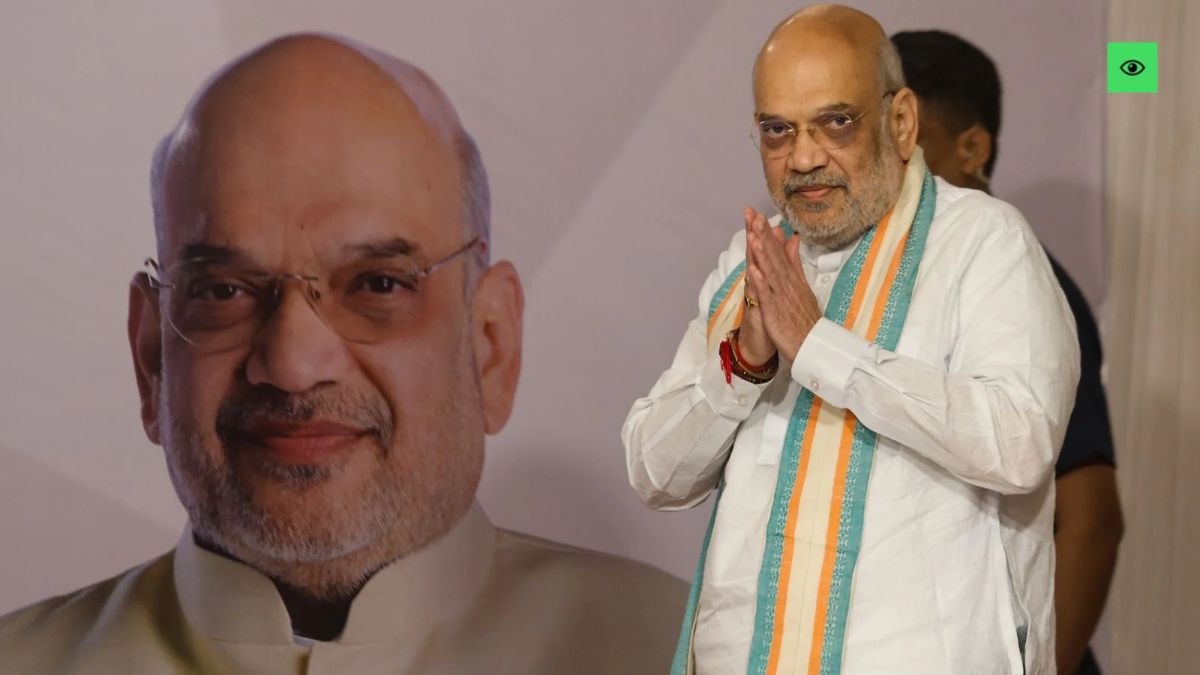
LUCKNOW, 31st Oct: Amit Shah has put the Uniform Civil Code back at the centre of Uttar Pradesh politics. With a promise to implement the UCC if the BJP returns to power in 2027 and a pointed reminder of the 1990 Ayodhya firing, the Union home minister has sent a clear message. The BJP is ready to bring Hindutva back into its electoral pitch.
The BJP’s political playbook in Uttar Pradesh is changing. Governance and welfare may have dominated the recent conversation, but Shah’s latest address suggests that the party is preparing to sharpen its ideological edge ahead of the next assembly elections.
And there’s a reason for that shift.
Uniform Civil Code in Uttar Pradesh: Amit Shah’s 2027 Strategy
Speaking at the BJP’s state working committee meeting in Lucknow on Friday, Shah promised that the Uniform Civil Code would be implemented in Uttar Pradesh if the party returned to power.
The commitment was categorical. The timing, equally significant.
Uttar Pradesh is heading towards the 2027 assembly elections, and the BJP is looking to strengthen its political position after its setback in the 2024 Lok Sabha elections.
For months, the party’s messaging has largely focused on governance, welfare delivery, organisational restructuring and rebuilding its social coalition.
Now, the emphasis appears to be shifting.
The Uniform Civil Code is not simply another policy announcement. It has long been associated with the BJP’s ideological agenda. Bringing it into the centre of the Uttar Pradesh campaign gives the party an opportunity to reconnect with its traditional Hindutva base.
The proposal also carries political weight in a state with a substantial Muslim population.
The UCC has remained a contentious subject in Indian politics. Its renewed prominence in Uttar Pradesh is likely to intensify the debate over personal laws, equality and the relationship between religion and the state.
For the BJP, however, the issue also offers a familiar political advantage: a campaign narrative that reaches beyond caste identities.
Why Hindutva Is Back on the BJP’s Agenda
The BJP has traditionally relied on Hindutva and nationalism to consolidate Hindu voters across caste divisions.
That approach has been central to its political appeal.
Caste remains a powerful factor in Uttar Pradesh elections. But the BJP has consistently sought to place a broader Hindu identity above individual caste affiliations.
A senior BJP leader, speaking anonymously, described Hindutva and nationalism as the ideological glue that brings Hindu voters together.
Shah’s address appears to reflect that thinking.
The party’s recent electoral messaging has placed considerable emphasis on governance and welfare. Those issues remain important, but they don’t necessarily offer the same ideological consolidation that Hindutva can provide.
The UCC promise changes the conversation.
It gives the BJP a policy commitment that fits its longstanding ideological position while allowing the party to present itself as pursuing a broader national objective.
The political calculation is straightforward. If caste-based mobilisation fragments the electorate, a common ideological identity can potentially bring sections of that electorate together.
Whether that strategy translates into electoral gains remains to be seen.
But the direction of the BJP’s messaging is becoming clearer.
The 1990 Ayodhya Firing Returns to the Political Spotlight
Shah’s UCC announcement was only one part of his address.
The other was a pointed reference to the 1990 firing on kar sevaks in Ayodhya during the Mulayam Singh Yadav government.
The episode remains a deeply charged chapter in Uttar Pradesh’s political history. It was closely associated with the Ram temple movement and the confrontation between the BJP and the Samajwadi Party.
Shah invoked that memory while contrasting the SP’s role during the movement with the BJP’s role in the construction of the Ram temple.
He accused the Samajwadi Party of massacring Ram devotees and dumping their bodies in the Saryu without performing their last rites.
He also said the BJP had paved the way for the grand Ram temple.
The message was directed at Akhilesh Yadav and his party.
Shah argued that the people of Uttar Pradesh would never forgive the SP for its actions during the Ram temple movement.
The reference was more than a historical reminder. It brought an emotionally charged political episode back into the present electoral conversation.
The Ram temple movement has long been an important part of the BJP’s political identity. By revisiting the 1990 firing, Shah sought to reconnect the party’s current campaign with that history.
BJP vs SP: The Battle Over Caste and Identity
The timing of Shah’s remarks is significant because of the Samajwadi Party’s PDA strategy.
PDA stands for Pichhda, Dalit and Alpsankhyak, referring to backward classes, Dalits and minorities.
Akhilesh Yadav has sought to consolidate Scheduled Castes, Other Backward Classes and minority voters through this approach.
That strategy places caste representation and social coalition-building at the centre of the SP’s political messaging.
The BJP, meanwhile, has traditionally sought to counter caste-based mobilisation through Hindutva and nationalism.
The two approaches represent competing ways of building electoral coalitions.
The SP’s strategy seeks to bring together groups through their shared social and political interests.
The BJP’s approach seeks to create a larger identity that can potentially transcend those divisions.
Shah’s address appears to be a deliberate attempt to strengthen the latter narrative.
The challenge for the BJP is to maintain its existing social coalition while responding to the Opposition’s efforts to consolidate caste-based support.
And that is where Hindutva becomes politically relevant again.
UCC Promise Raises Questions for Yogi Adityanath
There is another interesting dimension to Shah’s announcement.
Uttar Pradesh Chief Minister Yogi Adityanath is himself a prominent Hindutva leader with an independent political identity.
Yet he has not been equally vocal on the UCC issue, despite the fact that several states, including neighbouring Uttarakhand, have introduced or announced the implementation of the Uniform Civil Code.
Shah’s promise now places the issue firmly within the BJP’s Uttar Pradesh campaign.
The question is how the state government will approach it.
Will the UCC become a central policy commitment? Will it remain primarily an electoral promise? And how will the party navigate the legal and political complexities surrounding the issue?
These questions remain open.
What is clear is that the UCC has moved back into the political spotlight.
What Shah’s Address Means for Uttar Pradesh 2027
The BJP’s messaging in Uttar Pradesh is entering a new phase.
Governance, welfare and organisational restructuring have dominated much of the recent conversation. Shah’s address suggests that the party is now looking to complement those themes with a sharper ideological pitch.
The Uniform Civil Code and the 1990 Ayodhya firing serve different purposes within that narrative.
One is a future-facing political commitment. The other is a reminder of a historical confrontation.
Together, they reinforce the BJP’s longstanding Hindutva agenda.
The political contest with the Samajwadi Party is also becoming more clearly defined. The SP is seeking to consolidate its PDA coalition, while the BJP is attempting to strengthen a broader Hindu identity that cuts across caste lines.
The 2027 assembly elections are still ahead.
But Shah’s address has already made one thing clear: the BJP does not intend to leave Hindutva on the sidelines.
The ideological battle for Uttar Pradesh is back in full view.
The BJP’s renewed focus on Hindutva ahead of the 2027 Uttar Pradesh elections is hardly surprising. Political parties don’t abandon their core ideological positions. They adjust the volume.
Shah’s UCC promise and his reference to the 1990 Ayodhya firing suggest that the BJP wants to make identity a central part of the electoral conversation again. That is a clear political choice.
But the Uniform Civil Code deserves a debate that goes beyond campaign slogans. If the BJP wants to turn its promise into policy, it must explain what implementation would involve, how legal complexities would be addressed and what the proposed framework would actually mean for citizens.

Any Comments?