
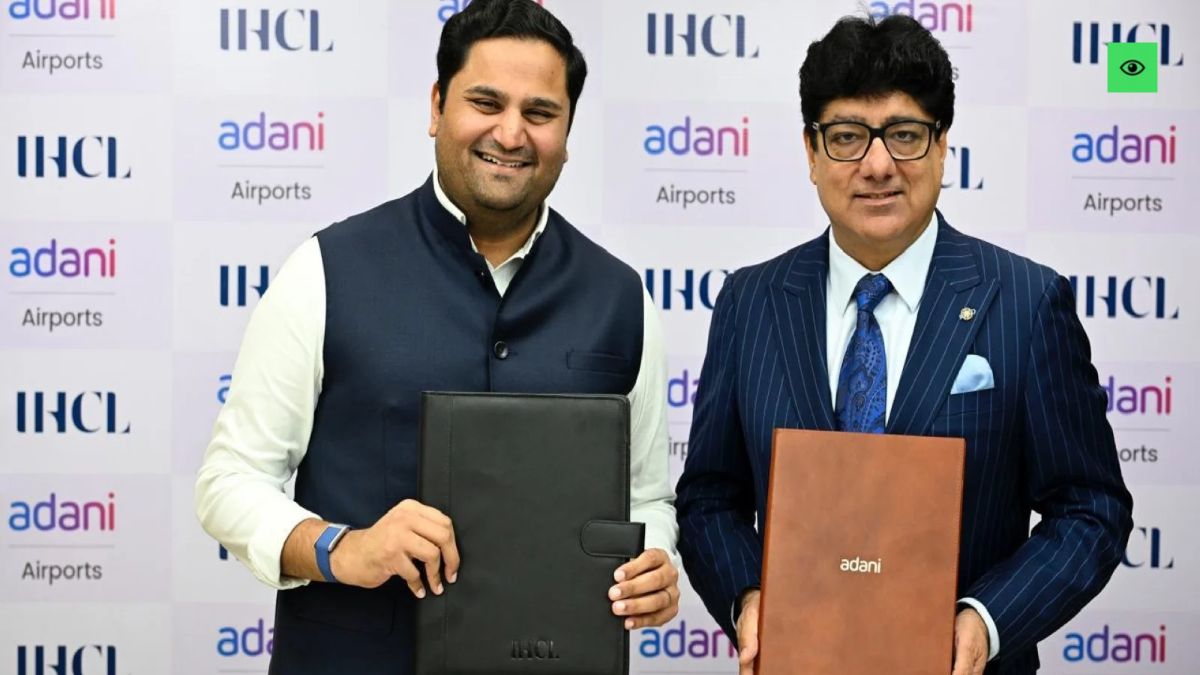
MUMBAI, 29th Oct: Airports are no longer just places to catch flights. They are becoming destinations in their own right. Adani Airport Holdings Limited and The Indian Hotels Company Limited (IHCL) are taking that idea further with an agreement to develop eight hotels comprising more than 2,000 rooms across four Indian cities.
The partnership covers Mumbai, Ahmedabad, Lucknow and Guwahati, bringing IHCL’s Taj, Vivanta, Gateway and Ginger brands into Adani’s expanding airport ecosystem. The larger ambition is clear: build destinations where aviation, hospitality, business and leisure work together.
Adani IHCL Airport Hotels: What the Agreement Includes
The agreement outlines eight hotel properties across four cities, with Adani Airports responsible for developing the properties and IHCL managing their operations under its established hospitality brands.
The portfolio includes three Taj hotels, two Vivanta properties, one Gateway hotel and two Ginger hotels. Together, they will cater to different categories of travellers, from premium business guests to visitors seeking practical and accessible accommodation.
The planned facilities include accommodation, dining, meetings and events, wellness and recreational services. This creates opportunities to serve not only passengers with early departures or late arrivals but also business travellers, event organisers and visitors using airport-linked commercial districts.
For both companies, the arrangement combines property development with hospitality expertise. Adani brings its airport infrastructure and development plans, while IHCL contributes its multi-brand hotel operating capabilities.
Four Cities, Eight Hotels: Where the Properties Will Come Up
Mumbai, Ahmedabad, Lucknow and Guwahati will anchor this expansion. Each location has a different role in the overall development.
Mumbai: Taj at Terminal 2
Mumbai will get a Taj hotel at Terminal 2 of the Mumbai airport. The location places the premium hospitality brand directly within the airport environment, potentially serving travellers who value convenient access to accommodation and business facilities.
Ahmedabad: Taj and Vivanta
Ahmedabad’s development includes a Taj hotel and a Vivanta property, both described as being in advanced stages of development.
The two brands address different market segments, allowing the proposed portfolio to serve guests looking for premium hospitality as well as contemporary business and leisure accommodation.
Lucknow: Vivanta and Ginger
Lucknow will have one Vivanta and one Ginger hotel. This combination brings two distinct IHCL brands into the city’s airport-linked development, catering to different accommodation preferences.
Guwahati: Taj, Gateway and Ginger
Guwahati’s planned portfolio includes Taj, Gateway and Ginger properties. With three brands represented, the development will offer accommodation options across different hospitality segments.
Together, these projects position the four cities as important locations in the companies’ broader airport hospitality strategy.
Adani Airport Cities: The Bigger Investment Plan
The eight hotels are part of a wider vision that extends beyond individual properties.
Adani Airports has established Adani Airport City Limited to develop a land bank exceeding 655 acres across eight airports in seven states. This includes nearly 440 acres in Mumbai and Navi Mumbai.
During its initial phase, Adani Airport City plans to invest more than Rs 20,000 crore to develop approximately 22 million square feet across Mumbai, Navi Mumbai, Ahmedabad, Lucknow, Jaipur and Guwahati.
The proposed development footprint brings hospitality together with business, retail and leisure. Rather than treating airport land solely as operational infrastructure, the plan seeks to create mixed-use destinations connected to surrounding urban centres.
Jeet Adani, Director of Adani Airport Holdings Limited, said the partnership represents an important step towards developing hospitality-led destinations that support commerce, tourism and urban growth.
He also highlighted the company’s ambition to strengthen the hospitality ecosystem within its Airport City developments and contribute to the long-term economic growth of the regions it serves.
IHCL Expands Its Airport Hotel Network
For IHCL, the agreement strengthens its presence across India’s major airport locations.
Managing Director and Chief Executive Officer Puneet Chhatwal said airport-centric developments are emerging as important commercial and hospitality hubs as India strengthens its position in the global aviation market.
According to Chhatwal, the partnership aligns with a shared vision to support India’s travel and tourism sector.
Following the agreement, Adani Airport Holdings Limited maintains hotel brand tie-ups covering 15 properties across its airport locations in India.
IHCL, meanwhile, expects its portfolio across its brandscape at key Indian airports to reach 25 hotels with the addition of these properties.
The distinction matters. The agreement is not simply about adding rooms. It brings together an airport infrastructure operator seeking to develop surrounding commercial districts and a hospitality company looking to extend its multi-brand presence.
What This Means for India’s Travel and Tourism Sector
India’s aviation ecosystem creates demand that extends well beyond boarding gates and baggage belts. Airports connect business centres, tourism destinations and regional economies. Hotel infrastructure can help meet the accommodation and service needs that develop around these connections.
The Adani IHCL airport hotels partnership reflects this broader approach. By combining airport-linked property development with established hotel brands, the companies are positioning hospitality as part of a larger commercial ecosystem.
Business meetings, corporate travel, dining and events can all form part of the airport city’s value proposition. The planned wellness and recreational facilities add another dimension to the intended visitor experience.
However, the distinction between announced plans and completed projects remains important. The agreement establishes the direction of development, but the hotels and wider Airport City projects will take shape through their respective development and operating timelines.
For travellers, the eventual value will depend on the facilities delivered, service standards, accessibility and the practical convenience of each location.
For the hospitality industry, the partnership signals continued interest in airport-linked development as a way to connect accommodation with infrastructure and commercial activity.
Conclusion: Airport Cities Are Becoming the Next Hospitality Frontier
The Adani IHCL airport hotels agreement combines eight proposed properties, more than 2,000 rooms and four cities under one multi-brand operating arrangement.
Its significance extends beyond the hotel count. The partnership sits within Adani Airports’ broader plan for airport cities, backed by a proposed initial investment exceeding Rs 20,000 crore and a development programme covering approximately 22 million square feet.
For IHCL, the agreement expands its airport presence across Taj, Vivanta, Gateway and Ginger. For Adani Airports, it brings an established hospitality operator into its vision of integrated destinations.
The real test will be execution. Announcements establish ambition, but construction, operational readiness and guest experience determine whether that ambition translates into lasting value.
One thing is clear: India’s airport infrastructure story is increasingly about what happens around the runway, not just what happens on it.
The Adani IHCL airport hotels agreement makes strategic sense because it connects two complementary strengths: airport infrastructure and hospitality operations.
Adani Airports is looking beyond the core business of managing aviation facilities. Its Airport City strategy aims to bring hotels, business activity, retail and leisure into developments surrounding major airports. IHCL contributes a recognised portfolio of hospitality brands that can serve different traveller segments.
The planned investment of more than Rs 20,000 crore in the initial Airport City phase indicates the scale of the wider ambition. Yet the numbers alone should not be mistaken for guaranteed success.

Any Comments?