
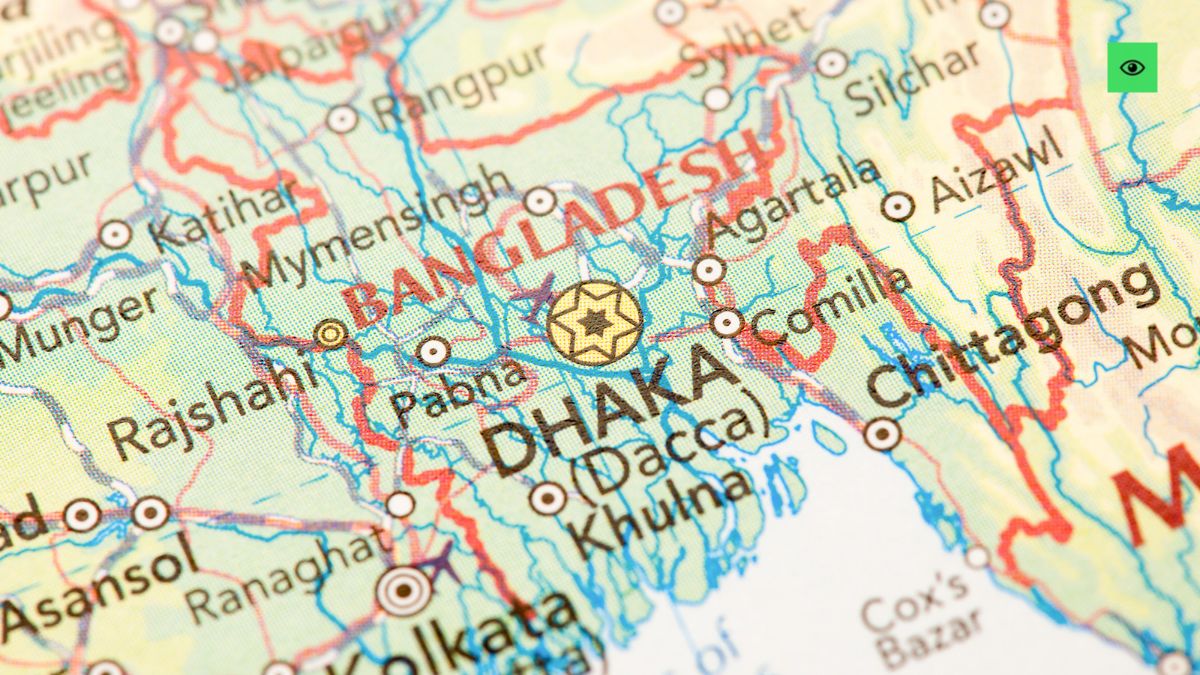
DHAKA, 31st Oct: Anti-India slogans are back on the streets of Dhaka. As Bangladesh struggles with rising prices, fuel shortages and prolonged power cuts, domestic anger is increasingly spilling into political rhetoric against New Delhi. And that creates another uncomfortable challenge for India.
Bangladesh’s economic troubles are no longer confined to household budgets and industrial production. They are now feeding into a political atmosphere where anti-India messaging is finding fresh space.
The latest protests have also put Prime Minister Tarique Rahman’s government under pressure, with demonstrators demanding ministerial resignations and questioning its ability to manage the crisis.
ANTI-INDIA SLOGANS IN BANGLADESH RETURN TO THE STREETS
Thousands gathered in Dhaka for a protest organised by the National Citizen Party (NCP), where convenor Nahid Islam demanded the resignation of Home Minister Salahuddin Ahmed and Energy Minister Iqbal Hassan Mahmood Tuku.
The immediate complaint was straightforward: the government was struggling to address shortages, electricity disruptions and rising living costs.
But the rally quickly acquired a different character.
Videos circulating on social media showed NCP leaders raising the slogan “Dilli na Dhaka”, followed by the crowd responding with “Dhaka, Dhaka”.
The slogan’s return matters. Anti-India rhetoric had become less prominent after the Bangladesh Nationalist Party (BNP) returned to power in February. Friday’s demonstration suggests that the political narrative has not disappeared.
NCP MP Hasnat Abdullah also attended the gathering. He had previously threatened to isolate India’s northeastern states, making his presence particularly noteworthy.
NAHID ISLAM TARGETS INDIA WITH SERIOUS ALLEGATIONS
Addressing protesters outside the National Museum, Nahid Islam accused India of conspiring against Bangladesh and alleged that the government was failing to defend national interests.
He raised several contentious issues, including alleged killings along the India-Bangladesh border, the persecution of Muslims in Assam and West Bengal, and claims about plans to demolish mosques in Delhi.
However, he did not provide evidence to substantiate these allegations.
The distinction matters. Political accusations made at a public rally should not automatically be treated as established facts.
Nahid also brought up the Ganga Water Sharing Treaty, which is due to expire in December 2026.
He warned that Bangladeshis would take to the streets if a renewed agreement failed to guarantee what he described as the country’s rightful share of water.
THE GANGA WATER TREATY COULD BECOME ANOTHER FLASHPOINT
The Ganga water-sharing arrangement is an important issue in India-Bangladesh relations.
The 30-year agreement governs the sharing of Ganga waters at the Farakka Barrage during the lean season. Its renewal is particularly significant for Bangladesh, where nearly a third of the population depends on the river system for livelihoods.
For Dhaka, water security is not merely a diplomatic talking point. It has direct implications for communities and economic activity.
With the December 2026 deadline approaching, the treaty could become a major subject of political debate.
Nahid’s remarks indicate that the issue is already finding space in domestic mobilisation. Whether the next agreement can satisfy both sides will be an important question for bilateral relations.
ANTI-INDIA SENTIMENT SURVIVES SHEIKH HASINA’S OUSTER
The latest demonstration also needs to be viewed against Bangladesh’s political developments since August 2024, when Sheikh Hasina was removed from power.
During the interim administration led by Muhammad Yunus, several political and student leaders made provocative statements against India.
Relations between Dhaka and New Delhi also faced pressure as Bangladesh moved closer to Islamabad.
Hasnat Abdullah was among the prominent voices making controversial remarks. He had threatened to support separatist elements in India’s northeastern states and referred to the Siliguri Corridor, the strategically important land connection between India’s Northeast and the rest of the country.
Such statements raised concerns in India because the region has considerable strategic importance.
Although anti-India rhetoric became less frequent after Tarique Rahman’s BNP government assumed office, the latest rally demonstrates that it remains part of Bangladesh’s political discourse.
A change in government does not automatically erase political hostility. That is the uncomfortable reality New Delhi must recognise.
TARIQUE RAHMAN’S GOVERNMENT FACES AN ECONOMIC TEST
Despite the nationalist slogans, the immediate reason behind Friday’s protest was economic distress.
Bangladesh is facing gas shortages and power disruptions amid instability in West Asia, a region on which it depends for a significant share of its energy imports.
The electricity crisis has also affected industrial activity, including the country’s important garment sector.
Meanwhile, inflation has remained around 8.5 per cent in 2026, according to the World Bank. For ordinary households, that means continued pressure on purchasing power as incomes struggle to keep pace with rising prices.
The poverty situation adds another layer to the problem.
The World Bank has reported that around 2.1 million more people fell into poverty compared with the previous year.
These numbers create a difficult political environment for any government. People expect reliable electricity, affordable essentials and functioning public services. Political slogans cannot substitute for those basic requirements.
PROTESTERS ISSUE AN ULTIMATUM TO THE PRIME MINISTER
The demonstration also delivered a direct political challenge to Tarique Rahman’s administration.
Nahid Islam threatened to surround the prime minister’s residence if the home and energy ministers refused to resign.
He also accused Rahman of becoming an autocrat, drawing comparisons with the previous regime.
That is a serious escalation in the language of domestic opposition.
The government is now dealing with two connected problems: public dissatisfaction over economic conditions and political groups willing to turn that dissatisfaction into a broader confrontation.
For India, the situation deserves close attention. Anti-India messaging can complicate diplomatic engagement, particularly when sensitive issues such as border security, regional connectivity and water sharing are already part of the political debate.
Bangladesh’s internal politics will ultimately be shaped by its own citizens and political institutions. However, the rhetoric emerging from Dhaka has consequences beyond its borders.
The return of anti-India slogans is therefore more than another protest soundbite. It is a reminder that political stability, economic performance and bilateral relations remain closely connected in South Asia.
Bangladesh’s latest political developments offer a familiar lesson: economic frustration can quickly become a convenient vehicle for nationalist rhetoric. Rising prices, fuel shortages and power cuts are legitimate reasons for public anger. The government must answer for its handling of these problems.
But dragging India into domestic political mobilisation is not a substitute for governance. Allegations against another country require evidence, not applause from a rally.

Any Comments?