
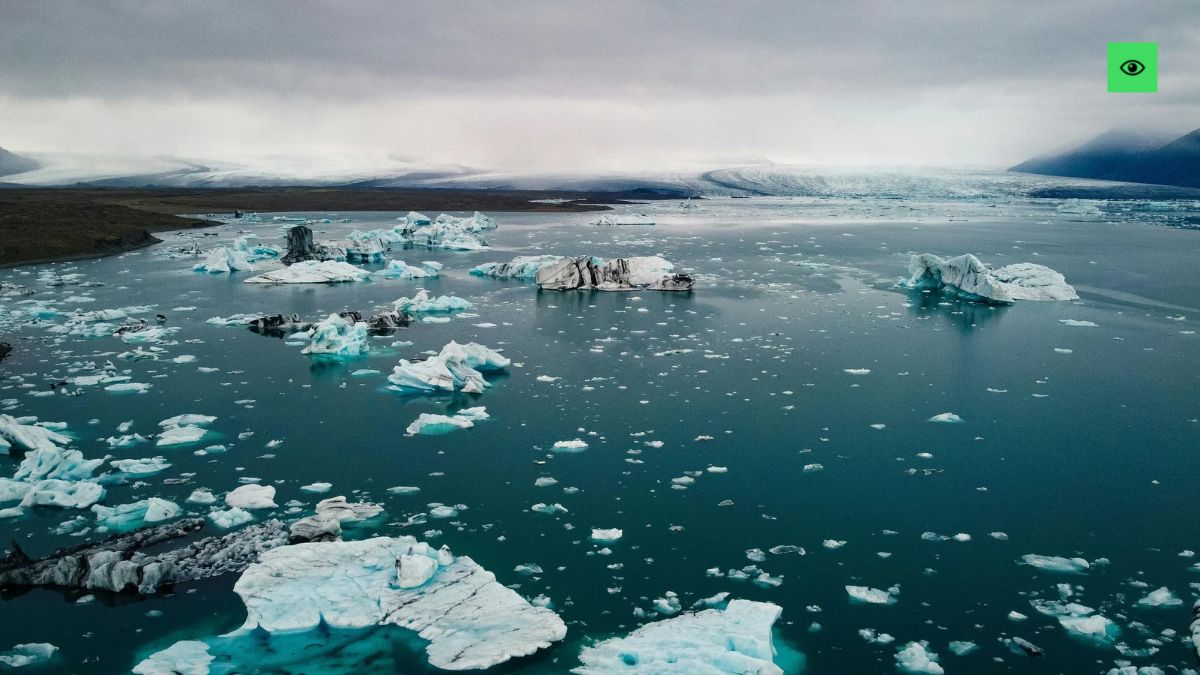
MUMBAI, 2nd Nov: The planet is running out of room for climate mistakes. Two United Nations reports warn that global warming beyond 1.5°C could trigger irreversible damage to glaciers, sea ice and frozen landscapes, with consequences that could haunt humanity for centuries.
The message is blunt: act now, or deal with the fallout for generations.
The reports, published on Monday ahead of COP31, warn that the consequences of crossing the 1.5°C threshold could extend far beyond melting ice. Rising seas, water shortages, ecological destruction and catastrophic flooding are all part of the picture.
And here’s the uncomfortable part. Even if temperatures eventually fall, the damage may not reverse.
The 1.5°C target is the most ambitious temperature goal established under the 2015 Paris Agreement. It seeks to limit global warming compared with pre-industrial levels.
But two new UN reports warn that crossing this threshold could have significant and often irreversible consequences for the cryosphere.
The cryosphere includes regions covered by snow, ice and frozen ground. That means glaciers, polar ice sheets, sea ice and permafrost.
These frozen systems play a critical role in regulating the Earth’s climate. Their decline threatens ecosystems, communities and the stability of the planet’s water systems.
Global warming has already reached approximately 1.37°C above pre-industrial levels. According to the European Copernicus network, the 1.5°C threshold could be exceeded around 2030.
The window for preventing further damage is narrowing. Fast.
Glaciers are among the clearest indicators of a warming planet.
One of the reports highlights that Switzerland has already lost 20% of its glacial mass. This is not some distant climate projection. The damage is happening now.
The reports warn that further warming could accelerate glacier loss, with consequences for mountain ecosystems and communities that depend on glacier-fed water.
The 1.5°C threshold itself may already be too high for the cryosphere. Scientists suggest that a safer temperature could be closer to 1°C or even lower.
The Arctic is another major concern.
Rising temperatures threaten sea ice, which plays an important role in the polar climate system. Its continued decline could produce lasting changes across the region.
Scientists warn that the consequences of crossing climate tipping points could persist even if global temperatures eventually return below 1.5°C.
The Arctic may recover under certain conditions. But recovery is not guaranteed, and the process could take decades or longer.
Melting glaciers and ice sheets contribute to rising sea levels.
The second UN report outlines a particularly disturbing scenario. If global warming exceeds 2.8°C and those temperatures persist into the next century, sea levels could rise by as much as 5 centimetres per year by 2150.
For comparison, the current rate is approximately 0.45 centimetres annually.
That is a dramatic increase.
Coastal communities, infrastructure and ecosystems would face growing pressure as rising seas accelerate. The consequences would extend well beyond the polar regions.
Permafrost is ground that remains frozen for at least two consecutive years. It stores enormous quantities of carbon.
As temperatures rise, this frozen ground begins to thaw, potentially releasing carbon dioxide into the atmosphere.
The second report warns that under a warming scenario exceeding 2.8°C, permafrost could release as much CO₂ annually as the United States currently emits.
That creates a dangerous feedback loop. Rising temperatures trigger emissions, and those emissions contribute to further warming.
The planet does not need another source of accelerated climate damage.
Glacier loss and thawing frozen ground can destabilise mountain environments.
The reports warn of increased risks of flooding, ecological damage and hazards in mountainous regions.
Water shortages could also become more severe as glaciers decline.
For communities that depend on mountain water systems, the consequences could be particularly serious.
This is where global warming stops being an abstract temperature measurement and becomes a direct threat to livelihoods.
Scientists are particularly concerned about climate tipping points.
These are thresholds beyond which major changes can become difficult or impossible to reverse.
The reports warn that even if global warming falls below 1.5°C after temporarily exceeding it, recovery could be extremely slow.
Chen Zhao, a glaciologist specialising in Antarctica and a contributor to the reports, warns that returning below the threshold would not undo the consequences of the warming experienced during the overshoot.
In simple terms, crossing the line and stepping back may not restore what was lost.
Climate recovery is not a neat, predictable process.
Matthew England, an oceanographer and climatologist at the University of New South Wales, explained that recovery could take several decades or even centuries.
Some glaciers could partially recover if temperatures quickly fall below 1.5°C or even 1°C. Arctic sea ice could also benefit.
But the timeline for recovery would not mirror the speed of decline.
Nature does not operate on political election cycles. And that is precisely why delayed action carries such a heavy cost.
The reports have particular relevance for India.
The Himalayan region supports communities, ecosystems and water systems that depend on mountain environments. Glacier loss and changing temperatures raise concerns about water availability and mountain hazards.
The warning becomes even more urgent when viewed alongside the August disaster in Nepal.
According to the statement by Nepalese glacier researcher Gunjan Silwal, the collapse of a glacier and part of a mountain peak in northern Nepal caused a devastating event that left more than 1,500 people dead and 5,000 missing.
Scientists attribute the disaster to global warming.
Silwal described the tragedy as a foretaste of what could come.
The phrase “mountain tsunami” captures the sheer scale of the danger. But the underlying message is far more serious than the headline.
Mountain communities are already dealing with the consequences of a changing climate. The future depends on how quickly governments respond.
The answer is yes, but the margin for error is shrinking.
A recent UN report projects that the world could face approximately 2.6°C of warming by 2100 even if countries meet their climate commitments.
That puts the planet on a dangerous trajectory.
James Kirkham, lead author of one of the reports, argues that temperatures must be brought well below 1.5°C as quickly as possible to limit damage in polar and mountainous regions.
He also warns that every additional fraction of a degree and every year spent above the threshold will bring more devastating consequences.
The reports call for immediate political ambition, particularly through reductions in fossil fuel use.
The Paris Agreement’s targets remain relevant. In fact, a temporary overshoot makes them even more urgent.
Global warming beyond 1.5°C is not simply another climate milestone. It could mark the beginning of irreversible changes to the Earth’s frozen systems.
The consequences include glacier loss, rising seas, thawing permafrost, water shortages and dangerous mountain disasters.
Some damage is already visible. Other consequences could unfold over decades or centuries.
The science is clear about one thing: delaying climate action increases the damage.
The decisions made over the next few years will determine how much of the planet’s frozen landscape survives.
And no, returning below a temperature threshold will not necessarily restore what was lost.

Any Comments?