
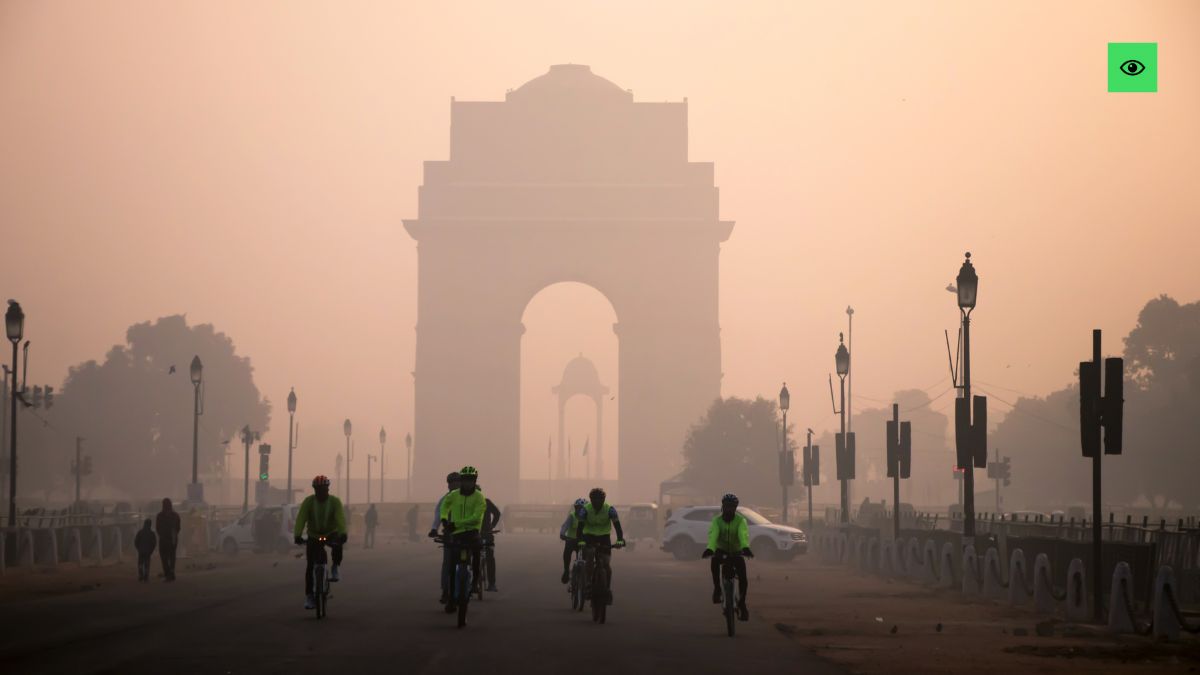
NEW DELHI, 6th Nov: Delhi’s air pollution crisis is moving closer to the severe category, and authorities have responded with stricter restrictions. With the Air Quality Index (AQI) reaching 382, GRAP Stage 3 has been implemented across Delhi-NCR, bringing construction bans, vehicle restrictions and changes to school operations.
The message is straightforward: activities contributing to dust and emissions must face tighter controls.
Delhi Pollution Triggers GRAP Stage 3 Restrictions
Delhi’s AQI currently stands at 382, placing it in the very poor category and dangerously close to the 400 mark that signals severe air quality.
In response, authorities have activated Stage 3 of the Graded Response Action Plan (GRAP). The measures target pollution sources across Delhi and neighbouring NCR cities, including Noida, Ghaziabad and Gurugram.
Construction activities, transportation and institutional operations are among the major areas affected.
The restrictions are designed to reduce dust pollution and emissions during the worsening air quality situation.
GRAP Stage 3: Construction Activities Face Major Restrictions
Construction and demolition work has come under some of the strictest restrictions under GRAP Stage 3.
Several activities capable of generating substantial dust and pollution have been prohibited across the National Capital Region.
These include:
- Excavation, filling and boring.
- Drilling, piling and demolition.
- Brickwork and masonry.
- Road construction and major repairs.
- Painting, polishing and varnishing.
- Major welding and gas-cutting.
- Cutting and grinding of tiles and stones.
The restrictions also cover the handling of construction materials.
The transfer, loading and unloading of dust-generating materials such as cement, sand, bricks, fly ash and crushed stone have been prohibited.
Vehicles transporting construction materials or demolition waste are also barred from using unpaved roads.
In short, construction sites cannot continue business as usual while pollution levels remain dangerously high.
Which Construction Projects Are Exempted?
Not every infrastructure project has been stopped.
Authorities have allowed several essential and strategically important construction activities to continue despite the GRAP Stage 3 restrictions.
Exempted projects include:
- Railway and metro services.
- Airports and interstate bus terminals.
- National security and defence projects.
- Hospitals and healthcare infrastructure.
- Highways, roads and flyovers.
- Power transmission projects.
- Pipelines and telecommunications infrastructure.
- Sewage treatment plants.
- Water supply projects.
Other construction activities generating comparatively less dust or pollution may also continue.
However, permission comes with conditions. These projects must strictly follow dust-control measures and construction and demolition waste management regulations.
Authorities have been instructed to enforce these restrictions across Delhi-NCR.
Older Vehicles Face Fresh Restrictions Under GRAP Stage 3
Construction is not the only sector facing restrictions. Older vehicles have also come under the scanner.
Under GRAP Stage 3, BS-III petrol and BS-IV diesel or older light motor vehicles, including four-wheelers, will not be allowed to operate in Delhi and five high-vehicle-density NCR districts.
These districts are:
- Gurugram
- Faridabad
- Sonipat
- Ghaziabad
- Gautam Buddha Nagar
Vehicles specifically adapted for persons with disabilities and used for their personal transportation are exempted.
Additional restrictions apply to goods vehicles.
In Delhi, diesel-operated BS-IV and older medium goods vehicles registered in the city will face restrictions.
Meanwhile, diesel-operated BS-IV and older medium goods vehicles and light goods vehicles registered outside Delhi will not be permitted to enter the Capital.
The restrictions aim to reduce vehicular emissions, particularly from older diesel-powered vehicles.
Schools Up to Class 5 Shift to Hybrid Classes
GRAP Stage 3 also affects school operations.
Schools up to Class 5 in Delhi, Gurugram, Faridabad, Ghaziabad and Gautam Buddha Nagar must conduct classes in hybrid mode.
This means students can attend classes physically or participate online wherever the facility is available.
Importantly, students and their guardians will decide whether to opt for online classes.
Other NCR districts may also consider introducing hybrid learning arrangements depending on local requirements.
The decision gives families some flexibility while authorities attempt to limit children’s exposure to polluted outdoor conditions.
Offices May Move to 50% Attendance
Government and private offices could also see operational changes.
The Delhi government and state governments across the NCR will decide whether public, municipal and private offices should operate with only 50% of their workforce physically present.
The remaining employees would work from home.
The Central government may independently decide whether its employees should receive work-from-home arrangements.
These measures are intended to reduce commuting activity and help control emissions across the region.
Why GRAP Stage 3 Matters for Delhi-NCR
An AQI of 382 puts Delhi firmly in the very poor category, with the severe threshold of 400 approaching.
GRAP Stage 3 introduces restrictions across multiple sectors rather than focusing on a single source of pollution.
Construction and demolition activities face restrictions because of dust emissions. Older vehicles face movement curbs because of their contribution to vehicular pollution. Schools and offices may also modify their operations.
The geographical scope is equally important.
The restrictions extend beyond Delhi to neighbouring urban centres such as Noida, Ghaziabad and Gurugram. Pollution does not respect administrative boundaries, and regional coordination is essential when dealing with the NCR’s air quality challenges.
The effectiveness of these measures will depend heavily on enforcement and compliance.
Authorities have directed officials to ensure strict implementation. The real test, however, lies in how consistently these restrictions are followed on the ground.
For residents, businesses and commuters, the immediate reality is clear: GRAP Stage 3 means tighter rules, restricted activities and changes to everyday routines.
Delhi’s AQI is already at 382. Waiting for the number to cross 400 before taking pollution control seriously would defeat the purpose of preventive action.

Any Comments?