
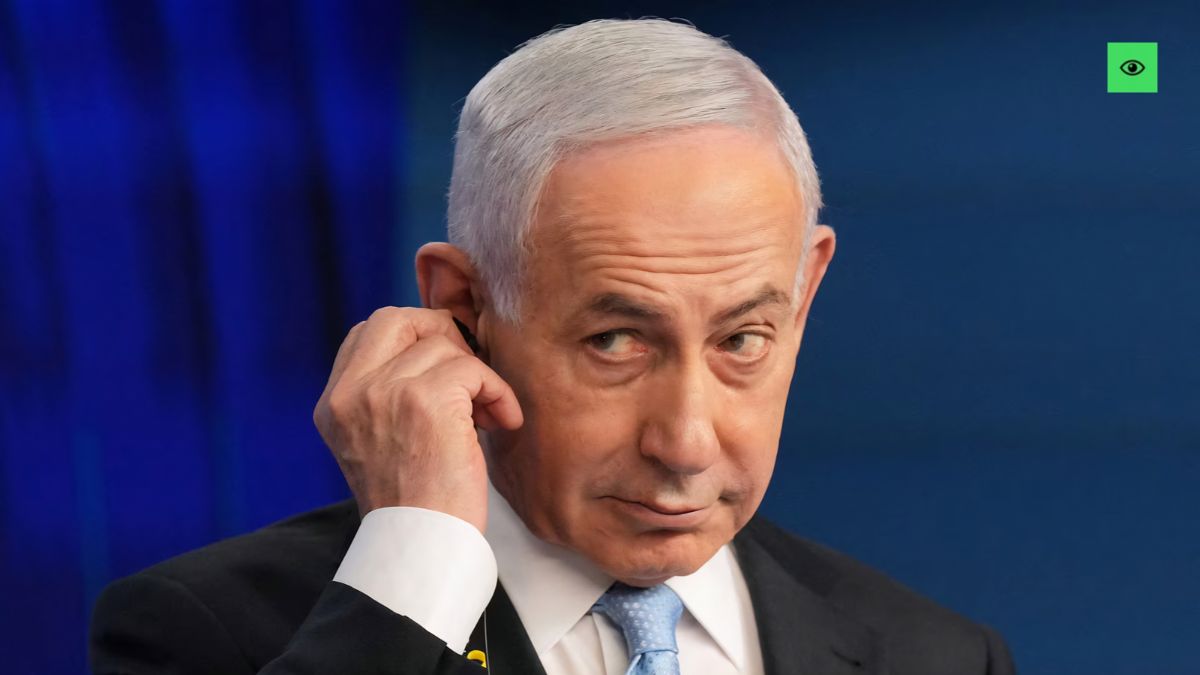
JERUSALEM, 28th Oct: Benjamin Netanyahu has emerged as the leading political figure in Israel’s 2026 election, with early projections showing his right-wing bloc ahead of the opposition. But there is a catch. His alliance has not secured a parliamentary majority, leaving Israel’s political future dependent on coalition negotiations and the next moves of his rivals.
Early results point to a significant political shift, with Netanyahu retaining substantial support among Israeli Jews despite mounting criticism over the wars involving Israel, his legal battles and the country’s growing international isolation.
NETANYAHU LEADS AS ISRAEL ELECTION RESULTS TAKE SHAPE
With approximately 70.7% of votes counted on Wednesday morning, Israeli media projected Netanyahu’s bloc of right-wing, far-right and ultra-Orthodox parties to win 54 seats in the 120-member Knesset.
The opposition bloc led by rival Gadi Eisenkot was projected to secure 47 seats, while parties representing Israelis of Arab descent were expected to win 19 seats.
The numbers offered Netanyahu a strong political position, but not the outright parliamentary majority required to govern comfortably. A majority in the Knesset requires 61 seats.
Although counting was continuing and the projections could change, Eisenkot’s prospects of removing Netanyahu from power appeared increasingly limited.
The opposition had entered the election hoping to challenge Netanyahu’s long-standing dominance. However, pre-election polls had suggested a closer contest than the early projections indicated.
The result underscores a central reality of Israeli politics: leading the largest political bloc does not automatically guarantee a stable government.
WHY NETANYAHU’S ELECTION POSITION MATTERS
Netanyahu addressed supporters at Likud’s election headquarters in Jerusalem after 3 a.m. local time, calling for the formation of a strong right-wing national government.
His message focused on national security, military achievements and the prospect of further joint military action against Iran alongside US President Donald Trump.
Netanyahu described the situation as a historic opportunity for Israel and its American partner to eliminate what he called the existential threat posed by Iran.
His remarks placed security at the centre of his political message. They also indicated that the confrontation with Tehran could remain a defining issue in his approach to government.
Trump, who had publicly urged Israeli voters to keep Netanyahu in power, credited his endorsement with helping the prime minister politically. Speaking at a campaign stop in Texas, the US president said Netanyahu had performed well, even if the final outcome amounted to a tie between political camps.
Trump’s support highlighted the close relationship between the two leaders and the importance of US-Israel coordination in Netanyahu’s political calculations.
GA DI EISENKOT CHALLENGES NETANYAHU’S MANDATE
Eisenkot responded to the projections by arguing that Netanyahu had lost the public’s trust, despite remaining in office in a caretaker capacity.
He urged the prime minister to retire from politics and called on Israel’s security establishment and civil service to resist any attempt to use national security for political purposes.
Eisenkot’s warning reflected the tensions surrounding Netanyahu’s leadership. The opposition’s challenge is no longer simply about winning votes. It also concerns the limits of executive authority, the role of security institutions and the question of who can credibly claim a public mandate.
Netanyahu’s bloc appeared ahead in the early projections, but its failure to reach 61 seats created a significant obstacle.
Without support from outside his alliance, Netanyahu would need to negotiate with other political parties to establish a functioning coalition. Meanwhile, opponents would face their own challenge in assembling an alternative government.
Arab parties were projected to win 19 seats, making their parliamentary presence potentially significant. However, many political opponents have ruled out relying on Arab parties to remove Netanyahu from power.
Even if negotiations fail to produce a new coalition, Netanyahu would remain caretaker prime minister during the political process, potentially until another election next year.
WAR AND SECURITY SHAPE ISRAEL’S POLITICAL DEBATE
The election was Israel’s first since Hamas-led fighters killed around 1,200 people and took 251 hostages during the October 2023 attacks, triggering a devastating regional conflict.
Israel’s subsequent military campaigns extended across Gaza and Lebanon, while the confrontation with Iran further intensified security concerns.
The war in Gaza has devastated the territory and, according to the figures reported in the source, killed approximately 74,000 Palestinians. The conflict has also contributed to Israel’s growing diplomatic isolation and a significant shift in international public opinion.
These developments formed the backdrop to the election, where national security, military strategy and political leadership remained central concerns.
Netanyahu also faces serious legal challenges. The International Criminal Court has issued a warrant for his arrest over alleged war crimes, allegations he rejects. He is separately facing corruption charges in Israel, which he has dismissed as politically motivated.
The early election projections suggest these controversies have not eliminated his political support among Israeli Jews.
A SHIFT TO THE RIGHT IN ISRAELI POLITICS
Netanyahu’s continued backing reflects a wider transformation in Israeli politics.
His brand of Jewish nationalism, support for settlements in occupied Palestinian territory and rejection of foreign criticism have become increasingly influential in the country’s political mainstream.
The centre-left, which dominated Israeli politics during the first half of the country’s history and supported negotiations involving territorial compromise for peace, has been reduced to a much smaller political force.
The source also notes that nearly all Jewish parties now reject the prospect of an independent Palestinian state, a position that marks a sharp departure from the framework underpinning internationally backed peace negotiations since the 1990s.
Netanyahu first became prime minister in the 1990s and returned to power in 2009 after a period in opposition. He has remained the dominant figure in Israeli politics, apart from an 18-month period when a coalition of rival parties managed to replace his government.
His political survival has repeatedly demonstrated his ability to maintain influence even when Israel’s political system is deeply divided.
ARAB VOTER TURNOUT ADDS ANOTHER DIMENSION
Voter participation reached 77.7%, the highest level in more than two decades and approximately seven percentage points above the 2022 election.
Turnout was particularly strong among Israelis of Palestinian descent, who constitute more than one-fifth of the population but have historically faced exclusion from cabinet-level power.
Many were motivated by opposition to what they regard as racism within Netanyahu’s government, which includes a party leader previously convicted of inciting racial hatred against Arabs.
At the Joint List headquarters in Nazareth, supporters responded enthusiastically to the exit polls.
Joint List candidate Faten Gattas reaffirmed the alliance’s opposition to occupation and racism, declaring that its supporters would remain in the country.
The projected 19 seats for Arab parties could give them considerable parliamentary representation. Yet representation alone does not guarantee a direct role in government formation, particularly when other parties refuse to cooperate with them.
WHAT HAPPENS NEXT IN ISRAEL?
Netanyahu’s position appears stronger than the opposition had hoped, but the election has not resolved Israel’s political deadlock.
The final seat distribution, coalition negotiations and willingness of smaller parties to cooperate will determine whether Netanyahu can build a government with a stable parliamentary majority.
For the opposition, the immediate challenge is equally difficult. It must find a credible path to power in a political environment where Netanyahu’s right-wing agenda has become deeply entrenched.
The election has delivered a clear message about the balance of political forces in Israel. Whether that translates into a durable government remains a separate question.
For now, Netanyahu retains a path to political survival. His next challenge is turning that advantage into a governing majority.
Netanyahu’s latest election performance highlights a hard truth about political power: controversy does not automatically translate into electoral defeat. Early projections suggest that his political base remains substantial, even after years of conflict, international criticism and legal challenges.
But the absence of a clear parliamentary majority matters. A strong electoral position is not the same as a stable government, and coalition arithmetic can be just as decisive as public support.
The opposition also needs to confront its own limitations. Criticising Netanyahu is not enough. It must demonstrate that it can build a workable alternative and agree on a governing strategy.
Israel’s security concerns will continue to shape the debate, particularly over Iran and the wider regional conflict. The real test is whether political leaders can translate electoral support into effective governance without allowing security concerns to become a substitute for accountability.

Any Comments?