
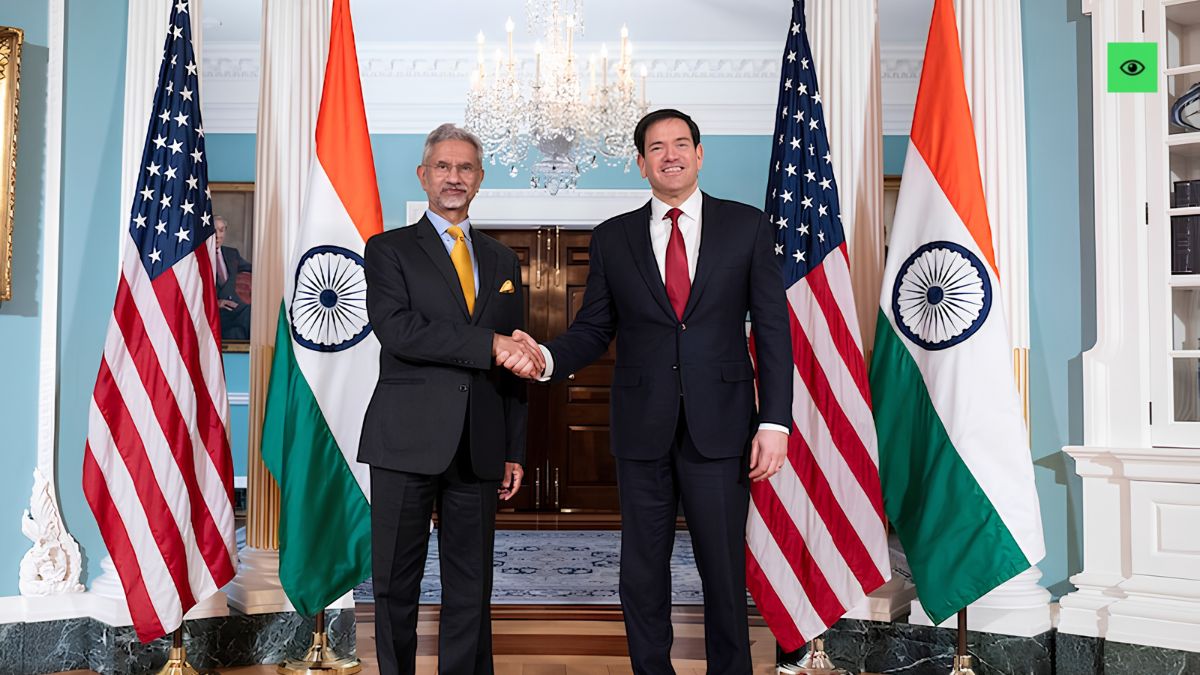
ATLANTA, 31st Oct: India and the United States are keeping their diplomatic channels active. External Affairs Minister S Jaishankar met US Secretary of State Marco Rubio in Atlanta on Saturday, reviewing bilateral cooperation during the G20 Foreign Ministers’ Meeting. The talks come as both countries continue discussions on a proposed trade deal.
India-US relations remain a key focus of the engagement, with Rubio recently assuring New Delhi that Washington’s ties with Pakistan would not come at the expense of its relationship with India.
India-US Relations: Jaishankar and Rubio Review Cooperation
The meeting between S Jaishankar and Marco Rubio took place on the sidelines of the G20 Foreign Ministers’ Meeting in Atlanta.
Jaishankar shared details of the interaction on X, thanking Rubio for his hospitality and confirming that the two leaders reviewed bilateral cooperation.
“Appreciated @SecRubio’s hospitality in Atlanta for the @g20org FMM. Took stock of our bilateral cooperation,” Jaishankar said.
The meeting followed Rubio’s official visit to India from October 20 to 22. During the visit, the US secretary of state met Jaishankar and discussed the proposed India-US trade deal.
The Atlanta engagement provided another opportunity for the two sides to assess their relationship and discuss the progress of existing cooperation.
The diplomatic exchanges also come against the backdrop of continuing discussions on trade, with both governments working towards an agreement.
Rubio’s India Visit: Trade Deal Remains a Priority
Rubio arrived in Mumbai on October 20 and concluded his three-day official visit on October 22.
His discussions with Jaishankar included the proposed India-US trade deal, which remains a significant component of bilateral economic engagement.
Rubio had earlier indicated that India and the United States were “very close” to finalising the agreement, with only a few items left to be resolved.
That statement offered an indication of the progress made in negotiations, although the agreement has not been finalised in the details provided.
The latest meeting in Atlanta is therefore significant in the context of continued diplomatic engagement.
Trade negotiations require sustained discussions, and the two sides have continued to engage at the highest levels.
For India, the proposed agreement remains an important part of its economic relationship with the United States. For Washington, maintaining engagement with New Delhi is also reflected in Rubio’s repeated references to bilateral cooperation.
Rubio’s Assurance on Pakistan and India-US Ties
Rubio also addressed concerns about Washington’s relationship with Pakistan during his recent engagement with Indian media.
Asked whether the United States was returning to the pattern of the 1970s, when then-president Richard Nixon and his national security adviser Henry Kissinger tilted towards Pakistan, Rubio rejected the suggestion that relations with Islamabad would come at the expense of India.
In an interview with The Indian Express, Rubio said the United States did not view its relationship with India in those terms.
“What everyone should be assured of in India is that our relationship, not just with Pakistan but with any country in the world, will never come at the expense of our relationship. We don’t view it that way in our relationship with India,” he said.
The statement directly addressed concerns about the balance of US relations in South Asia.
Rubio also pointed to his visits to India, Washington’s commitment to the proposed trade deal and ongoing engagements as evidence of the relationship between the two countries.
His remarks offered a clear diplomatic assurance, even as the United States maintains relations with several countries across the region.
Jaishankar Holds Talks With EU, Germany and Brazil
The G20 Foreign Ministers’ Meeting also gave Jaishankar an opportunity to engage with several other international counterparts.
He met European Union foreign policy chief Kaja Kallas, with discussions covering the Ukraine conflict and tensions in the Gulf.
“Discussed the Ukraine conflict and the Gulf situation with EU HRVP @kajakallas,” Jaishankar said.
The discussions reflected the importance of regional conflicts and international security issues in the G20 diplomatic agenda.
Jaishankar also met German Foreign Minister Johann Wadephul.
“Great to meet FM Johann Wadephul of Germany. Always look forward to my discussions with @AussenMinDE,” he said.
His meeting with Brazilian Foreign Minister Mauro Vieira covered bilateral and global issues.
“A pleasure to sit down with FM Mauro Vieira of Brazil. Our conversation covered bilateral and global issues,” Jaishankar said.
The meetings allowed India to maintain engagement with key partners across Europe and Latin America.
Mexico, Canada and Argentina Also Feature in Talks
Jaishankar’s diplomatic engagements in Atlanta extended to Mexico, Canada and Argentina.
His meeting with Mexican Foreign Minister Roberto Velasco Álvarez focused on giving fresh momentum to bilateral ties.
“My meeting with FM Roberto Velasco Álvarez @r_velascoa of Mexico was focussed on giving a new impetus to our ties,” Jaishankar said.
The minister also met Canadian Foreign Minister Anita Anand to review bilateral cooperation.
“Delighted to meet FM @AnitaAnandMP of Canada today. Assessed the steady growth of our cooperation,” he said.
Jaishankar’s discussion with Argentine Foreign Minister Pablo Quirno covered a wider range of issues.
The two sides discussed trade, critical minerals, defence and nuclear cooperation, along with multilateral issues.
“Glad to meet FM Pablo Quirno @pabloquirno of Argentina on the sidelines of @g20org #Atlanta. Discussed trade, critical minerals, defence and nuclear cooperation. Also spoke about multilateral issues,” Jaishankar said.
The range of subjects under discussion highlights the breadth of India’s diplomatic engagement with different regions.
The Bigger Picture: India’s G20 Diplomatic Engagement
The Atlanta meetings brought together several strands of India’s foreign policy engagement.
The interaction with Rubio focused on bilateral cooperation and followed discussions on the proposed trade deal. Jaishankar’s meetings with other counterparts addressed regional conflicts, economic cooperation, defence, critical minerals and multilateral issues.
These engagements also provided an opportunity to review existing partnerships and discuss areas where cooperation could be expanded.
The G20 Foreign Ministers’ Meeting served as a platform for India to engage with major international partners while discussing developments affecting regional and global stability.
The India-US relationship remains one of the key areas of focus, particularly as both sides continue trade discussions and seek to maintain regular diplomatic engagement.
For now, the Atlanta meeting adds another chapter to the ongoing dialogue between New Delhi and Washington.
India-US relations should be judged by sustained cooperation, not diplomatic soundbites. Rubio’s assurance that Washington’s ties with Pakistan will not come at India’s expense is important, but statements alone cannot settle every concern New Delhi may have. The proposed trade deal is a more concrete test of the relationship. Both countries have indicated that negotiations are close to completion, and the focus should now remain on resolving the remaining issues.

Any Comments?