
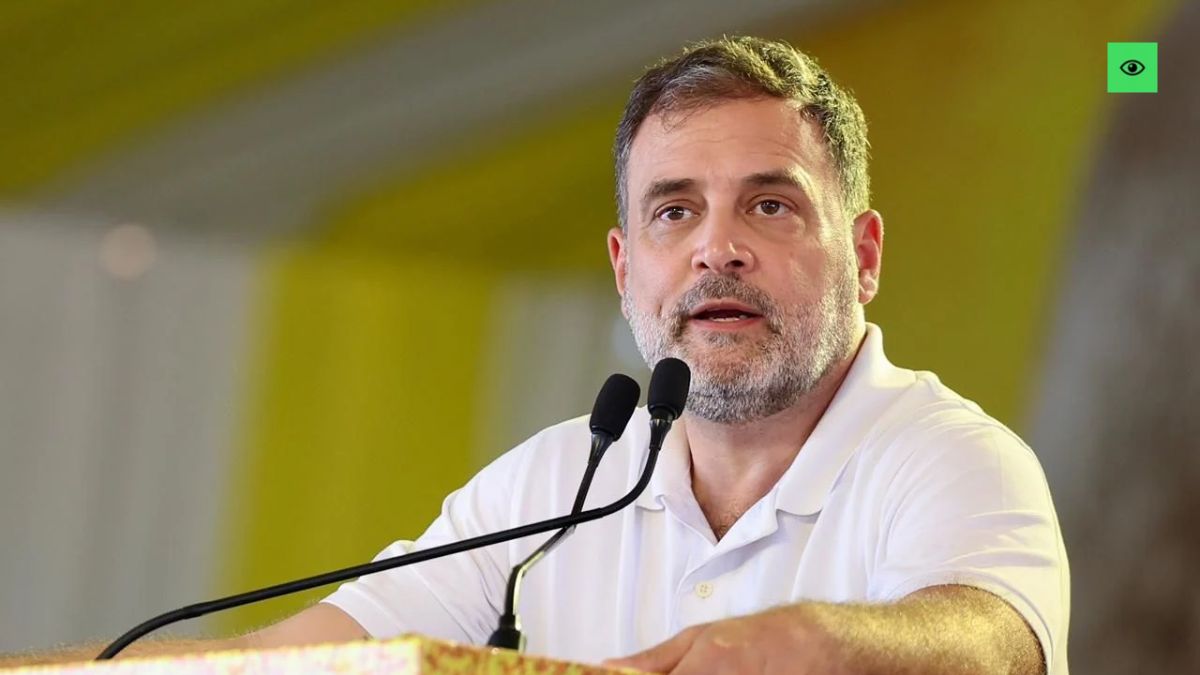
NEW DELHI, 29th Oct: Rahul Gandhi has called on citizens across political affiliations to join the November 1 march at Delhi’s Ramlila Maidan, as the Opposition INDIA bloc intensifies its campaign over alleged electoral manipulation. The protest will focus on voter roll revisions, the Election Commission’s accountability and concerns about the protection of India’s democratic institutions.
The Congress leader has described the planned march as a movement extending beyond party politics. Meanwhile, Opposition leaders are preparing a symbolic impeachment of Chief Election Commissioner Gyanesh Kumar, taking their dispute with the poll body from Parliament into the public arena.
Rahul Gandhi’s Ramlila Maidan March: What Is at Stake?
In a video message shared on X, Gandhi urged people from different political backgrounds to participate in the November 1 demonstration.
He said the march was not the campaign of a single political party but a collective effort to defend democracy and the Constitution.
Gandhi also appealed directly to student organisations, asking them to participate irrespective of their political affiliations. His message focused on freedom of expression, independent thinking and the role citizens play in protecting constitutional principles.
Addressing concerns about possible police action, Gandhi said participants should not be discouraged by the prospect of a police response.
His appeal comes amid the Opposition’s allegations of “vote theft” and its criticism of the Election Commission of India’s Special Intensive Revision (SIR) of electoral rolls.
These remain contested political claims. The Opposition has raised concerns about alleged irregularities and voter deletions, while the Election Commission’s role and procedures remain central to the dispute.
INDIA Bloc Plans Symbolic Impeachment of CEC Gyanesh Kumar
Before the public rally, Opposition leaders plan to stage symbolic impeachment proceedings against Chief Election Commissioner Gyanesh Kumar on October 30.
Congress president Mallikarjun Kharge convened Opposition leaders in Delhi to coordinate the programme. According to the supplied account, the event is scheduled for 3.30 pm at Kharge’s official residence, 10, Rajaji Marg.
The programme is expected to recreate a parliamentary session, with participants assigned roles on the Treasury and Opposition benches. Around 40 speakers are expected to take part.
Congress MPs Akhilesh Prasad Singh and Deepender Singh Hooda, along with Trinamool Congress MPs Mahua Moitra and Kalyan Banerjee, are among those expected to speak from the Treasury benches.
Former Lok Sabha Speaker Meira Kumar is expected to chair the proceedings. Rahul Gandhi and Mallikarjun Kharge are also likely to address the gathering.
Congress leaders Priyanka Gandhi Vadra, KC Venugopal, Jairam Ramesh, Pawan Khera and Gaurav Gogoi were among those involved in consultations, alongside representatives of other Opposition parties.
The event is intended to draw public attention to the Opposition’s allegations against the Election Commission. It is a political demonstration, not a constitutional proceeding capable of removing the CEC.
The Constitutional Limits of a Symbolic Impeachment
There is an important distinction between political protest and a formal constitutional process.
Article 324(5) of the Indian Constitution provides that the Chief Election Commissioner can be removed in the same manner and on the same grounds as a judge of the Supreme Court.
A mock parliamentary session or symbolic impeachment cannot itself remove the CEC from office. Any actual removal must follow the applicable constitutional procedure.
That distinction matters. Political parties can publicly challenge an institution, question its decisions and demand accountability. However, the legal consequences of such demands depend on constitutional provisions, not on the format of a political event.
Congress general secretary Jairam Ramesh has accused Kumar of violating constitutional principles and undermining electoral democracy. Ramesh has also alleged that the CEC misled the Supreme Court. These are allegations made by Congress, not established findings presented in the supplied account.
SIR Controversy Drives Opposition Campaign
The Special Intensive Revision of electoral rolls has become a major point of contention between the Opposition and the Election Commission.
Congress and its allies have questioned the process, raising concerns about voter deletions and alleged irregularities. They argue that the integrity of electoral rolls is central to ensuring that eligible citizens can exercise their voting rights.
The dispute also reflects a broader political confrontation over the Election Commission’s independence, accountability and handling of electoral processes.
Electoral roll revisions are an administrative exercise, but their implementation can have significant consequences for voters. Questions about inclusion, deletion, verification and transparency therefore require clear procedures and credible explanations.
For the Opposition, the November 1 march offers an opportunity to take these concerns directly to the public. For the Election Commission, the broader debate underscores the importance of transparent processes and public confidence in electoral administration.
Venue Dispute Adds to Political Tensions
The disagreement has also affected arrangements for the Opposition’s planned programme.
Congress alleged that its attempts to secure alternative venues for the October 30 event were obstructed. The party subsequently shifted the symbolic proceedings to Kharge’s official residence.
The November 1 rally is scheduled at Ramlila Maidan from 10 am to 5 pm. According to the supplied account, Delhi Police issued a no-objection certificate from the law-and-order perspective, subject to permission from the land-owning authority and compliance with conditions, including a prohibition on overnight stays.
The arrangements highlight the logistical requirements involved in organising large political demonstrations in the national capital. Venue permissions, public safety and compliance with administrative conditions remain relevant to the event.
What Happens Next?
The October 30 symbolic proceedings and the November 1 march represent two stages of the INDIA bloc’s campaign against alleged electoral manipulation.
The first is designed to draw attention to the Opposition’s allegations against the Chief Election Commissioner. The second aims to bring together political workers, students and members of the public at Ramlila Maidan.
Whether the demonstrations lead to further institutional action remains to be seen. Their immediate purpose is to amplify the Opposition’s demands and bring the dispute over electoral rolls and the Election Commission into wider public discussion.
For citizens, the central issues are concrete: how electoral rolls are revised, how eligible voters are protected from wrongful exclusion, and how complaints about electoral administration are investigated.
Political demonstrations can bring these questions into the public domain. Resolving them, however, requires evidence, transparent procedures and appropriate constitutional mechanisms.
The debate over electoral integrity is bigger than one rally or one political party. Its credibility ultimately depends on whether allegations are examined carefully, institutional decisions can withstand scrutiny, and citizens can understand how their electoral rights are protected.
Electoral integrity cannot be reduced to a political slogan. It requires reliable voter rolls, transparent revision procedures and credible mechanisms for investigating complaints. The INDIA bloc’s campaign brings these issues into public view, but a protest alone cannot establish whether electoral manipulation occurred. That requires evidence and scrutiny.
The distinction between a symbolic impeachment and a constitutional removal process is equally important. Political parties have the right to criticise public institutions and demand accountability, but legal outcomes must follow the Constitution. The same standard should apply to every allegation, regardless of who makes it. The priority should be straightforward: protect eligible voters, examine claims fairly, and ensure that electoral procedures are transparent enough to earn public confidence.

Any Comments?