
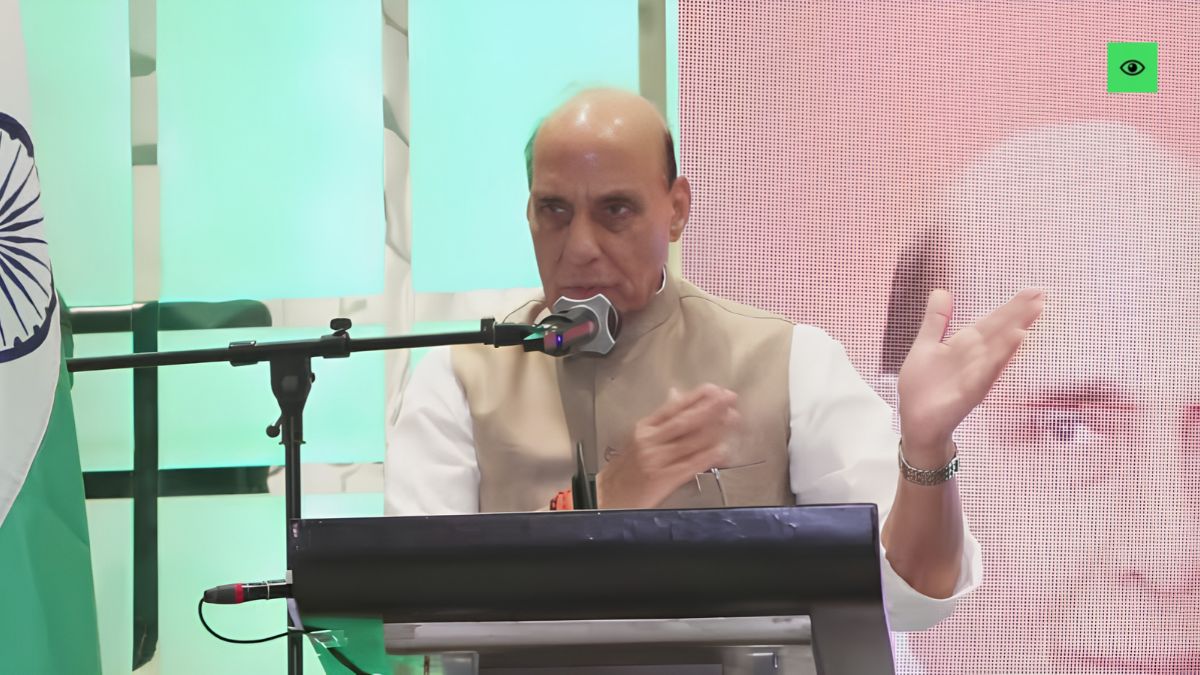
PHILIPPINES, 28th Oct: India does not provoke others, but it will respond firmly when challenged. Defence Minister Rajnath Singh delivered that message during his visit to Cebu in the Philippines, while highlighting India’s growing defence capabilities, expanding global influence and stronger international partnerships. His participation in ADMM-Plus 2026 also brought India’s defence diplomacy in Southeast Asia into focus.
India’s message is clear: national security, economic growth and strategic partnerships must advance together.
Rajnath Singh’s Philippines Visit Puts Defence Preparedness in Focus
Addressing members of the Indian community in Cebu, Singh said India’s global standing and defence preparedness had strengthened. He invoked Operation Sindoor to underline the country’s response to security threats, asserting that India would not provoke another nation but would act firmly if provoked.
“India is no longer weak,” Singh said, stressing that the country’s defence preparedness had grown.
The remarks reflect the government’s emphasis on deterrence and the ability to respond to security challenges. Singh also highlighted India’s growing international recognition, pointing to the highest civilian honours awarded to Prime Minister Narendra Modi by the leadership of 35 countries.
His message extended beyond military capability. Singh presented India as a country seeking stronger international cooperation while maintaining the capacity to defend its national interests.
BrahMos Missile Strengthens India-Philippines Defence Cooperation
One of the key developments highlighted during Singh’s address was the Philippines’ acquisition of the BrahMos missile system from India.
The acquisition represents an important element of bilateral defence cooperation. It also illustrates how India’s defence partnerships are expanding beyond traditional relationships, with Southeast Asian countries becoming significant partners in regional security.
For India, defence cooperation involves more than military equipment. It also creates opportunities for deeper strategic engagement, closer institutional ties and sustained collaboration between partner countries.
The Philippines occupies an important position in Southeast Asia and the wider Indo-Pacific. Stronger defence engagement with Manila therefore fits into India’s broader efforts to build relationships across the region.
India and Japan Explore New Defence Cooperation Opportunities
Singh’s diplomatic schedule in Cebu included a meeting with Japanese Defence Minister Shinjiro Koizumi on the sidelines of the 13th ASEAN Defence Ministers’ Meeting-Plus.
In a post on X, Singh said the two ministers had held productive discussions on ongoing bilateral defence cooperation and explored new avenues to strengthen the India-Japan Special Strategic and Global Partnership.
He also emphasised their shared commitment to a free, open and peaceful Indo-Pacific region.
The meeting followed Singh’s bilateral discussions with US Secretary of War Pete Hegseth and Australian Defence Minister Richard Marles. He was also scheduled to meet counterparts from the Philippines, Singapore, Vietnam and South Korea.
These engagements highlight the importance India attaches to defence diplomacy. Regional security challenges cannot be addressed through military preparedness alone. Communication, cooperation and sustained engagement between governments also matter.
What Is ADMM-Plus and Why Does It Matter to India?
The ASEAN Defence Ministers’ Meeting-Plus is a regional platform designed to strengthen defence and security cooperation between ASEAN member states and eight dialogue partners, including India, the United States, China, Russia, Japan, South Korea, Australia and New Zealand.
The wider ASEAN framework includes Brunei, Cambodia, Indonesia, Laos, Malaysia, Myanmar, the Philippines, Singapore, Thailand, Timor-Leste and Vietnam.
India became an ASEAN dialogue partner in 1992. The inaugural ADMM-Plus meeting took place in Hanoi, Vietnam, on October 12, 2010. Since 2017, defence ministers have met annually to strengthen cooperation among participating countries.
The Philippines is chairing ADMM-Plus in 2026.
India is also co-chairing the Experts Working Group on Counter-Terrorism with Malaysia for the 2024-2027 cycle.
This engagement aligns with India’s Act East policy, which seeks to deepen economic, strategic and institutional relationships with Southeast Asia. Participation in ADMM-Plus gives India a platform to discuss regional security issues and build cooperation with countries that have different strategic priorities.
India’s Economic Progress Features in Singh’s Address
Singh also highlighted India’s economic position, saying the country ranked fifth globally and expressing confidence that it would move into the top three economies.
He said the crisis in West Asia had affected the pace of India’s economic progress, while maintaining that the country’s rise among the world’s largest economies was inevitable.
His address also cited developments in education, entrepreneurship and aviation.
According to figures presented by Singh, India had established 490 universities. He said the number of unicorns had increased from four before the current government came to power to 125, while the startup ecosystem had expanded from around 100 startups to thousands. He also put the number of operational airports at 160.
These figures formed part of Singh’s broader argument that India’s development extends beyond defence. Economic capacity, technological progress and a growing entrepreneurial ecosystem contribute to the country’s overall national strength.
Financial Inclusion and Governance Remain on the Agenda
Singh addressed corruption and the delivery of government benefits, acknowledging that corruption had not been completely eliminated but asserting that concerted efforts had significantly curbed it.
He highlighted Jan Dhan bank accounts as a mechanism for transferring government benefits directly to citizens, including farmers, women and young people.
Direct benefit transfers and financial inclusion have become important elements of India’s approach to public service delivery. Singh presented these measures as evidence of the government’s efforts to improve access to financial services and make welfare transfers more direct.
He also referred to the security situation in Jammu and Kashmir, claiming that the number of active terrorists had declined from 228 before the current government took charge to approximately 40 to 45.
These remarks connected domestic governance and internal security with the broader theme of national preparedness.
India’s Indo-Pacific Strategy Moves Through Partnerships
Singh’s visit to Cebu brought together several strands of India’s foreign and defence policy: military preparedness, bilateral cooperation, counter-terrorism and regional engagement.
The BrahMos acquisition by the Philippines and discussions with Japan underline the practical dimension of these relationships. The ADMM-Plus platform provides a broader setting in which participating countries can address shared security concerns.
India’s approach also reflects the importance of maintaining working relationships across a region that includes countries with differing interests and strategic positions.
The challenge is to turn diplomatic engagement into sustained cooperation. Meetings establish priorities, but implementation, regular dialogue and tangible outcomes determine whether partnerships deliver long-term value.
Conclusion
Rajnath Singh’s Philippines visit highlighted India’s efforts to strengthen its defence preparedness while expanding cooperation across Southeast Asia and the wider Indo-Pacific.
From the BrahMos missile system acquired by the Philippines to discussions with Japan and other regional partners, the visit placed defence diplomacy at the centre of India’s regional engagement.
Singh also used the opportunity to highlight economic growth, financial inclusion and domestic security measures.
The larger takeaway is straightforward. India wants to strengthen its ability to protect its interests while building partnerships that contribute to regional peace and stability. The next test lies in translating these commitments into measurable results.
India’s defence strategy increasingly depends on two capabilities working together: the ability to protect national interests and the ability to build meaningful partnerships. Rajnath Singh’s Philippines visit illustrates both priorities. The BrahMos missile acquisition by the Philippines gives bilateral defence cooperation a practical dimension, while discussions with Japan and other regional partners strengthen the diplomatic framework around regional security.

Any Comments?