
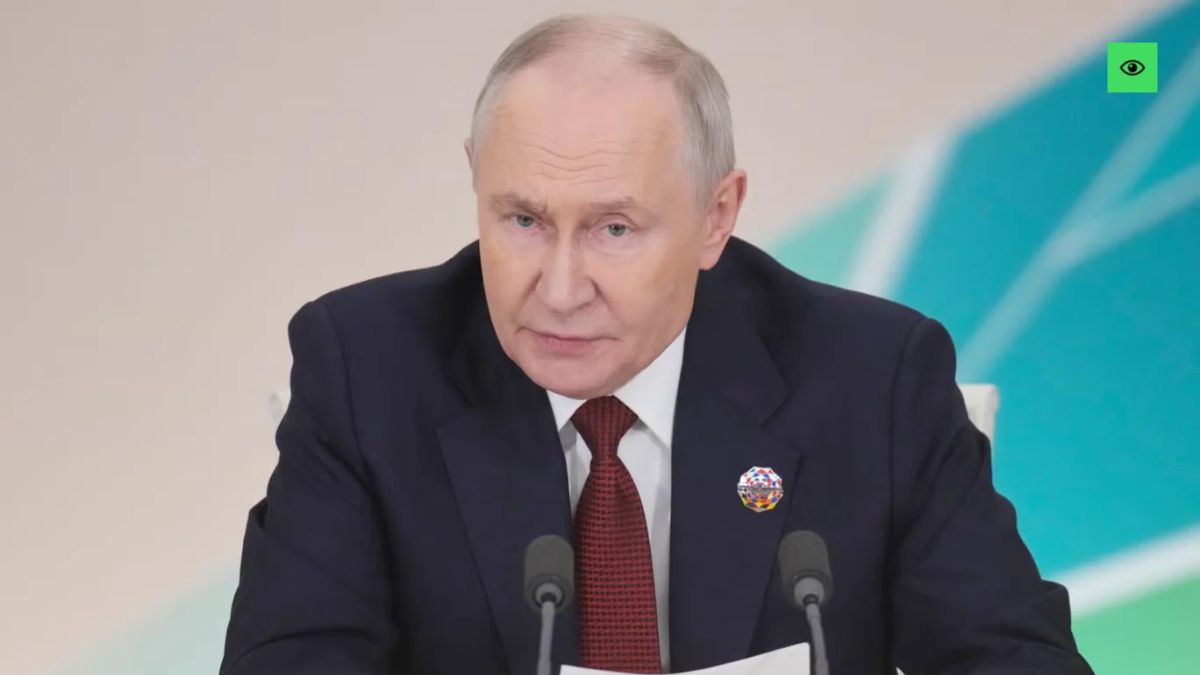
MOSCOW, 30th Oct: Russia is prepared for a potential war with Europe, but Vladimir Putin insists Moscow does not want one. His latest warning comes at a particularly sensitive moment, with the Ukraine conflict continuing, diplomatic divisions emerging within Europe and fresh concerns surrounding security in the Baltic Sea.
The message from the Kremlin is difficult to ignore. Putin has warned that any confrontation escalating beyond control would leave no winners. Meanwhile, direct diplomatic engagement with Moscow by Finland and Norway has exposed differences among European leaders over how to approach Russia.
For a continent already dealing with an extended security crisis, the timing matters.
Putin’s War Warning: Russia Says It Is Ready for Europe
Russian President Vladimir Putin has made it clear that Moscow considers itself prepared for a potential military confrontation with Europe, although he maintains that Russia has no desire to enter such a war.
Speaking to reporters after hosting a summit with African leaders, Putin discussed Russia’s relations with European countries and his recent telephone conversation with Finnish President Alexander Stubb and Norwegian Prime Minister Jonas Gahr Stoere.
“We are ready, but we want no war with Europe,” Putin said.
He added that countries seeking confrontation should prepare for the consequences, warning that an escalation could leave all sides without a victory.
Putin also argued that attempts to inflict a strategic defeat on Russia had not achieved their objective.
His remarks carried two messages. Moscow wants to keep diplomatic channels open, but it also wants European governments to understand that Russia considers itself prepared for a wider confrontation.
Finland and Norway’s Direct Talks With Putin Trigger European Disagreement
The Russian president’s comments followed a politically significant diplomatic engagement involving Finland and Norway.
Finnish President Alexander Stubb and Norwegian Prime Minister Jonas Gahr Stoere held what Stoere described as frank and substantive discussions with Putin.
The conversations reportedly focused on the importance of de-escalation and the continuing conflict in Ukraine.
Both leaders also reiterated their support for Kyiv.
However, their decision to speak directly with the Russian president did not receive universal approval across Europe.
Danish Prime Minister Mette Frederiksen and other European counterparts reportedly expressed concerns about the move, stressing the importance of maintaining a united European position on Ukraine.
Swedish Prime Minister Ulf Kristersson also indicated that other European leaders had not been informed about the discussions.
This disagreement highlights a significant diplomatic question facing Europe.
Should governments maintain direct communication with Moscow despite the continuing conflict, or should they prioritise a coordinated approach that prevents individual countries from moving independently?
The discussions involving Finland and Norway have brought that question back into focus.
Baltic Sea Becomes Another Flashpoint in Russia-Europe Tensions
Putin’s warning was not limited to the possibility of a military confrontation.
He also raised concerns about navigation and communication restrictions in the Baltic Sea, suggesting that the region should not experience a situation resembling the Strait of Hormuz.
The Russian president said Moscow wanted unrestricted navigation in the Baltic Sea and warned that Russia would respond to any challenge.
His comparison with the Strait of Hormuz is particularly significant because the waterway has become a major point of international concern amid the US-Iranian conflict.
By raising the issue, Putin has brought maritime security into the broader discussion about Russia’s relations with European countries.
The Baltic Sea remains an important geographical and strategic area for the region.
Any deterioration in relations surrounding navigation, shipping or maritime access could add another dimension to already strained relations between Moscow and European capitals.
Europe Faces Growing Pressure to Support Ukraine
While Putin has spoken about the possibility of restoring relations with Europe, the financial and military requirements of Ukraine remain central to the continent’s security debate.
Former UK Chancellor Rachel Reeves has urged the European Union to take control of approximately £175 billion in frozen Russian assets to help Ukraine defend itself against Russian aggression.
In her first major intervention since leaving government, Reeves argued that the time had come for Brussels to act.
Her appeal comes as Ukraine faces significant funding challenges and the prospect of another difficult winter.
She also raised concerns about US President Donald Trump’s efforts to pressure Kyiv towards reaching an agreement with Moscow.
The debate over frozen Russian assets reflects a larger question: how should European governments finance Ukraine’s defence while maintaining pressure on Russia?
The issue is becoming increasingly important as the conflict continues without a comprehensive settlement.
Britain Warns of a Potential Future Conflict
The security debate is not restricted to Eastern Europe.
Britain has also been discussing its preparedness for a possible future confrontation.
UK Defence Secretary Wes Streeting has warned that the country must be prepared for war within the next 1,000 days.
In a separate warning, he indicated that Britain’s adversaries could potentially be ready to attack the country by 2030.
The British government has also advised citizens to maintain basic emergency supplies, including tinned food and bottled water.
These developments reflect growing attention towards national preparedness and the possibility of a more challenging European security environment.
For governments across the continent, defence planning is no longer limited to military deployments. Civilian preparedness, infrastructure resilience and financial support for Ukraine are also becoming part of the discussion.
Deadly Russian Drone Attack Hits Trains in Ukraine
Even as diplomatic conversations continue, the fighting in Ukraine remains devastating.
A Russian jet-powered drone struck two trains at a railway station in the central Ukrainian city of Dnipro on Thursday, October 29.
Initial reports cited by Ukrainian officials said at least 13 people had been killed and 10 injured.
Ukrainian President Volodymyr Zelenskyy described the incident as a horrific attack, saying the drone struck a platform where passenger trains were standing.
Subsequent reports on Thursday revised the casualty figures to at least 14 dead and 14 injured. AFP+1
The attack underlines the continuing human cost of the conflict, even as diplomatic initiatives and discussions about possible de-escalation remain active.
Meanwhile, Russia and Ukraine have reportedly maintained a local ceasefire in and around the occupied southern city of Oleshky since Tuesday.
Previous attempts to establish ceasefires have either failed to materialise or collapsed shortly after implementation.
What Putin’s Warning Means for Europe’s Security
Putin’s latest remarks come at a time when Europe is balancing several competing priorities.
On one side, there is the need to maintain support for Ukraine and strengthen collective security. On the other, some European leaders appear interested in keeping diplomatic communication with Moscow open.
The conversations involving Finland and Norway demonstrate that direct engagement remains an option, even when it creates disagreements among European partners.
The Baltic Sea adds another strategic dimension, while Britain’s warnings about future preparedness suggest that concerns about a wider confrontation extend beyond countries directly bordering Russia.
However, Putin’s statement that Russia is prepared for war should not automatically be interpreted as confirmation that a conflict with Europe is imminent.
His remarks are a warning about Moscow’s stated position, not evidence that a wider war has been decided.
For now, the challenge for European governments remains clear: maintain security, manage diplomatic disagreements and prevent the Ukraine conflict from escalating into something considerably larger.
A war between Russia and Europe would carry consequences far beyond the battlefield. As Putin himself has acknowledged, such a confrontation could leave everyone without a winner.
And that is precisely the outcome European diplomacy must work to prevent.
Putin’s war warning deserves attention, but it also deserves careful interpretation. There is a difference between a country declaring military preparedness and announcing an intention to start a war. Confusing the two does little to improve public understanding.
Europe faces a difficult diplomatic calculation. Maintaining communication with Moscow may help preserve channels for negotiation, while collective coordination remains important when dealing with a conflict that affects the entire continent. The disagreement surrounding Finland and Norway’s conversations with Putin illustrates this tension.
The larger issue is preventing escalation. Supporting Ukraine, strengthening preparedness and keeping diplomatic communication functional are not necessarily competing objectives. European governments need to consider all three. Because once a regional conflict expands into a direct confrontation between Russia and Europe, the consequences would extend well beyond the countries involved. Strategic restraint is not weakness. It is a practical necessity.

Any Comments?