
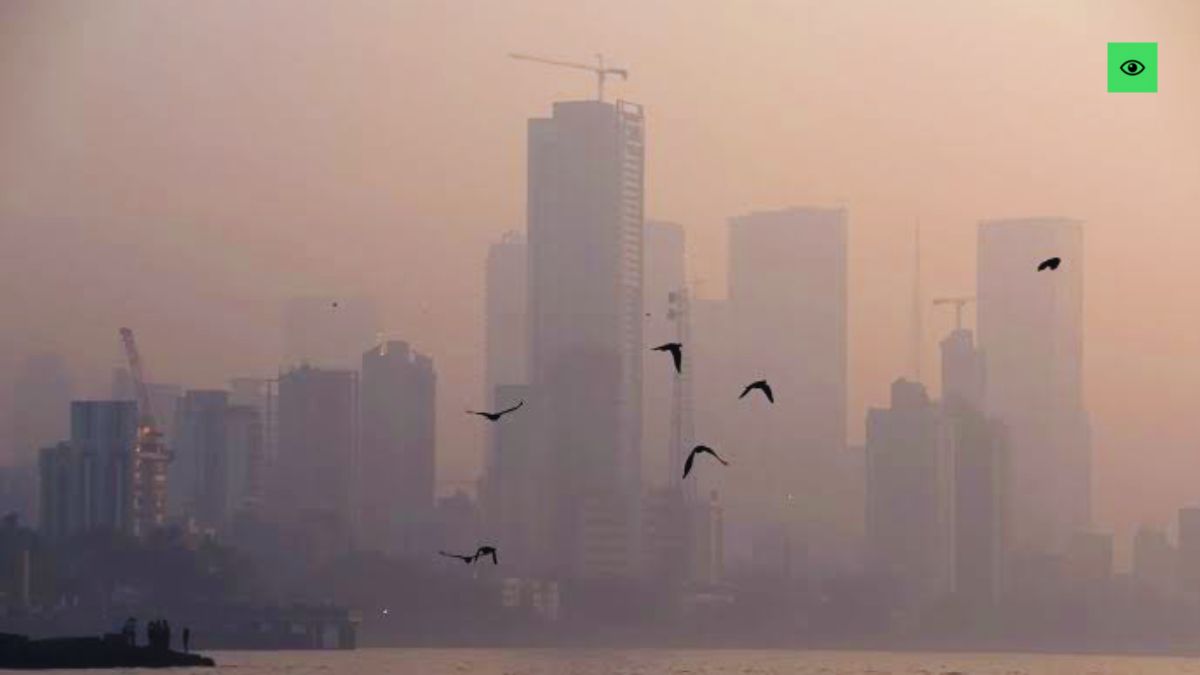
MUMBAI, 22nd Oct: Mumbai’s pollution levels have triggered a sharp warning from the Bombay High Court. The court has banned firecrackers on public roads, streets and footpaths, questioned the failure of enforcement agencies and demanded accountability from senior civic and police officials.
The court has also directed the Brihanmumbai Municipal Corporation (BMC) Commissioner and Mumbai Police Commissioner to submit an affidavit by October 26, explaining how the restrictions will be enforced.
The message is clear: festival celebrations cannot become an excuse to ignore pollution rules.
Bombay High Court Firecracker Ban: What Are the 5 Key Orders?
The Bombay High Court has issued a series of directions to address violations involving firecrackers, loudspeakers and noise pollution during festivals. Its latest intervention places the responsibility for enforcement firmly on civic authorities, pollution control officials and the police.
Here are five important directions from the court.
1. Firecrackers banned on public roads and footpaths
The High Court has prohibited the bursting of firecrackers on public roads, streets and footpaths in Mumbai.
The direction targets the use of busy public spaces for fireworks, an activity the bench said had continued despite earlier court orders. The court expressed displeasure over the failure to control such violations.
The restriction means public roads and pedestrian footpaths cannot be treated as designated spaces for bursting firecrackers.
Authorities are expected to enforce the ban rather than merely issue instructions that go unimplemented.
2. Complete firecracker ban in silence zones
The court has also ordered a complete ban on firecrackers in silence zones.
These areas include locations around hospitals, government offices, courts and schools. Such spaces require protection from excessive noise, particularly where people need quiet for medical care, official work or education.
The order reinforces the need to respect restrictions in designated silence zones during festivals.
However, the court’s directions should not be interpreted as a blanket ban on all firecrackers throughout Mumbai. The restrictions described in the proceedings concern public roads, streets, footpaths and silence zones.
3. BMC and Mumbai Police chiefs must submit an affidavit
The High Court has directed the BMC Commissioner and Mumbai Police Commissioner to submit an affidavit by October 26.
The affidavit must explain how the prohibition on bursting firecrackers in public spaces will be strictly enforced.
This requirement places senior officials under direct judicial scrutiny. It also shifts the focus from announcements and assurances to the practical question of implementation.
The court wants authorities to explain the enforcement arrangements, not simply repeat the restrictions.
For Mumbai residents, the central issue is whether these directions translate into visible action on the streets.
4. Police must prepare an enforcement plan
The court has directed authorities to prepare a Standard Operating Procedure (SOP) for taking action against people who violate the restrictions.
The Police Commissioner has also been asked to convene a meeting with senior officers from police stations across Mumbai to communicate the details of the ban.
A clear enforcement procedure can establish how officers should respond to violations and coordinate action.
The court’s concern is not limited to the existence of rules. It has questioned why repeated violations continue despite judicial directions.
Without effective enforcement, even a well-defined restriction risks becoming little more than a formal announcement.
5. Loudspeaker permissions and noise limits must be enforced
The High Court has directed authorities to implement its September 22 order concerning processions that use loudspeakers.
Under that order, processions using loudspeakers must clearly display the official police permission granted for their use.
The court also criticised the failure to ensure that prior permission is obtained for music systems used during processions, with undertakings to comply with prescribed decibel limits.
The issue extends beyond firecrackers. Noise from loudspeakers and music systems during festivals has also drawn the court’s attention.
Authorities must enforce the applicable rules governing permissions and sound levels instead of allowing repeated violations to continue unchecked.
‘This Is Shocking’: High Court Questions Mumbai’s Pollution
The bench of Justice Girish S Kulkarni and Justice Neela Gokhale expressed concern over Mumbai’s air pollution, particularly given the city’s coastal location and access to sea breezes and open spaces.
The judges questioned why Mumbai was experiencing such pollution despite these geographical characteristics.
“This is shocking,” the bench said while urging authorities to ensure that Mumbai’s skies remain clear.
The court’s remarks reflect concern over the city’s air quality and the effectiveness of measures intended to control pollution during the festive season.
According to the figures cited in the reports, Mumbai’s Air Quality Index (AQI) remained between 150 and 200 over the preceding week, based on data attributed to aqi.in. That range is considered unhealthy under the US AQI scale.
AQI classifications can vary across monitoring systems, so the measurement scale matters when interpreting such figures.
The reported readings nevertheless added urgency to the court’s concerns about pollution control and the enforcement of existing restrictions.
BMC and MPCB Face Questions Over Public Awareness
The court also reprimanded the BMC and the Maharashtra Pollution Control Board (MPCB) for failing to conduct public awareness campaigns about the prohibition on bursting firecrackers in public spaces.
Public awareness is an important part of enforcement. Residents need to understand where restrictions apply, while officials need clear procedures for responding to violations.
But awareness campaigns alone cannot solve the problem if rules are ignored on the ground.
The bench questioned how enforcement officers could sleep peacefully while lakhs of citizens were facing what it described as an emergency situation caused by pollution.
The criticism placed the performance of civic authorities, the pollution control board and the police under scrutiny.
The court’s intervention highlights a basic administrative responsibility: rules must be communicated, monitored and enforced consistently.
Why the Bombay High Court Firecracker Ban Matters
The Bombay High Court firecracker ban matters because it addresses two related public concerns: air pollution and excessive noise during festivals.
Firecrackers contribute to short-term air pollution, while loudspeakers and amplified music can create noise that affects residents, patients, students and people working in silence zones.
Mumbai’s density makes enforcement particularly important. A restriction that works only on paper offers little protection to people exposed to pollution in public spaces.
The court has therefore sought accountability from the officials responsible for implementing its directions.
The October 26 affidavit deadline creates a specific requirement for the BMC and Mumbai Police leadership to explain their enforcement arrangements. The order also calls for coordination among police stations and a defined procedure for dealing with violations.
The outcome will depend on implementation. Meetings, affidavits and written procedures can establish accountability, but their value ultimately rests on what happens when officers encounter violations.
What Mumbai Residents Should Know
Residents should distinguish between the restrictions specifically described in the court’s directions and a citywide prohibition on every form of firecracker use.
The orders described here prohibit firecrackers on public roads, streets and footpaths, and impose a complete ban in silence zones. The court has also directed stricter enforcement of applicable loudspeaker permissions and noise limits.
Anyone planning festival celebrations should check the current local restrictions and official instructions before using firecrackers or sound systems.
Residents who witness violations can consider reporting them to the relevant local authorities or police. They should avoid confronting alleged violators directly.
The court’s directions place responsibility on public agencies to enforce the rules. Compliance by residents and effective action by authorities are both necessary to reduce avoidable pollution.
Mumbai’s festive calendar should not come at the cost of public health. The challenge now is to turn judicial directions into consistent enforcement across the city.
Mumbai’s pollution problem is not simply about firecrackers. It is also about whether public authorities can enforce the rules already in place.
The Bombay High Court’s directions highlight a familiar administrative weakness: restrictions mean little when violations continue and enforcement remains inconsistent. Requiring the BMC and Mumbai Police commissioners to explain their plans through an affidavit introduces a clear accountability mechanism.
Still, paperwork alone will not deliver cleaner air or quieter streets. Effective enforcement requires coordination, public awareness and action against violations.

Any Comments?