
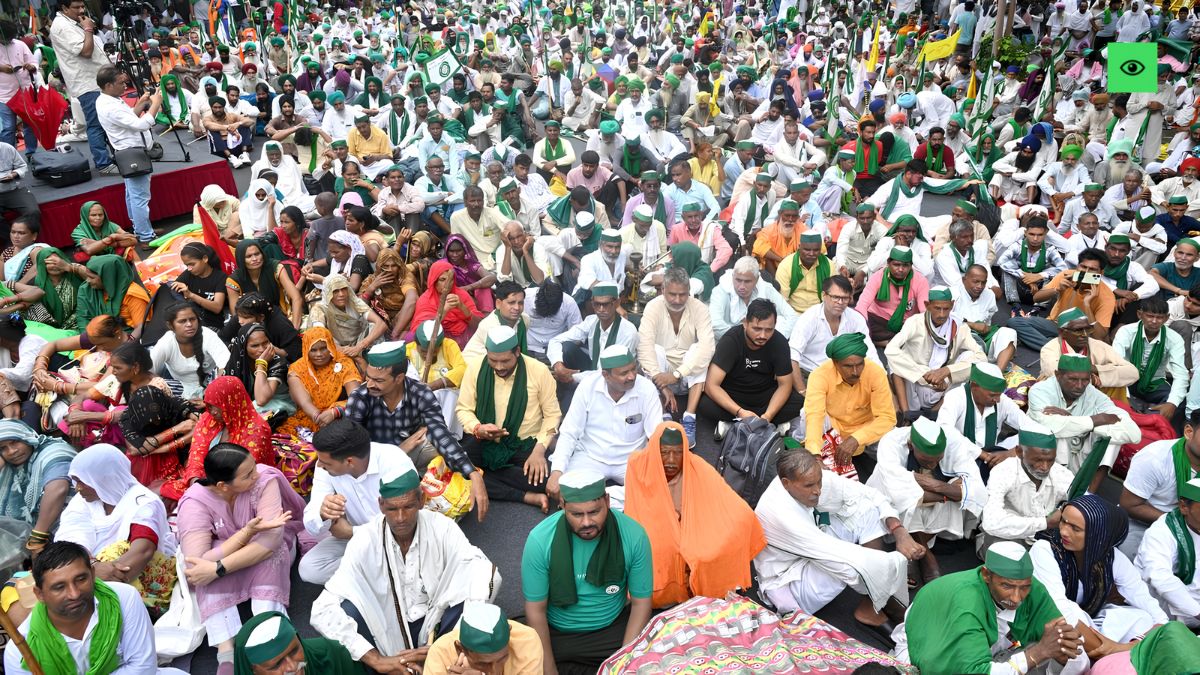
NEW DELHI, 23rd Oct: Delhi witnessed a protest against the Special Intensive Revision (SIR) of electoral rolls on Friday, October 23, 2026, as demonstrators marched towards the Election Commission of India headquarters. Several protesters were detained by Delhi Police amid slogans over alleged voter deletions, demands for accountability and concerns about electoral democracy.
Electoral roll revisions are too important to be reduced to a shouting match between political opponents. Accuracy matters. So does the right of every eligible voter to remain registered and participate in elections.
The Delhi protest against SIR reflects concerns that deserve a transparent, evidence-based response. Allegations of voter deletion must be investigated through verifiable records, not accepted automatically as fact or dismissed simply because political groups raised them.
The Election Commission and other relevant authorities have a responsibility to maintain confidence in the electoral process. Clear explanations, accessible verification procedures and effective mechanisms for correcting errors are essential.
Protests can bring public attention to disputed policies, but attention alone does not settle the facts. The real test is whether concerns are examined fairly, evidence is made available where appropriate, and legitimate grievances receive meaningful answers.
The demonstration brought together students, young people, farmers and political activists, turning the streets of central Delhi into a platform for opposition to the SIR exercise.
Delhi Protest Against SIR: What Happened?
The march began near Gole Dak Khana, at the intersection of Kalibari Marg and Bhai Vir Singh Marg. From there, participants proceeded towards the Election Commission of India headquarters, carrying the national flag and banners representing the People Against SIR collective.
The demonstration was organised by the Delhi Coordination Committee of People Against SIR, a people’s collective campaigning against the electoral roll revision exercise.
Protesters raised slogans including “Gyanesh Kumar, resign”, “Halt SIR” and “Won’t tolerate vote theft”. Their central concern was the alleged deletion of voters from electoral rolls during the revision process.
The demonstration drew participants from different sections of society, including students, young people and farmers. Several political and social organisations also extended their support, reflecting the campaign’s effort to build a broader coalition against the exercise.
The protest follows concerns raised by opposition parties and various organisations over the SIR process and its alleged impact on voters.
Why Are Protesters Opposing SIR?
The Special Intensive Revision of electoral rolls has become a point of contention, with opposition parties and several organisations raising concerns about alleged voter deletions.
Electoral rolls determine who is registered to vote. Any revision exercise therefore carries significant implications for eligible voters, particularly when questions arise about whether names have been removed incorrectly.
The protesters focused their criticism on Chief Election Commissioner Gyanesh Kumar, demanding his resignation and calling for the SIR exercise to be halted.
However, allegations raised at a protest should not be treated as established findings. The demonstration reflected the concerns and political positions of its participants. Determining whether individual voters were wrongly removed requires examination of the relevant electoral records and official explanations.
That distinction matters. Electoral integrity depends on accurate voter lists, transparent procedures and public confidence in the institutions responsible for administering elections.
When citizens question the revision process, the response needs to address the substance of those concerns. Political slogans may draw attention to an issue, but transparency and verifiable evidence are essential to resolving it.
Brinda Karat Joins the Demonstration
Senior CPI(M) leader Brinda Karat joined the protesters, alongside members of the All India Democratic Women’s Association (AIDWA) and the All India Democratic Students’ Organisation (AIDSO), among others.
Speaking to reporters, Karat said, “Our struggle will continue until CEC Gyanesh Kumar resigns”.
CPI leader P Sandosh also participated in the People Against SIR demonstration and warned that the campaign would intensify.
“Our protest will intensify; nobody can save Gyanesh Kumar,” he said.
The Krantikari Yuva Sangathan (KYS) and the Students’ Federation of India (SFI) had also extended support to the protest.
Activists from Delhi, Haryana and western Uttar Pradesh joined the demonstration, giving the gathering a wider regional presence.
The participation of political leaders, student groups and other organisations highlighted the campaign’s attempt to bring multiple constituencies together around concerns over electoral roll revisions.
Police Detentions and Tight Security in Central Delhi
Delhi Police detained several protesters as the march moved towards the Election Commission headquarters.
Security arrangements were tightened across central Delhi, with police personnel and the Rapid Action Force deployed in large numbers.
When the police stopped the demonstrators, participants sat down and held a People’s Parliament, an activity announced by the organisers.
The sit-down gathering provided another platform for participants to voice their opposition to SIR and discuss the broader political questions surrounding the exercise.
One protester said the demonstration was not simply about reclaiming Jantar Mantar as a protest venue.
“This is not about reclaiming Jantar Mantar; this is about saving democracy and the country,” the protester said.
Another participant argued that, following the denotification of Jantar Mantar as a protest site, streets across the country would become alternative spaces for demonstrations.
The remarks reflected the organisers’ wider message: that opposition to SIR should extend beyond a single location and become a nationwide campaign.
People Against SIR Plans Demonstrations Across India
The Delhi protest forms part of a wider mobilisation announced by the People Against SIR collective.
According to the organisation, demonstrations have been planned in 88 cities across 18 states, involving 145 organisations.
The collective has launched a website providing information about demonstrations taking place in different cities. It has also listed protests scheduled for Friday and announced programmes extending until November 1.
Organisers have appealed to farmers, workers, young people, women and other sections of society to join the campaign while carrying the national flag.
The Delhi demonstration, they said, would remain peaceful and conclude with the adoption of resolutions and the national anthem.
The SFI separately called for solidarity protests in central Delhi and at district headquarters on Friday.
The announced programme indicates that the campaign is not limited to the national capital. Its organisers are seeking participation across multiple states and among organisations with different social and political constituencies.
The scale of the announced mobilisation, however, represents the collective’s own figures and plans. Actual participation and the eventual reach of the demonstrations would need to be assessed separately.
Traffic Diversions Across Central Delhi
The demonstration also affected traffic arrangements in the capital.
Traffic diversions came into effect in parts of central Delhi from 1 pm and were scheduled to remain in place until 5 pm.
Congestion was likely around Bangla Sahib Gurudwara, Connaught Place, Parliament Street and Jantar Mantar.
The Delhi Traffic Police advised commuters to avoid unnecessary travel through affected stretches, plan their journeys in advance and follow instructions issued by traffic personnel.
For commuters, the immediate concern was straightforward. Demonstrations, security deployments and road restrictions can disrupt regular movement, particularly around busy central Delhi locations.
Anyone travelling through these areas during the diversion window was advised to allow additional time and follow official traffic updates.
The protest’s location near key central Delhi landmarks made traffic management an important part of the day’s arrangements.
What the SIR Controversy Means for Electoral Democracy
The dispute surrounding SIR raises a broader question about public confidence in the electoral process.
An electoral roll must be accurate, but the process used to revise it also needs to inspire confidence. Eligible voters must have a clear way to verify their registration and address errors, while election authorities must be able to explain changes through transparent and verifiable procedures.
The Delhi demonstration showed how concerns about electoral roll revisions can develop into a wider political mobilisation. Students, farmers, political leaders and civil society organisations came together to challenge the process and demand accountability.
At the same time, the claims raised by demonstrators require careful examination. Allegations of voter deletion are serious, but their accuracy must be established through evidence rather than political rhetoric alone.
The Election Commission’s role in administering electoral rolls makes public communication and confidence particularly important when a revision exercise attracts controversy.
The coming days could bring further demonstrations as the collective pursues its announced campaign through November 1. The central issue remains whether the concerns raised by protesters can be addressed through transparent procedures, reliable information and appropriate scrutiny.
For now, the Delhi protest has put the SIR controversy firmly on the streets, with organisers seeking to turn a local demonstration into a wider national campaign.

Any Comments?