
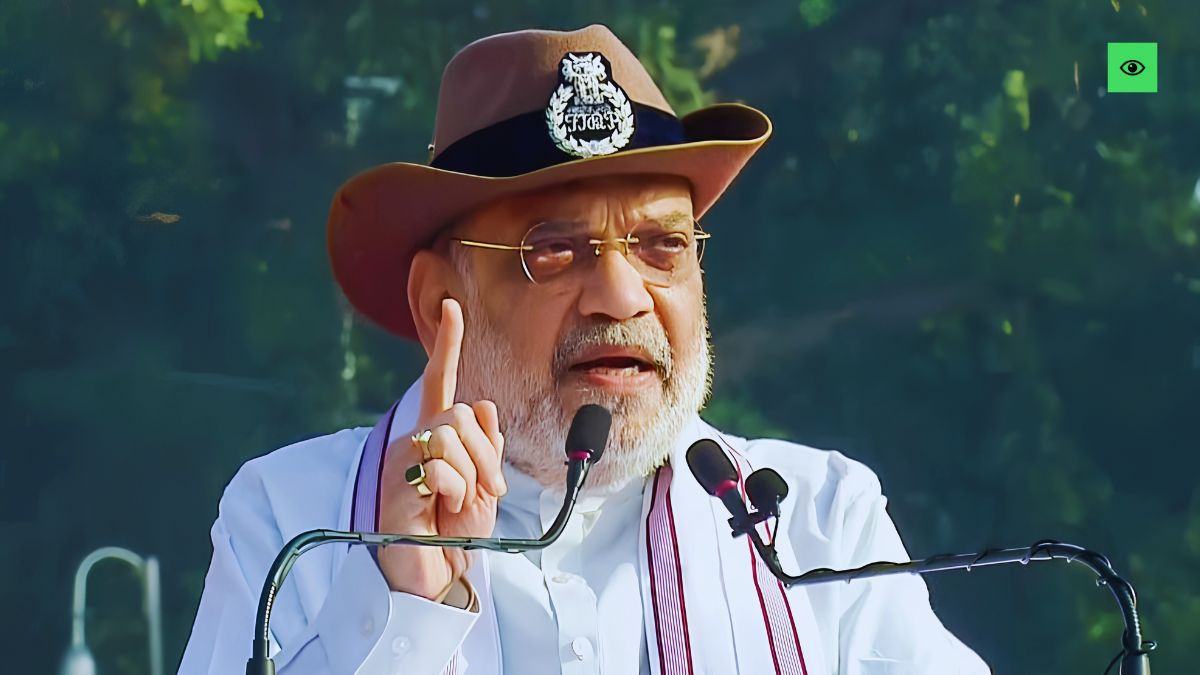
India has a deadline to confront its drug menace. Union Home Minister Amit Shah has called on police forces nationwide to eliminate the threat by December 31, 2029, describing narcotics as a danger to future generations, the economy and national security.
The message is clear. The government wants the fight against drugs to become a sustained national priority, with police forces and central security organisations working towards a common goal.
Drug-Free India 2029: Amit Shah Calls for United Action

Speaking on Wednesday, October 21, 2026, Shah addressed the nation’s drug problem during Police Commemoration Day at the National Police Memorial in New Delhi. He said the remaining months of 2026, followed by 2027, 2028 and 2029, must be devoted to a united campaign against narcotics.
Prime Minister Narendra Modi has set December 31, 2029, as the deadline for making India drug-free.
Shah urged police forces across the country to work towards achieving this objective, emphasising the need to protect future generations from the consequences of drug abuse.
The challenge extends beyond individual health and social welfare. According to Shah, narcotics also place an undue burden on the economy and provide financial support to organisations involved in anti-national activities.
That makes the campaign a matter of public safety and internal security, not merely a law enforcement exercise.
Drug abuse can have consequences that reach far beyond the individual. Families, communities and public institutions can all face the effects of addiction and the social disruption associated with substance abuse.
Shah highlighted three major concerns: the threat to future generations, the economic burden and the financing of organisations involved in anti-national activities.
His remarks place the drug-free target within a broader national security framework. The government’s stated objective is to eliminate the drug menace through coordinated action by police forces across India.
However, the December 2029 deadline also puts the spotlight on implementation. A national objective of this scale requires sustained enforcement, coordination among agencies and consistent action across jurisdictions.
The announcement establishes the political priority. The challenge ahead is turning that priority into measurable progress.
Police Commemoration Day: Remembering Those Who Made the Supreme Sacrifice
Shah delivered his remarks while paying homage to police personnel who lost their lives in the line of duty.
Police Commemoration Day is observed annually on October 21 in remembrance of 10 police personnel killed in an ambush by heavily armed Chinese troops at Hot Springs in Ladakh on October 21, 1959.
Recalling the incident, Shah said the personnel remained committed to defending the country’s territory despite the difficult circumstances of the encounter.
He said the National Police Memorial was inaugurated by Prime Minister Narendra Modi in 2018 to honour police personnel who had sacrificed their lives across the country.
Addressing the families of the martyrs, Shah acknowledged that their loss could never be compensated. He expressed the nation’s gratitude for the sacrifices made by police personnel and their families in protecting internal security and national borders.
The annual commemoration serves as a reminder that the country’s security depends on personnel who carry out their duties under demanding conditions.
Intelligence Bureau Director Mahesh Dixit said 154 police personnel had lost their lives in the line of duty during the previous year.
He also stated that 36,852 police personnel had made the supreme sacrifice since Independence.
The figures underline the human cost of maintaining law and order and protecting the country against internal and external threats.
Dixit said that, following a recommendation by the Prime Minister at the Directors General of Police conference, Central Armed Police Forces and Central Police Organisations would organise commemorative events at the National Police Memorial from October 22 to 30.
Police forces across the country would hold similar programmes during this period.
The events are intended to honour fallen personnel and recognise the contributions of serving officers.
Motorcycle Rally Takes the Anti-Drug Message Across India
As part of the campaign, Shah flagged off a motorcycle rally themed “Fight Against Drugs”.
The rally involves approximately 90 police riders from several states and union territories, Central Armed Police Forces and other central police organisations.
According to an official statement, the initiative will bring riders from across India to Ekta Nagar in Gujarat. They are scheduled to participate in the Ekta Parade on October 31.
The rally adds a public outreach element to the broader campaign against narcotics. Its message is designed to travel beyond police institutions and reach communities across different parts of the country.
The initiative also connects the fight against drugs with the government’s wider emphasis on national unity and collective responsibility.
Shah also highlighted the government’s claims of progress against Naxalism and other security challenges.
He said decades of Naxalism had been eliminated by March 31, 2026, crediting the Chhattisgarh Police, Central Armed Police Forces, Central Reserve Police Force and its CoBRA battalion for their role in combating the insurgency.
According to Shah, violence associated with Naxalism killed more than 3,600 security personnel and approximately 13,700 civilians between 1981 and March 2026.
He specifically praised the CRPF, CoBRA and Chhattisgarh Police for their contributions to counterinsurgency operations.
The Home Minister also said peace had been established in three major security hotspots: Kashmir, the Northeast and areas affected by Left-Wing Extremism.
He described these developments as creating an environment conducive to development, allowing the regions to compete with the rest of India.
Shah further pointed to progress in curbing terrorism in Kashmir. He said agreements and the surrender of arms by thousands of people had helped move the Northeast towards peace.
These remarks formed part of his broader assessment of India’s internal security situation.
Shah also discussed electoral violence, particularly in West Bengal.
He said electoral violence had been eliminated in Uttar Pradesh and Bihar, while West Bengal had experienced the problem for an extended period.
According to the Home Minister, security personnel ensured that the recently concluded West Bengal Assembly elections were completed without a single fatality.
He described the outcome as a significant achievement for the Central Armed Police Forces and a new benchmark in election security.
The deployment of central security personnel during elections is intended to help maintain order and provide a secure environment for voters and election officials.
Shah said the outcome demonstrated that electoral violence could be brought to an end. His remarks highlighted the government’s emphasis on strengthening public confidence in the electoral process.
Shah praised Central Armed Police Forces personnel for remaining vigilant while serving away from their families.
He noted that their responsibilities extend across elections, festivals, protests and border security duties.
These deployments require personnel to respond to different operational demands while maintaining public order and protecting national interests.
The Home Minister’s address connected these responsibilities with the sacrifices remembered on Police Commemoration Day.
From counterinsurgency operations to election security, the central message was that police and security forces remain essential to India’s internal security framework.
The government has established December 31, 2029, as the deadline for its drug-free India objective. Shah’s October 21 remarks reinforced the expectation that police forces nationwide should work towards this target.
The next phase will require sustained action against the drug menace, alongside attention to the wider social and economic consequences of narcotics.
The motorcycle rally and commemorative programmes provide public-facing elements of the initiative. The larger challenge, however, is maintaining coordinated efforts over the period leading to the deadline.
The fight against drugs will remain a significant test of law enforcement coordination and the government’s ability to translate a national target into concrete results.
Shah’s message at the National Police Memorial was direct: protecting India’s future generations requires a united effort against narcotics.
The deadline is set. The work ahead will determine the outcome.
Drug-Free India 2029 is an ambitious national objective, but setting a deadline is only the beginning. The real test lies in execution. Police forces need sustained coordination, consistent enforcement and a clear focus on the networks that enable narcotics distribution. Shah’s remarks rightly connect the drug menace with public safety, economic consequences and national security. Yet the success of such a campaign should ultimately be judged by tangible outcomes, not the scale of its announcements. Public awareness and community participation also matter because enforcement alone cannot address every dimension of substance abuse. India has a defined target. The priority now should be turning that target into measurable progress while maintaining accountability throughout the process.

Any Comments?