
14/04/2026: Russia is leaning into diplomacy again. This time the stage is Beijing. Foreign Minister Sergey Lavrov has landed in China for talks that could shape conversations far beyond Asia.
Here’s the blunt truth. We all know it was China playing on the chess board wearing the mask of Pakistan at Islamabad talks. It was an intelligent attempt at attaining peace without war. Now, let’s wish the next move isn’t what I think it will be. The Sergey Lavrov China visit isn’t just another diplomatic handshake. It’s part of a larger shift in global power conversations. FM of a former super power just landing for talks?
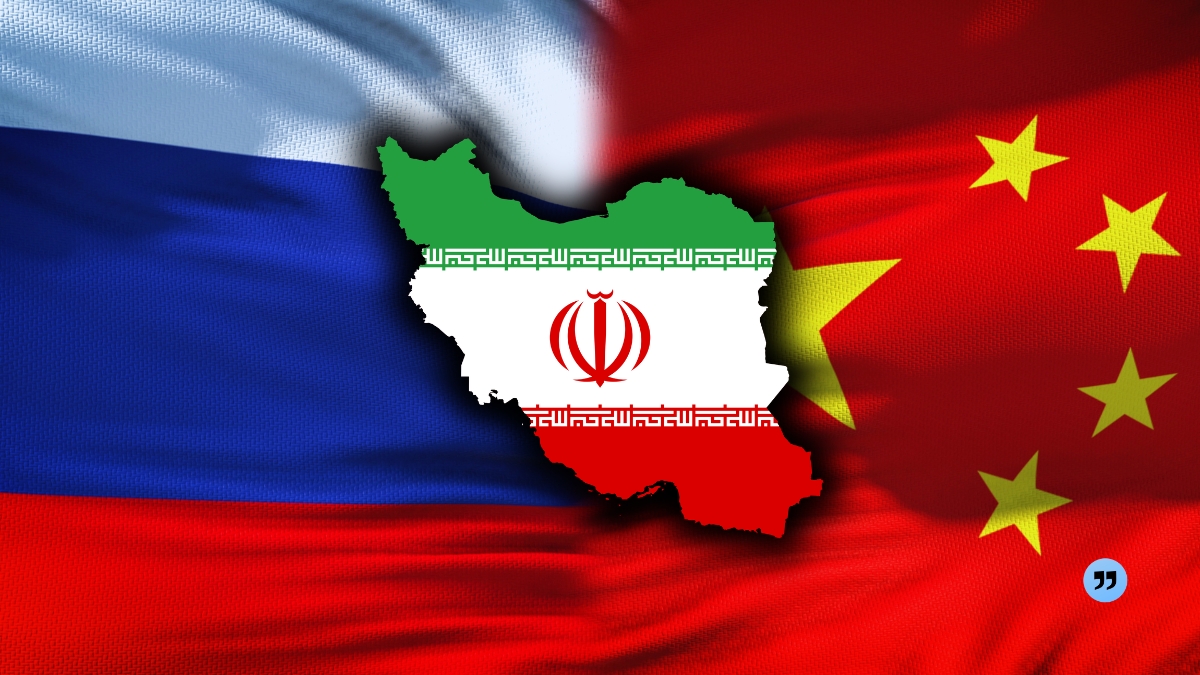
Russia and China increasingly coordinate on major international issues. Iran is actively engaging both countries while warning the United States about regional escalation. That triangular diplomacy is not accidental.
Whether one views it as strategic balancing or geopolitical maneuvering, the pattern is obvious. Major non-Western powers are building parallel channels of influence in global conflicts.
For countries like India, the takeaway is simple. Watch the Gulf. Watch energy routes. And watch how these diplomatic alliances evolve.
Because when the Strait of Hormuz enters the conversation, the entire world economy quietly leans forward.
The Sergey Lavrov China visit has kicked off a fresh round of diplomacy between two powers that increasingly move in sync on the global stage.
Russia’s foreign minister arrived in China on Tuesday for an official visit scheduled for April 14 and April 15. The trip centers on discussions with Chinese Foreign Minister Wang Yi, with both sides expected to cover bilateral cooperation and a wide spectrum of international issues.
The Russian Foreign Ministry confirmed the visit earlier this week, noting that the two diplomats would discuss pressing regional and global matters. In plain terms, that means geopolitics. And plenty of it.
Russia and China have steadily tightened diplomatic coordination in recent years. This meeting looks like another step in that direction.
Russia and China Expand Strategic Dialogue

The Sergey Lavrov China visit comes at a moment when global fault lines are widening. Energy routes, Middle East tensions, and shifting alliances are now central topics in nearly every major diplomatic meeting.
Lavrov’s talks with Wang Yi are expected to address traditional bilateral issues. Trade, energy cooperation, and political coordination remain core pillars of the Russia-China partnership.
But the real weight of the meeting lies in international developments.
Both countries have repeatedly positioned themselves as advocates for diplomatic solutions to regional conflicts. Whether one agrees with that framing or not, Moscow and Beijing are clearly presenting themselves as alternative power centers to Western diplomacy.
And that matters.
The timing of the visit suggests the conversation will extend far beyond routine diplomatic protocol.
Iran Warns of “Dangerous Consequences”
The geopolitical backdrop to the Sergey Lavrov China visit includes rising tensions involving Iran and the United States.
Iranian Foreign Minister Abbas Araghchi recently spoke with Lavrov by phone, warning that what he described as “provocative” US actions in the Persian Gulf could have dangerous consequences for regional and global stability.
According to Iran’s foreign ministry, Araghchi highlighted the risks associated with heightened military and political pressure in the Strait of Hormuz. That narrow waterway carries a massive share of the world’s oil shipments.
Any instability there immediately rattles global markets.
Araghchi also reviewed developments following a ceasefire announcement and talks between Iran and the United States held in Islamabad on April 11 and 12. The discussions were part of ongoing efforts to manage tensions and avoid escalation.
Still, Iran’s warning was blunt.
Actions in the Persian Gulf, Tehran argues, could spiral quickly if diplomacy collapses.
Putin and Iran Discuss Middle East Developments
Diplomatic activity hasn’t been limited to foreign ministers.
Russian President Vladimir Putin also spoke with Iranian President Masoud Pezeshkian on April 12 to review developments in the Middle East.
During that conversation, Pezeshkian shared Iran’s assessment of the Iran-US talks in Islamabad and thanked Russia for what he described as its principled stance on international platforms.
Putin, for his part, reiterated Russia’s willingness to support diplomatic mediation in the region.
The Kremlin framed the discussion as part of broader efforts to promote a political settlement and reduce tensions across the Middle East.
That’s consistent with Russia’s messaging over the past few years. Moscow repeatedly presents itself as a mediator willing to engage multiple sides in complex conflicts.
Whether that mediation succeeds is another question entirely.
China Signals Role in Gulf Stability
China is also stepping into the conversation.
Chinese Premier Li Qiang stated on Monday that Beijing is ready to play a constructive role in restoring peace and stability in the Gulf region.
Li made the remarks while meeting Sheikh Khaled bin Mohamed bin Zayed Al Nahyan, Crown Prince of Abu Dhabi, in Beijing.
According to Chinese officials, Beijing has maintained communication with multiple regional actors since tensions escalated involving Iran.
China’s strategy appears straightforward. Maintain dialogue with all sides and push for political solutions.
That approach fits China’s broader foreign policy playbook. The country has increasingly tried to position itself as a diplomatic stabilizer, especially in energy-sensitive regions.
The Gulf matters deeply to China’s economy due to its reliance on imported energy. Stability there is not just a diplomatic goal. It is a strategic necessity.
Why the Sergey Lavrov China Visit Matters
At first glance, this trip might look like another routine diplomatic exchange.
It isn’t.
The Sergey Lavrov China visit sits at the intersection of several global developments: Middle East tensions, Iran-US negotiations, energy security, and the evolving Russia-China partnership.
Each of these elements feeds into the others.
Russia and China continue strengthening coordination in global forums. Iran is warning about potential escalation in critical maritime routes. And major powers are positioning themselves as mediators in a region that never stays quiet for long.
Look at the map and the picture becomes clearer.
The Persian Gulf controls a key artery of global energy trade. The Strait of Hormuz alone carries roughly a fifth of the world’s oil shipments. Any disruption there affects everyone from Washington to Mumbai.
That reality explains why conversations in Beijing today echo far beyond diplomatic conference rooms.
India, like many countries dependent on energy imports, watches these developments closely. Stability in the Gulf directly affects fuel prices, shipping routes, and economic momentum.
When major powers start coordinating around that region, the ripple effects travel fast.
Diplomacy rarely moves in isolation. Every conversation connects to another somewhere else on the map.
The Sergey Lavrov China visit is one of those moments where several geopolitical threads meet at once. Russia and China are coordinating strategy. Iran is raising alarms about US actions. And Gulf stability is back in the spotlight.
For now, the meetings in Beijing remain discussions. Talks. Statements.
But in international politics, those conversations often signal what comes next.

Any Comments?