
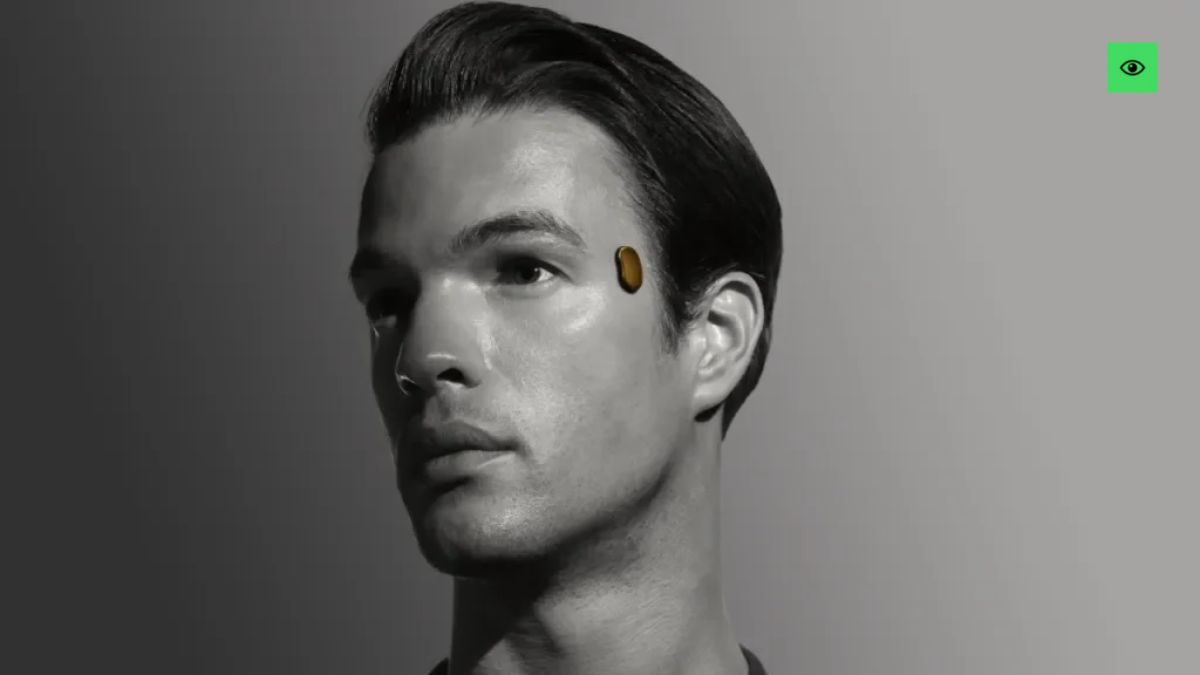
BENGALURU, 2nd Nov: Deepinder Goyal’s latest wearable doesn’t sit on your wrist. It sits on your head, tracks cerebral blood flow and costs a hefty Rs 85,000. Temple has officially opened pre-orders in India, and the early response suggests that some fitness enthusiasts are ready to pay a premium for a radically different approach to health tracking.
The question is simple. Is Temple the next big thing in wearable technology, or an expensive experiment in understanding the human brain?
Temple Wearable India: What Is It?
Temple, developed by Deepinder Goyal’s Eternal, is a head-worn wearable designed to monitor cerebral blood flow and physiological responses associated with mental strain.
Unlike a smartwatch or smart ring, Temple sits on the side of the head, between the forehead and the ear. The positioning is deliberate. The device uses disposable adhesive patches called Grips to attach directly to the skin.
No wrist straps. No traditional smartwatch display. Just a small device designed to collect physiological data from a different part of the body.
The idea is to move beyond conventional fitness tracking. Smartwatches have already made heart rate, sleep and activity monitoring mainstream. Temple takes a different route by focusing on signals associated with brain activity, exertion and recovery.
And at Rs 85,000, it isn’t targeting the average fitness enthusiast.
How BrainFlow Technology Works
Temple’s central technology is called BrainFlow. It uses optical sensors to monitor physiological signals associated with cerebral blood flow and brain oxygenation.
The device focuses on three key areas.
Cerebral Blood Flow
Temple tracks how blood circulates through the brain. This gives users another physiological signal to examine alongside conventional fitness metrics.
Brain Oxygenation and Cognitive Load
The device monitors signals associated with brain oxygenation and cognitive load. These measurements are intended to help users understand how their bodies respond to stress, physical exertion and recovery.
Entropy Score
Temple also provides an Entropy score ranging from 1 to 250.
The score combines physiological strain influenced by several factors, including exercise, sleep, stress and caffeine intake.
Think of it as a single metric intended to summarise how much strain the body is experiencing. The number may help users track patterns over time, although it should not be mistaken for a medical diagnosis.
Temple Wearable India: 5 Features That Matter
Temple’s appeal rests on a combination of unusual hardware, specialised tracking and premium ownership benefits.
1. Head-Worn Design
The device sits on the temple rather than the wrist. Its positioning allows Temple to focus on physiological signals that conventional wrist-based wearables aren’t designed to measure in the same way.
2. Optical BrainFlow Sensors
BrainFlow technology is the core of Temple. It tracks cerebral blood flow and signals associated with brain oxygenation and cognitive load.
3. Entropy Score
The 1–250 Entropy score offers a consolidated view of physiological strain influenced by exercise, sleep, stress and caffeine.
4. Water Resistance
Temple is designed to be water-resistant, making it suitable for activities such as running, swimming and showering.
It is also designed to fit comfortably under glasses, an important consideration for a device worn on the side of the head.
5. Lifetime Software Access
Temple includes lifetime access to its software without a recurring monthly subscription fee.
The package also includes one-on-one personal onboarding and a lifetime supply of adhesive Grips.
For a device priced at Rs 85,000, these ownership benefits matter. A premium wearable that adds another monthly bill would be a harder sell.
Temple Price in India: What You Get for Rs 85,000
Temple is entering the Indian market as an ultra-premium wearable.
The first batch, Batch 01, is priced at Rs 85,000.
The device is handcrafted and made to order. That means buyers aren’t necessarily getting an off-the-shelf product shipped immediately after payment.
The estimated fulfilment timeline is up to three months.
Buyers can choose from six colour finishes:
True Gold
Rose Gold
Black Mirror
Real Jade
Deep Blue
Purple Funk
The package includes lifetime software access, one-on-one onboarding and a lifetime supply of adhesive Grips.
There is also a full-refund option. Buyers can cancel for a complete refund at any time before their order ships.
That is a useful safeguard when spending Rs 85,000 on a relatively unfamiliar wearable category.
How to Book Temple in India
Temple has opened pre-orders through its official website and app.
Here is how the booking process works.
1. Install the official Temple app from the Apple App Store or Google Play Store. Alternatively, visit temple.com.
2. Complete account verification and set up your initial profile.
3. Select the quantity you want to order and choose one of the six available colour finishes.
4. Enter your shipping information, including your name, contact details and delivery address. Providing a GSTIN is optional.
5. Complete the pre-order payment to secure your place in the Batch 01 queue.
Since the device is made to order, buyers should account for the estimated delivery timeline of up to three months.
Those placing orders during the November 2026 pre-order period could receive their devices in early 2027, depending on the actual fulfilment schedule.
The Temple Booking Portal Faced Heavy Traffic
Temple’s India pre-orders opened with a burst of interest.
Within minutes of launch, heavy traffic briefly brought down the company’s booking portal.
That is an interesting development for a device priced at Rs 85,000.
The response suggests that a section of India’s fitness and technology enthusiast community is willing to explore wearable devices beyond the familiar smartwatch category.
But early demand doesn’t automatically establish long-term value. The real test will come when users begin wearing Temple regularly and examining the data it provides.
Is Temple a Medical Device?
Here is the important distinction.
Temple is positioned as a research and wellness tool. It is not a medical-grade diagnostic device.
Its measurements should not be treated as a substitute for clinical testing, professional medical advice or diagnosis.
Tracking physiological signals associated with brain function is not the same as diagnosing a neurological condition.
That distinction matters, particularly when a wearable offers sophisticated metrics that can sound more definitive than they actually are.
Temple may help users explore physiological patterns, but its data should be interpreted within the limits of its intended wellness and research use.
The Bottom Line
Temple wearable India pre-orders mark an unusual moment for the country’s consumer technology market.
A device that sits on the head, tracks cerebral blood flow and costs Rs 85,000 is hardly a conventional fitness purchase.
Its BrainFlow technology, Entropy score and premium ownership package make it an interesting proposition for enthusiasts who want to explore physiological tracking beyond the wrist.
Still, the price is substantial, and the device is not a medical diagnostic tool.
Temple has attracted early attention. Now comes the harder part: proving that its data, design and everyday usefulness justify the premium.

Any Comments?