
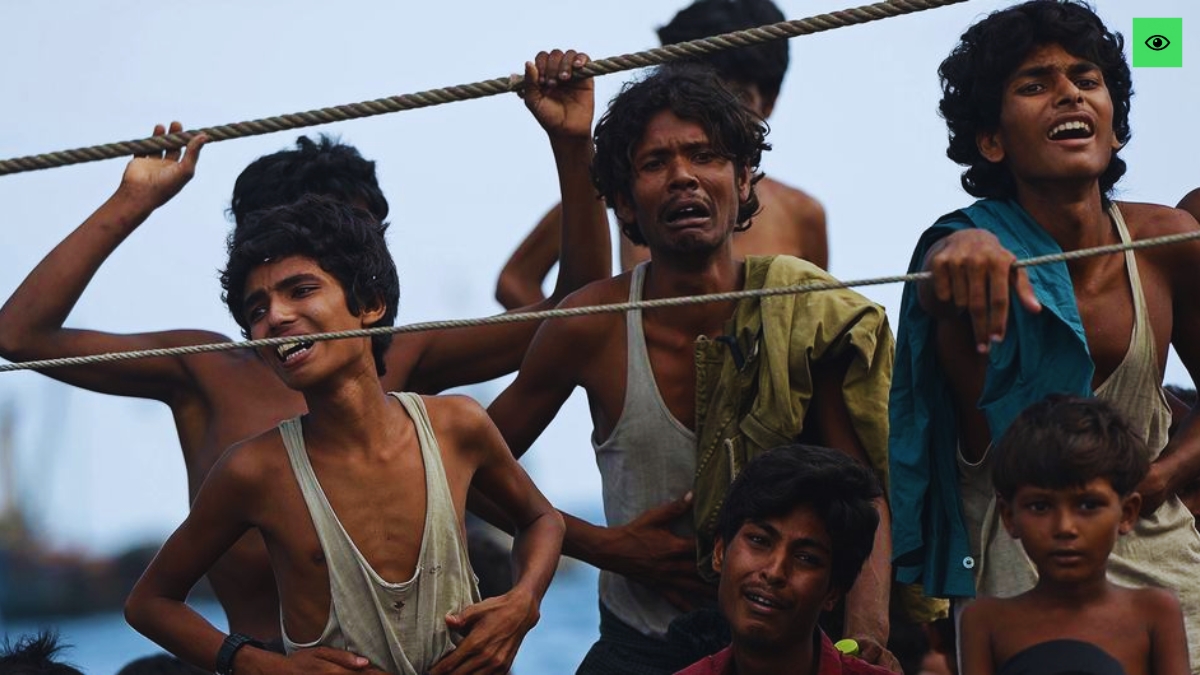
New Delhi, 15.08.26: Rohingya refugees in Bangladesh have been waiting nearly nine years for a safe route home. Myanmar now says more than 300,000 verified former residents of Rakhine state could return, but there’s a rather large condition attached: security must improve first.

The Rohingya refugee crisis has entered its ninth year, with hundreds of thousands of people still living in camps across Bangladesh after fleeing Myanmar during the military crackdown of 2017.
On Saturday, Myanmar’s Ministry of Foreign Affairs said it had verified 426,545 people from a list of 828,824 refugees supplied by Bangladesh. Of those verified, 308,797 were identified as former residents of western Rakhine state.
Myanmar said it would continue working with Bangladesh to receive those verified former residents once security conditions in Rakhine become more stable.
That statement offers a possible route back for more than 300,000 people. It does not, however, mean that a mass return is about to begin.
The numbers tell the story.
Myanmar Has Verified More Than 426,000 People
Bangladesh provided Myanmar with a list containing 828,824 refugees. By the end of July, Myanmar said it had verified 426,545 of them.
The government said 308,797 of those verified people were former residents of Rakhine.
Another 113,507 people could not be verified, according to the Ministry of Foreign Affairs. Myanmar also said 4,241 people had been identified as having been involved in what it described as terrorist activities.
The figures are significant because verification has long been central to Myanmar’s proposed repatriation process.
Myanmar does not recognize the Rohingya as one of its 135 lawful ethnic minorities. Instead, it generally refers to them as Bengalis, a term used to suggest that they originated in Bangladesh and are illegally settled in Myanmar.
That disagreement over identity sits at the heart of the crisis.
Why Did the Rohingya Refugees Leave Myanmar?
The latest crisis began in August 2017, after attacks by a Rohingya insurgent group on security posts in Rakhine.
Myanmar’s military responded with a sweeping crackdown.
More than 700,000 Rohingya crossed into Bangladesh, joining hundreds of thousands of others who had already fled there during earlier waves of violence involving Myanmar’s military.
The operation drew international accusations of ethnic cleansing and genocide, including from the United Nations.
Myanmar has disputed some accounts of the scale of displacement. In its latest statement, the Ministry of Foreign Affairs rejected claims that more than 1 million people had been displaced from Rakhine.
The ministry said more than 540,000 people crossed into Bangladesh after the 2017 violence, while more than 200,000 remained in northern Rakhine.
Those competing figures reflect one of the biggest problems surrounding any repatriation effort: even the basic facts remain politically contested.
The First Repatriation Plan Failed
Myanmar and Bangladesh agreed in 2018 to a two-year repatriation process.
It did not deliver a large-scale return.
The security picture inside Myanmar deteriorated further after the military seized power in 2021, removing the elected government of Aung San Suu Kyi and triggering widespread armed resistance.
Then came another complication.
Fighting intensified in Rakhine in 2023 between Myanmar’s military and the Arakan Army, an ethnic armed group based in the state. The conflict forced more people to flee and further complicated efforts to bring refugees home.
The Arakan Army has captured substantial territory from the military in recent years and now controls much of Rakhine.
So Myanmar’s latest promise comes against a backdrop of continuing instability. That matters because the government itself says security conditions must improve before verified former residents can return.
Bangladesh’s Camps Are Under Growing Pressure
For Rohingya refugees, remaining in Bangladesh is hardly a permanent solution.
Many have spent years in overcrowded refugee camps, while foreign aid cuts have worsened already difficult conditions.
With few safe prospects for returning to Myanmar, some Rohingya have increasingly attempted dangerous sea journeys toward Malaysia and Indonesia.
The boats are often unfit for long journeys. The risks are obvious, yet the movement continues.
That tells you something important about the crisis. When people begin choosing dangerous ocean crossings over staying in refugee camps, the problem has moved well beyond temporary displacement.
Malaysia Adds Another Complication
The repatriation debate also reached Malaysia in July.
Prime Minister Anwar Ibrahim said Myanmar had agreed to take back 5,000 Rohingya refugees currently living in Malaysia as part of a repatriation programme.
But Myanmar’s foreign ministry offered a sharply different account.
Official Han Win Aung told The Associated Press that the programme was focused only on verified Myanmar nationals being held in Malaysian detention centres. He rejected reports that Myanmar had agreed to accept Rohingya.
That contradiction matters.
If Myanmar and regional governments are not even describing the same repatriation programme in the same way, expectations can move much faster than actual policy.
What Happens Next?
Myanmar says more than 300,000 verified former residents of Rakhine could eventually return.
But three major hurdles remain.
First, security.
The government has explicitly tied repatriation to improved conditions in Rakhine. Fighting between the military and the Arakan Army has made that difficult.
Second, verification.
Myanmar has verified 426,545 people from Bangladesh’s list but says 113,507 could not be verified. The process therefore remains incomplete.
Third, political disagreement.
Myanmar’s refusal to recognize the Rohingya as a lawful ethnic minority remains a fundamental issue. Repatriation is not simply a matter of moving people across a border. It also involves questions of identity, status and acceptance.
For Bangladesh, meanwhile, the pressure remains immediate. Hundreds of thousands of refugees remain in camps, while aid reductions and difficult living conditions continue to push some people toward dangerous migration routes.
For the Rohingya themselves, the idea of returning home carries an obvious appeal. But a return process tied to unstable security conditions and unresolved political disputes is hardly straightforward.
Myanmar has now put a number on the people it says could eventually return: 308,797 verified former residents of Rakhine.
That is substantial.
It is also only a statement of intent.
Until security improves, verification advances and Myanmar and Bangladesh agree on how the process will actually work, the road from refugee camp to home remains unfinished.
Nearly nine years after the 2017 crisis, the Rohingya refugee situation remains unresolved.
Myanmar says 308,797 Rohingya refugees in Bangladesh have been verified as former residents of Rakhine state and could eventually return once security conditions improve.
That sounds significant. It is.
But it isn’t a repatriation date.
Myanmar has verified 426,545 people from a list of 828,824 refugees supplied by Bangladesh. More than 113,000 people on the list could not be verified, while Myanmar said 4,241 were involved in what it described as terrorist activities.
Meanwhile, conditions inside Rakhine remain unstable. Fighting between Myanmar’s military and the Arakan Army has reshaped control of the region and pushed more people to flee.
Bangladesh continues to host hundreds of thousands of Rohingya refugees in camps. Aid cuts and difficult living conditions have also contributed to an increasing number of dangerous sea journeys toward Malaysia and Indonesia.
The crisis is therefore stuck between two realities: refugees need a durable solution, while Myanmar says security must improve before verified former residents can return.
The number is finally moving.
The solution isn’t.

Any Comments?