
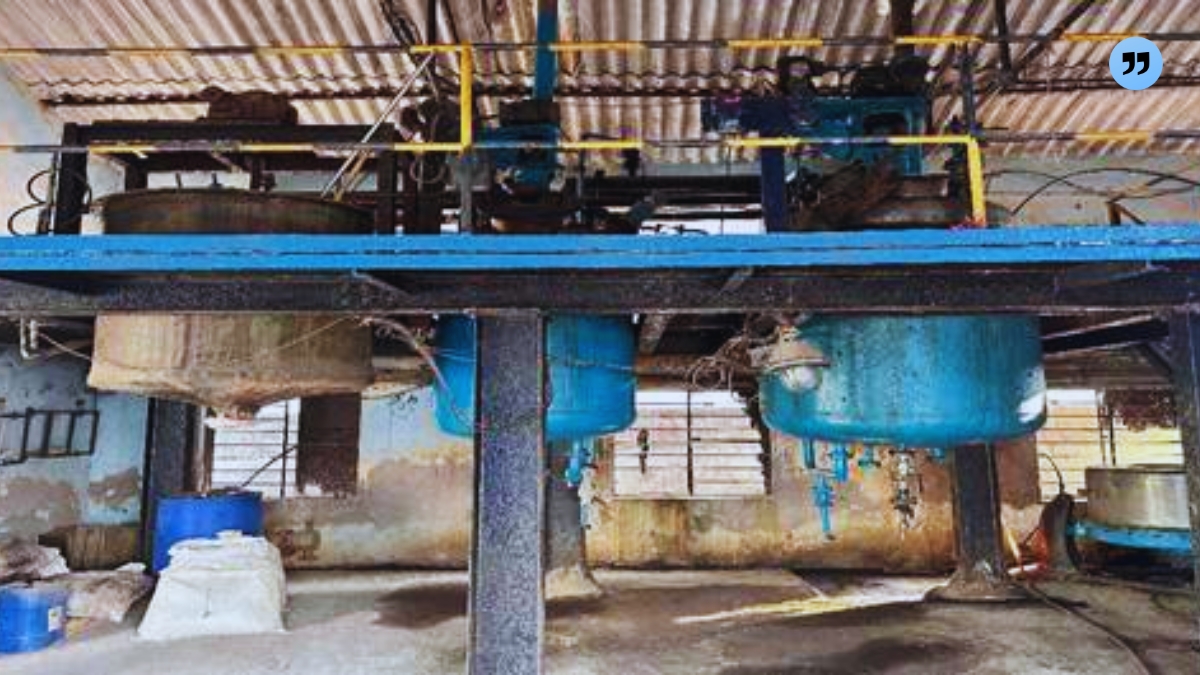
13/03/2026: A quiet industrial zone in Andhra Pradesh just got a loud wake-up call. The Directorate of Revenue Intelligence has busted an illegal Alprazolam factory worth ₹47 crore in a coordinated crackdown called Operation White Hammer.
India’s fight against synthetic drugs took a sharp turn this week.
In a high-impact operation, the Directorate of Revenue Intelligence (DRI) dismantled a clandestine manufacturing facility producing Alprazolam in the Kondapalli Industrial Development Area in District NTR, Andhra Pradesh. The raid, executed on 11 and 12 March 2026, uncovered a full-scale illegal drug production unit operating behind the façade of a legitimate chemical factory.
The numbers alone tell the story.
Investigators seized 237 kilograms of Alprazolam, a psychotropic substance regulated under the NDPS Act, 1985. On the street, that haul carries an estimated value of about ₹47 crore.
But the pills were only part of the operation.
Officials also confiscated more than 800 kilograms of key raw materials and roughly 2,860 litres of chemical substances used in the manufacturing process. Alongside the chemicals sat industrial-grade equipment including reactors, driers and a centrifuge. Not small-time gear. The kind of setup that signals organised, large-scale production.
Look closer and the picture gets sharper. This was not a crude backyard lab. It was an industrial drug plant hiding in plain sight.
How Operation White Hammer Uncovered the Alprazolam Factory Bust
The operation was intelligence-driven and carefully coordinated. DRI officers tracked suspicious activity linked to the facility and moved in after confirming that the premises were being used to manufacture Alprazolam illegally.
The location helped the criminals blend in. Kondapalli Industrial Development Area hosts legitimate manufacturing units, which gave the clandestine operation cover. Chemical drums moving in and out rarely attract attention in such zones. That camouflage worked for a while.
Then the intelligence trail tightened.
When officers finally entered the premises, what they found was a complete production ecosystem designed specifically for synthetic drug manufacturing. Reactors for chemical synthesis. Drying units for processing. A centrifuge for separating compounds. Everything lined up like a pharmaceutical production line, except none of it was legal.
And the product being manufactured, Alprazolam, sits squarely within the NDPS Act’s controlled psychotropic substances list.
Who Ran the Illegal Alprazolam Manufacturing Unit
Investigators say the operation was orchestrated by a chemist with more than two decades of experience in the chemical and pharmaceutical sector.
That detail matters.
Running an illegal synthetic drug plant requires technical knowledge. The synthesis process for Alprazolam involves precise chemical handling, temperature control and purification steps. In other words, someone who knows the chemistry can build a production system that runs efficiently and quietly.
According to preliminary investigation findings, the chemist did not work alone.
His associate allegedly handled logistics, arranging raw materials and managing the distribution network in Hyderabad. Together they rented the factory premises and set up the clandestine manufacturing operation.
Both individuals have now been arrested.
Authorities believe the pair were key operators behind the illegal production chain. Investigators are expected to examine supply routes, financial trails and potential buyers connected to the seized drugs.
Because synthetic drug networks rarely stop at a single facility.
Why the Alprazolam Factory Bust Matters
Alprazolam is widely known in legitimate medicine as an anti-anxiety drug. But when diverted into illegal supply chains, it becomes part of the broader psychotropic drug trade.

And that trade is growing.
Synthetic drugs offer traffickers a big advantage over traditional narcotics. They can be manufactured indoors, scaled quickly and produced near urban markets. No fields. No crops. Just chemistry.
That is exactly why enforcement agencies are increasingly targeting clandestine labs rather than only focusing on distribution networks.
The Andhra Pradesh facility exposed a production-level operation capable of manufacturing large quantities of Alprazolam. With industrial equipment already installed, the unit could potentially produce batches continuously.
Shutting it down early prevented further distribution.
For investigators, raids like this cut off supply at the source. For communities, it means fewer illicit pills entering circulation.
DRI’s Growing Crackdown on Synthetic Drugs Labs
This Alprazolam factory bust is not an isolated case.
According to officials, the Directorate of Revenue Intelligence has dismantled eight clandestine drug manufacturing units during the current financial year through intelligence-based operations.
That pattern signals a clear shift in enforcement strategy. Agencies are focusing more on identifying manufacturing hubs rather than chasing street-level distribution.
It is a practical move.
Destroy a supply chain’s factory and the network collapses much faster.
The crackdown also aligns with the Government of India’s Nasha Mukt Bharat Abhiyaan, a nationwide campaign aimed at reducing drug abuse and dismantling narcotics supply chains.
DRI’s role in that effort has increasingly involved tracking synthetic drug production units that operate under cover of legitimate chemical industries.
And India’s industrial clusters can be tempting targets for such operations. Chemical facilities, pharmaceutical supply chains and logistics hubs all exist in close proximity. That environment can mask illegal activity if enforcement does not stay alert.
Operation White Hammer shows that the monitoring systems are catching up.
What Happens Next

With the factory dismantled and two accused in custody, investigators will now focus on the larger network behind the operation.
That includes identifying suppliers of raw materials, tracking distribution routes and uncovering potential buyers across cities.
Hyderabad has already emerged as a distribution node in the preliminary findings.
Authorities will likely examine financial records, transport documentation and digital communications connected to the suspects. Synthetic drug networks often leave traces in supply orders and payment channels.
Each thread can reveal another layer of the operation.
And sometimes, another lab.
India’s anti-narcotics agencies are increasingly aware that clandestine pharmaceutical-style labs are replacing traditional drug production models. As enforcement tightens, operations become more sophisticated.
But so do the investigations.
For now, Operation White Hammer has shut down one of those operations before it could grow further.
One factory. ₹47 crore worth of illegal drugs removed. Two arrests.
Not bad for two days of work.

Any Comments?