
New Delhi, 12.08.26 The Danube River has given up a grim piece of Europe’s wartime past. Record-low water levels in Budapest have exposed the remains of two German soldiers, alongside identification tags, a wedding ring, a combat badge and a remarkably intact military motorcycle.
The Danube River WWII soldiers discovery is more than an archaeological curiosity. It could finally answer a question that two families may have carried for more than eight decades: what happened to their missing relatives?

A Wartime Secret Emerges From the River
The discovery came after an intense drought pushed the Danube’s water level to an exceptionally low point.
On 2 August, a passerby noticed part of a motorcycle protruding from rocks along the riverbank in central Budapest. What initially looked like an old wreck soon became something far more significant.
A recovery team investigating the site found the remains of two World War Two German soldiers.
The German War Graves Commission said identification tags belonging to the soldiers were also recovered. Other objects included a wedding ring and a Kuban shield, a combat badge associated with the German Wehrmacht.
Then came another complication.
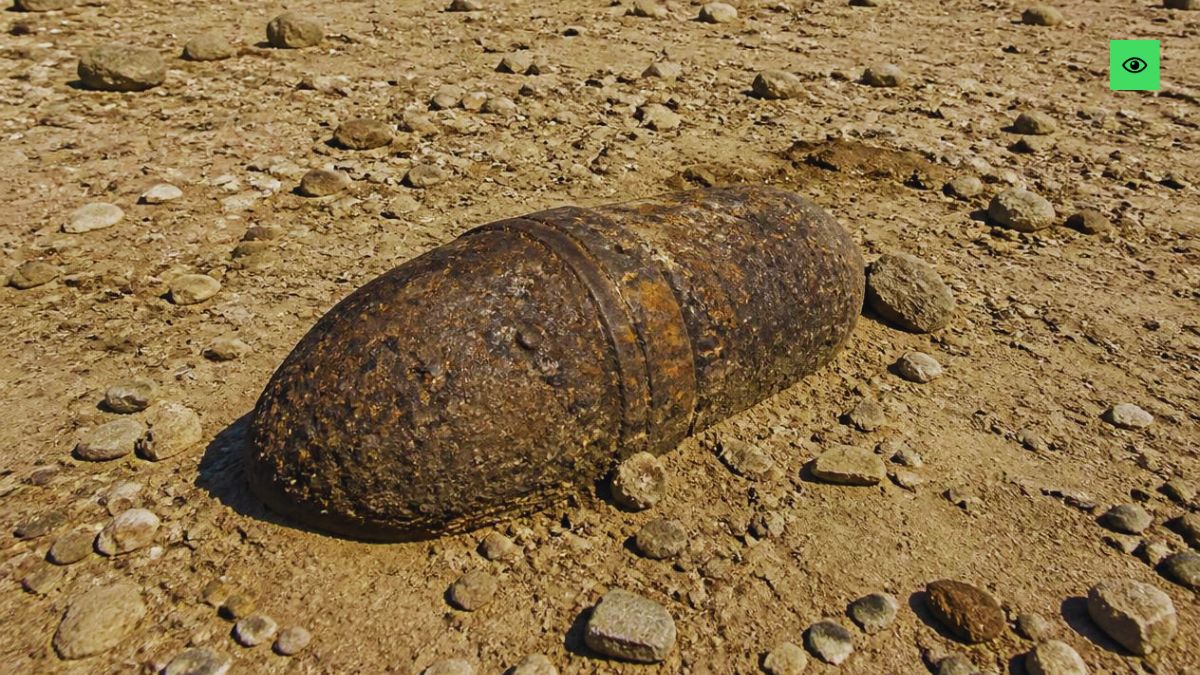
Anti-tank mines were discovered in the same area. The riverbank had to be temporarily closed while a bomb disposal unit dealt with the danger.
History, it seems, wasn’t finished being difficult.
The Motorcycle That Survived the War
Among the most striking discoveries was a German army Wehrmacht motorcycle.
The German War Graves Commission believes the machine is a DKW NZ 350-1, a model produced specifically for wartime use from 1944.
Despite spending more than 80 years in the Danube, the motorcycle was reportedly found in a largely intact condition.
That level of preservation is unusual. According to the commission, the combination of harbour sludge and oil on the riverbed helped protect some of the objects from deterioration.
The identification tags were also remarkably well preserved.
And those small pieces of metal could prove far more valuable than the motorcycle itself.
They may provide the first direct clue to the identities of the two dead.
Two Tags, Two Different Military Organisations
The German War Graves Commission said one of the recovered identification tags belonged to a Wehrmacht soldier. The other was associated with a member of the Waffen-SS.
The distinction matters.
The Waffen-SS was declared a criminal organisation at the Nuremberg Trials because of its responsibility for war crimes.
German military identification tags were designed to help authorities identify casualties. They were split into two parts when a soldier died. One half remained with the body, while the other was sent to German army authorities responsible for tracking military losses and notifying relatives.
In this case, however, the notification appears never to have reached the families.
The German War Graves Commission said the relatives of the two soldiers would have “waited in vain” for official confirmation of their deaths.
That makes the discovery deeply personal, even after 80 years.
The Search for Their Identities Begins
Finding the tags is only the beginning.
Arne Schrader of the German War Graves Commission told German newspaper Bild that investigators now face a complicated puzzle to determine who the two soldiers were.
The names associated with the identification tags may be located relatively quickly. But that does not automatically prove the tags belonged to the remains recovered from the river.
The commission has to establish whether the tags and the Kuban shield were actually associated with the two soldiers.
Bone analysis will also play a key role.
As the commission put it, identifying the original wearers of the tags is only the first step. Investigators still have several pieces of evidence to assemble, and the final outcome remains uncertain.
That distinction is crucial. A name on a tag is evidence. It isn’t a conclusion.
Families Could Finally Get Answers
The discovery has generated significant interest among online communities dedicated to tracing the fate of soldiers who disappeared during the First and Second World Wars.
For families who have spent generations without knowing what happened to a relative, even a partial answer can matter enormously.
The German War Graves Commission has started its investigation and allows people searching for missing relatives to check its online database.
There is still no guarantee that the two soldiers will be identified.
But for the families potentially connected to these remains, the investigation offers something that may have seemed impossible only weeks ago: a new lead.
And sometimes history works that way. A drought lowers a river. A motorcycle emerges from the rocks. Suddenly, an old unanswered question becomes visible.
Why Budapest Matters?
The location is significant.
Budapest witnessed some of the fiercest fighting in the closing stages of the Second World War, when Soviet Red Army forces fought German Wehrmacht troops in and around the Hungarian capital.
The fighting left behind enormous human and material losses.
Decades later, the Danube continues to reveal traces of that period.
The latest discovery is not isolated. Other World War Two remnants have recently emerged from the river system, including the broken-up hull of a vessel near Prahovo in Serbia.
The Danube is not simply a geographical feature cutting through Central Europe. It has been a witness to centuries of conflict, migration and political upheaval.
Now, falling water levels are exposing pieces of that history that had remained hidden.
A Dignified Burial Awaits
Once the investigation is complete, the two soldiers will be buried at the German war cemetery in Budaörs, just outside Budapest.
That burial will close one chapter, but potentially open another for their families.
For more than 80 years, these men remained unidentified among the countless missing from the Second World War. Their remains were hidden beneath the Danube, while relatives were left without the official notification that military authorities were supposed to provide.
The discovery cannot undo the war or the circumstances that led to their deaths.
It can, however, restore something that war often takes away: a name, a place and a final resting place.
The river has surrendered the evidence.
Now investigators have to put the pieces together.
The most important part of this discovery isn’t the motorcycle. It isn’t even the unusual preservation of objects beneath the Danube.
It’s the possibility of identification.
Wars create statistics. Families experience absences.
For decades, the deaths of these two soldiers appear to have remained unresolved from their relatives’ perspective. The discovery now gives investigators physical evidence to work with, but that evidence needs to be treated carefully. A tag can point toward a name. It cannot, by itself, establish identity. The investigation has to connect the pieces.
That means patient forensic work, proper documentation and a willingness to accept uncertainty where the evidence doesn’t provide an answer.
There is also a larger lesson here. The past doesn’t disappear simply because the people who lived through it are gone. Objects remain. Records remain. Graves remain. Sometimes, even rivers give something back.
The right response is straightforward: identify the soldiers if the evidence allows it, document what was recovered, and give the remains a dignified burial.
No mythology is needed. No sensationalism either.
Just the facts, properly assembled.
After more than 80 years, that’s the least these two soldiers and their families deserve.

Any Comments?