
NEW DELHI, 9th Sept 2026: India’s aviation story is getting bigger, and the latest developments show exactly why. Major institutional capital is moving into airport infrastructure while airlines are beginning to test cleaner fuel alternatives.
The two developments are different, but they point in the same direction: the India aviation sector is preparing for another phase of expansion.
India Aviation Sector: Adani Airports Raises Rs 9,825 Crore
Adani Airport Holdings Ltd (AAHL), India’s largest private airport operator, has entered into binding agreements to raise Rs 9,825 crore, or about $1 billion, in primary equity capital.
The investment comes from a consortium comprising Alpha Wave Global, Premji Invest, Temasek and funds managed by BlackRock.
The transaction values AAHL at a pre-money equity valuation of about $18 billion. It also ranks among the largest primary equity investments by financial institutions into India’s airport infrastructure sector.
That is a sizeable vote of confidence in an industry where passenger numbers, airport capacity and commercial development are becoming increasingly important.
The latest fundraising follows Adani Enterprises Limited’s Rs 15,000 crore qualified institutional placement in July 2026. That QIP was the largest ever by a non-financial corporate in India.
AAHL has identified three strategic priorities for the fresh capital.
The first is straightforward: expanding and modernising airport infrastructure across its portfolio.
The second is more ambitious. AAHL plans to accelerate the development of integrated airport city ecosystems around its airports. The first phase is expected to include about 2.2 crore square feet of mixed-use development.
The third priority is passenger-facing and other non-aeronautical businesses, including the company’s ground handling operations.
This matters because modern airports are no longer simply places where passengers arrive, check in and board aircraft. The commercial ecosystem around an airport can become almost as important as the runway itself.
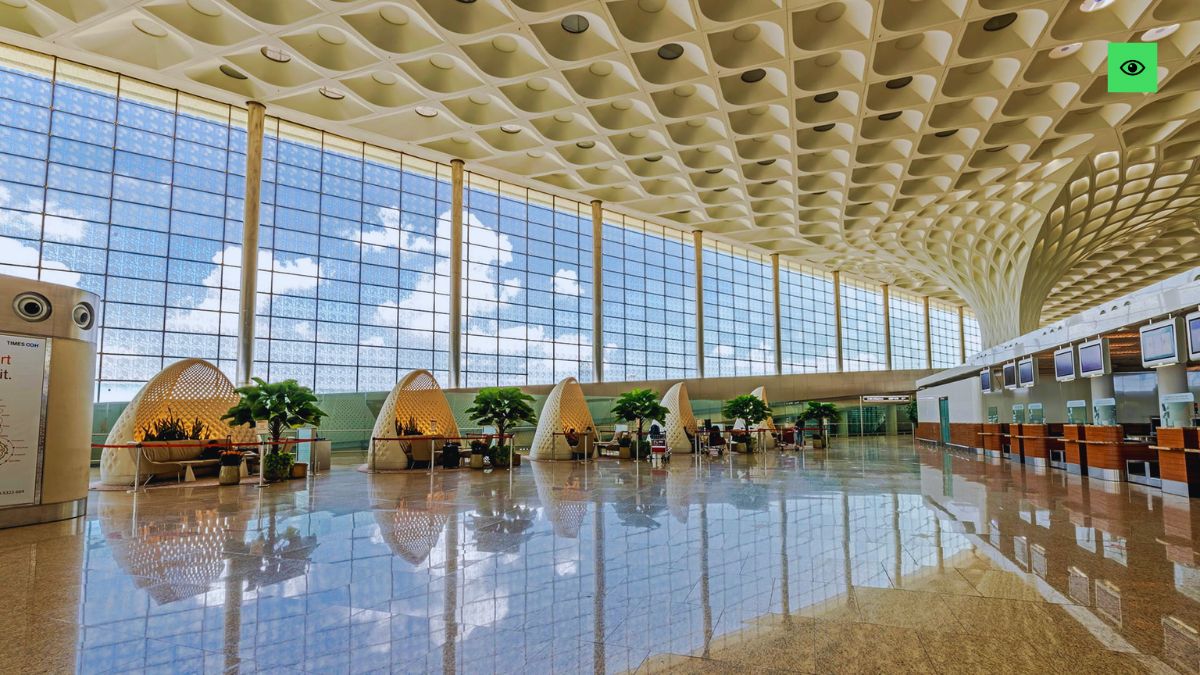
AAHL currently manages eight airports across India: Mumbai, Navi Mumbai, Ahmedabad, Jaipur, Lucknow, Guwahati, Mangaluru and Thiruvananthapuram.
Together, these airports handle more than 23 per cent of India’s total passenger traffic.
AAHL said the investments are expected to increase its capacity to serve 20 crore passengers annually.
The company also expects the investment to deepen commercial monetisation, improve passenger experience and strengthen its integrated airport ecosystem.
In plain English, the strategy is not just about building more airport infrastructure. It is about extracting more value from the infrastructure that already exists while preparing for substantially higher passenger volumes.
That combination could become increasingly important as India’s aviation market continues to develop.
Akasa Air Takes a Different Step

While AAHL is putting billions into infrastructure, Akasa Air is testing another part of the aviation equation: fuel.
On September 8, the airline successfully operated a commercial flight using conventional aviation turbine fuel blended with 1 per cent sustainable aviation fuel, or SAF.
The SAF was supplied by Bharat Petroleum Corporation Limited (BPCL).
The flight departed Chhatrapati Shivaji Maharaj International Airport in Mumbai at 13:05 IST and arrived at Manohar International Airport in Goa at 14:30 IST.
It was a commercial operation, but its significance extends beyond one flight.
The flight builds on a memorandum of understanding signed by Akasa Air and BPCL in July 2026.
Under the agreement, the two companies agreed to explore the adoption of SAF and other opportunities supporting aviation decarbonisation.
The MoU also provides a framework for the supply and offtake of SAF-blended ATF at designated airports across India.
Akasa Air said the flight would provide both organisations with practical insights and operational learnings that could help shape future initiatives.
That is an important point. Moving from conventional aviation fuel to more sustainable alternatives is not something an airline can solve on its own. Fuel producers, airlines, airports, policymakers and other parts of the aviation ecosystem all have to move together.
Akasa Air CFO Ankur Goel said sustainability is one of the airline’s core values and that the company has invested in next-generation aircraft, technology and responsible operating practices since its inception.
He also pointed to the need for domestic supply, supportive policy and commercial viability if SAF is to scale in India.
The SAF flight is not Akasa Air’s only sustainability initiative.
The airline said its Boeing 737 MAX fleet is central to its efforts to operate a fuel-efficient and environmentally progressive fleet.
The aircraft use CFM International LEAP-1B engines and advanced-technology winglets. According to Akasa Air, the 737 MAX reduces fuel use and emissions by 20 per cent compared with the aircraft it replaces.
The airline has also partnered with OpenAirlines to deploy SkyBreathe, a fuel-management solution that uses advanced analytics to improve operational efficiency and reduce carbon emissions across its network.
Then there is a smaller operational decision with a surprisingly tangible result.
Akasa Air became the first Indian airline to voluntarily discontinue traditional water-cannon salutes during route inaugurations. The airline said the move has helped conserve more than 5.5 lakh litres of water to date.
BPCL is framing the transition towards sustainable aviation fuel as more than an environmental exercise.
Subhankar Sen, Director (Marketing) at BPCL, said the shift from conventional fuels to sustainable alternatives is both an environmental imperative and a strategic necessity for India.
He highlighted feedstock availability and aggregation as historical challenges, particularly because supply chains can be fragmented.
According to BPCL, sustained efforts across the value chain have helped create the foundation for a viable SAF ecosystem.
The company also linked sustainable fuels to India’s wider energy transition and energy security objectives.
For a country that relies significantly on crude oil imports, that argument is difficult to ignore. Sustainable and domestically sourced energy solutions can have implications that go well beyond aviation.
Two Moves, One Larger Aviation Story
Put the two developments side by side and the direction becomes clearer.
AAHL is raising major institutional capital to expand airports, develop airport cities and grow commercial businesses. Akasa Air and BPCL are testing the practical use of SAF in commercial aviation.
One is focused heavily on physical infrastructure and passenger capacity. The other is focused on fuel and operating efficiency.
Both are essential pieces of a growing aviation ecosystem.
The airport business is becoming more integrated, with infrastructure, retail, commercial development and passenger services increasingly operating as parts of one larger model. At the same time, airlines are looking at ways to reduce fuel consumption, improve efficiency and introduce more sustainable alternatives.
There is no magic switch here. SAF needs supply. Supply needs viable economics. Airport expansion needs capital. Capacity needs passengers. And infrastructure needs to be supported by efficient operations.
That is precisely why these developments matter.
What Comes Next for the India Aviation Sector
The immediate takeaway is simple: capital is flowing into aviation infrastructure while companies are experimenting with new approaches to make flying more efficient and sustainable.
AAHL’s Rs 9,825 crore equity raise gives the company substantial capital to pursue airport expansion and its airport city strategy. Its stated target of serving 20 crore passengers annually underlines the scale of the ambition.
Meanwhile, Akasa Air’s 1 per cent SAF-blended commercial flight gives the airline and BPCL practical operating experience as they explore how sustainable aviation fuel could be adopted more widely.
These are early steps in different areas, but they are moving in a common direction.
India’s aviation industry needs more capacity, better passenger infrastructure, commercially stronger airports and more efficient operations. It also needs a credible path towards cleaner aviation.
The latest moves show that companies across the ecosystem are already putting money, aircraft, technology and fuel into that transition.
And frankly, that is where the real story is. Indian aviation is not merely adding flights. It is building the infrastructure and operating model required for a much larger aviation market.
India’s aviation sector is entering another interesting phase.
On one side, Adani Airport Holdings Ltd has secured agreements to raise Rs 9,825 crore from Alpha Wave Global, Premji Invest, Temasek and BlackRock-managed funds. The capital will support airport expansion and modernisation, integrated airport city development and the scaling of passenger-facing and non-aeronautical businesses.
AAHL manages eight airports across India and handles more than 23 per cent of the country’s total passenger traffic. The company expects its latest investments to help raise capacity to serve 20 crore passengers annually.
On the other side, Akasa Air has taken a step towards sustainable aviation fuel. The airline successfully operated a commercial Mumbai-Goa flight using conventional ATF blended with 1 per cent SAF supplied by BPCL.
The flight follows the two companies’ July 2026 MoU to explore SAF adoption and other aviation decarbonisation opportunities.
These developments highlight two sides of the same story: India needs more aviation capacity, but it also needs more efficient and sustainable ways to operate it.
The runway is getting longer. The ambitions are getting bigger.

Any Comments?