
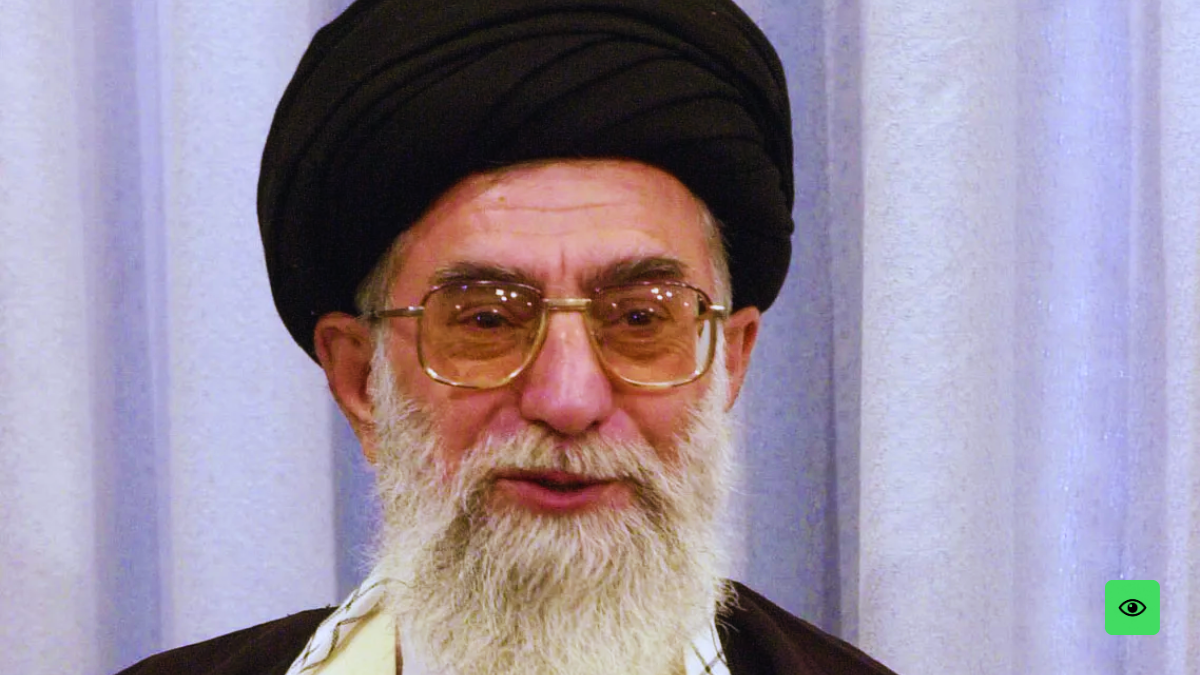
New Delhi, 04/07/26: Fireworks are expected to light up skies across the United States as Americans celebrate Independence Day. Nearly 10,000 kilometres away, Tehran is preparing for something entirely different. Coffins, mourning processions and millions of black-clad supporters now define Iran’s biggest public event in decades.
The timing is impossible to ignore.
July 4 has become a day of two sharply different national images. One country marks the birth of its republic. The other is attempting to show the world that its political system can survive the death of the man who shaped it for more than three decades.

Iran has launched a six-day state funeral for former Supreme Leader Ayatollah Ali Khamenei, transforming Tehran into the centre of one of the largest public mourning ceremonies in the country’s modern history. Authorities expect millions of people from across Iran and neighbouring countries to participate before the ceremonies conclude in Mashhad after passing through Qom and Iraq’s holy Shia cities of Najaf and Karbala.
The capital no longer resembles an ordinary city preparing for a funeral.
Military vehicles dominate major intersections. Police checkpoints have appeared across central Tehran. Barricades seal off access to sensitive locations, while Basij volunteers patrol areas surrounding the Imam Khomeini Grand Mosalla, where Khamenei’s coffin has been placed before public processions begin.
The scale itself tells a story.
This is not simply about honouring a deceased leader. Iran is staging an event meant to reassure supporters, send a message abroad and demonstrate that the Islamic Republic remains firmly in control after months of war and political uncertainty.
Every visible detail across Tehran appears designed to communicate resilience.
Red banners carrying the slogan “We Must Rise” stretch across major roads. Giant clenched-fist monuments stand beside black mourning flags. Revolutionary artwork fills public squares. Hotels are offering discounted accommodation while schools, sports halls and government buildings have been converted into temporary shelters for arriving mourners. Rail and bus services have also been expanded to move crowds efficiently through the capital.
Iranian officials have made little effort to hide the objective.
They describe the funeral as proof that the Islamic Republic remains politically united despite losing its most influential leader during the conflict involving Iran, Israel and the United States earlier this year. Funeral organisers believe the gathering could become the country’s largest public mobilisation since the 1979 Islamic Revolution.
Whether those expectations become reality will only be known after the processions begin.
But one thing is already clear.
Tehran wants the images broadcast around the world.
Emotional Scenes Before the Main Procession
Even before the official public funeral began, thousands had already gathered to pay their respects.
Khamenei’s coffin was first displayed during a private ceremony attended by families of those killed during the conflict. Supporters surged toward the casket, stretching scarves forward in hopes they would briefly touch it. Flowers covered the hall as mourners wept openly and recited prayers.
Among the most striking moments came from the display of several coffins belonging to members of Khamenei’s family who were also killed in the same strike.
His daughter, son-in-law, infant granddaughter and other relatives were honoured alongside him, reinforcing the narrative promoted by Iranian authorities that the country’s leadership personally paid the price of war. The image of the child’s coffin quickly emerged as one of the defining visuals of the ceremony’s opening hours.
That symbolism is unlikely to fade anytime soon.
For supporters, it reflects sacrifice.
For critics, it represents another example of how personal tragedy and state messaging have become tightly intertwined.
If there was any expectation that Iran’s power structure would appear shaken, Friday’s ceremonies projected the opposite.
The country’s top leadership arrived together, presenting a carefully managed image of continuity. President Masoud Pezeshkian stood alongside Parliament Speaker Mohammad Bagher Ghalibaf, senior Islamic Revolutionary Guard Corps commanders, cabinet ministers, judiciary officials and influential clerics, signalling that the state’s governing institutions remain intact despite the loss of their most recognisable figure.
One appearance attracted particular attention.
Ahmad Vahidi, the newly appointed commander of the Islamic Revolutionary Guard Corps, emerged publicly after maintaining a low profile following the conflict. Reports of heightened security concerns had kept him largely out of sight in recent weeks, making his presence at the funeral politically significant.
His message left little room for interpretation.
Iran, he declared, would never surrender. Khamenei may have died, but his ideals would continue guiding the nation. Other senior officials echoed similar themes, insisting that Iran would not remain silent in the face of what they described as foreign aggression.
The funeral stage quickly evolved into a political podium.
The speeches were as much about tomorrow’s leadership as yesterday’s legacy.
Foreign Delegations Reflect Iran’s Global Standing
The guest list revealed another story unfolding quietly behind the mourning.
While most Western governments stayed away, Tehran welcomed representatives from countries that continue maintaining diplomatic or strategic ties with Iran. Pakistan’s Prime Minister Shehbaz Sharif attended alongside officials from Iraq, Armenia and Tajikistan. Representatives from China and Russia were also present during the ceremonies.
Families connected to regional allies, including relatives of Hezbollah leaders Hassan Nasrallah and Imad Mughniyeh, also joined the gathering, reinforcing Iran’s long-standing relationships across parts of the Middle East.
India, meanwhile, maintained its familiar diplomatic balancing act.
New Delhi sent an official delegation led by Minister of State for External Affairs Pabitra Margherita along with Bihar Governor Lt Gen (Retd.) Syed Ata Hasnain. Senior officials from the Ministry of External Affairs accompanied them, reflecting India’s effort to preserve engagement with Tehran while navigating its broader strategic relationships across the region.
In diplomacy, attendance often speaks louder than statements.
#WATCH | Representing India’s official delegation, MoS Pabitra Margherita and Bihar Governor Lt Gen (Retd) Syed Ata Hasnain paid tribute to Ayatollah Ali Khamenei during the funeral ceremony in Tehran.
The event was attended by leaders and dignitaries from across the world.… pic.twitter.com/wyDTHEhsnr— India Today Global (@ITGGlobal) July 3, 2026
This funeral became another reminder of where global alliances currently stand.
July 4: Tehran Wants the World Watching
Governments do not organise events of this magnitude for domestic audiences alone.
Iran’s leadership understands that every aerial photograph, every television broadcast and every image of overflowing streets will circulate far beyond its borders. Optics have become part of modern geopolitics, and Tehran appears determined to use them.
Authorities expect millions of people to participate in processions stretching nearly ten kilometres through the capital before the ceremonies move onward to Qom, Najaf, Karbala and finally Mashhad. Schools, mosques, sports complexes and public buildings have been converted into temporary accommodation. Hotels have introduced steep discounts while transport networks have been redesigned to handle the anticipated influx of visitors.
This level of preparation is expensive.
It is also intentional.
The government wants one image reaching international audiences: a nation standing together despite military confrontation, economic hardship and sustained external pressure.
Whether the final turnout reflects spontaneous public support or effective state mobilisation will almost certainly become the next geopolitical debate.
Behind the Crowds, Economic Reality Persists
No amount of ceremony can completely hide the pressures facing ordinary Iranians.
Years of international sanctions, persistent inflation and recurring political unrest continue weighing heavily on the country’s economy. Daily life remains difficult for many citizens even as national attention shifts toward mourning.
Officials appear aware of that contradiction.
Alongside revolutionary slogans, posters promising “a bright future for Iran” have appeared throughout Tehran, attempting to reassure citizens that political continuity will eventually deliver stability. It is messaging designed not only for international observers but also for people struggling with rising living costs at home.
States can organise grand funerals.
Winning public confidence after the mourning ends is a much longer challenge.
Mojtaba Khamenei Remains the Biggest Question
For all the carefully managed images emerging from Tehran, one absence has become impossible to ignore.
Mojtaba Khamenei, the son of the late Supreme Leader and his designated successor, has not appeared in public since reportedly suffering serious injuries in the same strike that killed his father. Iranian media have released photographs of father and son together, while written statements attributed to Mojtaba have called for the continuation of ceasefire negotiations and projected confidence in the country’s institutions.
Still, questions continue to grow.
Officials have disclosed little about his medical condition, leaving room for speculation across political circles. His absence has become one of the most closely watched aspects of the transition, particularly as Iran attempts to project stability during one of the most sensitive periods in its modern history.
The uncertainty deepened further after Israel’s Defence Minister Israel Katz publicly threatened Mojtaba earlier this week, declaring that he too had been marked for death. The remarks added another layer of tension inside Iran, where hardline voices have renewed calls to reconsider the country’s long-standing religious prohibition on acquiring nuclear weapons.
For now, Tehran’s strategy appears straightforward.
Project confidence. Control the succession. Avoid public signs of uncertainty.
Muharram Gives the Funeral Greater Symbolism
Timing has become one of the most powerful elements of the ceremony.
The funeral coincides with Muharram, the sacred month in which Shia Muslims commemorate the martyrdom of Imam Husayn, the grandson of Prophet Muhammad. Within Shia tradition, Husayn represents sacrifice, resistance and refusal to surrender before injustice.
Iran’s leadership has repeatedly drawn that comparison.
Officials have linked Khamenei’s death to the symbolism of martyrdom, while recalling speeches in which he declared that neither he nor the Iranian nation would bow before what he described as corrupt leadership. Throughout Tehran, black mourning banners hang beside red flags symbolising sacrifice, while religious chants merge almost seamlessly with political slogans.
Supporters view the imagery as a reminder of endurance.
Critics argue it demonstrates how closely political legitimacy remains tied to religious symbolism within the Islamic Republic.
Either way, the message is unmistakable.
This farewell is being framed as history, not merely ceremony.
Security Leaves Nothing to Chance
Authorities are treating the funeral as one of the country’s largest security operations in recent memory.
Military vehicles, police units and Basij volunteers have been deployed across central Tehran, while access to key venues remains tightly controlled. Officials have also warned that any attempt to disrupt the ceremonies would invite severe consequences.
The precautions reflect painful experience.
The funerals of Ayatollah Ruhollah Khomeini in 1989 and IRGC commander Qassem Soleimani in 2020 both witnessed dangerous crowd surges that resulted in chaos and loss of life. Organisers are determined to avoid repeating those scenes during an event carrying enormous political and religious significance.
Why This Funeral Matters Far Beyond Iran
State funerals often close political chapters.
This one opens a new one.
Iran is emerging from months of direct confrontation with Israel and the United States. A fragile ceasefire remains in place. Economic pressure continues to mount. Diplomatic uncertainty persists. The country’s highest office has changed hands. Against that backdrop, every image leaving Tehran carries weight well beyond its borders.
For domestic audiences, the funeral is designed to reinforce confidence in the next phase of leadership.
For regional allies, it signals that Tehran intends to remain a central player despite military setbacks.
For Western capitals, it is a reminder that Iran wants to be viewed not as a weakened state, but as one capable of surviving one of the biggest blows in its contemporary history.
And that brings the story back to where it began.
On one side of the world, fireworks celebrate the birth of a nation built on independence.
On the other, millions gather around a coffin as another nation tries to prove that even the death of its most powerful leader cannot shake the foundations of the state.
The coincidence is striking.
The message from Tehran is even louder.
The coincidence with America’s Independence Day creates a striking visual contrast, but it should not be misunderstood as a political comparison.
One nation is celebrating the ideals on which it was founded. The other is trying to demonstrate that leadership transitions will not weaken the state.
Those are fundamentally different events, yet the images will inevitably be viewed side by side around the world.
The real test begins after the mourners return home.
Crowds can be organised. Ceremonies can be choreographed. Powerful speeches can dominate headlines for moments. Governing through economic pressure, regional tensions, leadership transition and public expectation is far more difficult.
History will not judge this week by the size of the funeral procession.
It will judge what Iran looks like when the black flags come down, the cameras leave Tehran and the realities of governing once again replace the symbolism of mourning.

Any Comments?