
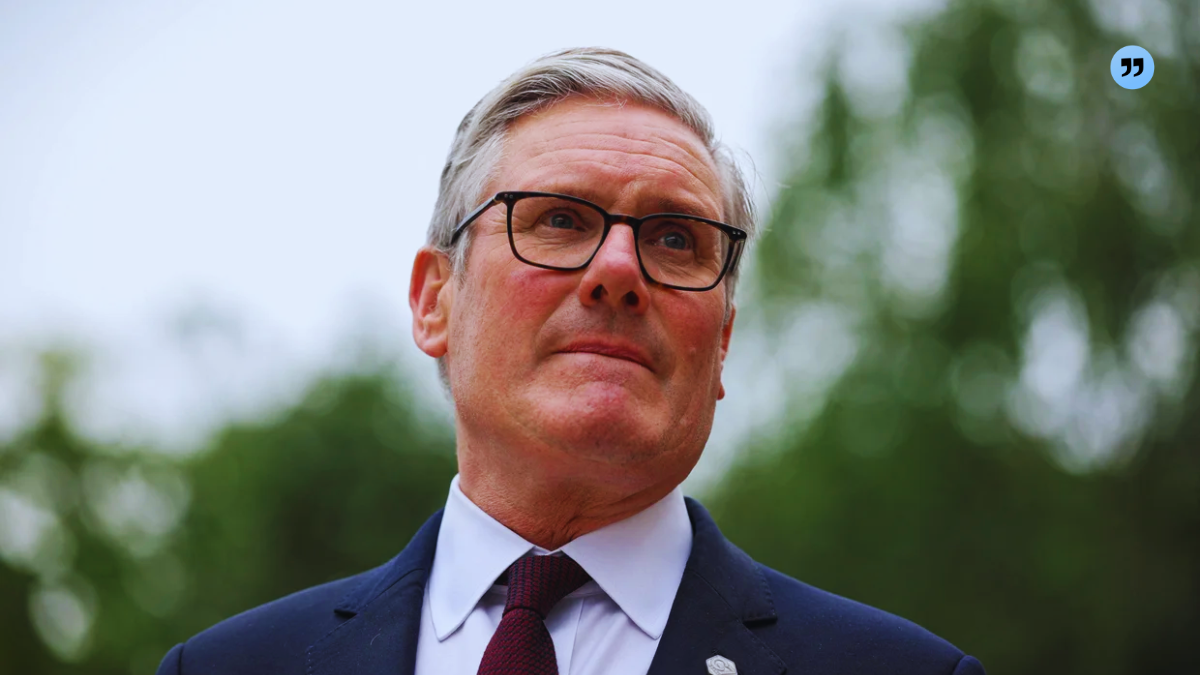
New Delhi, 22.06.2026: The Keir Starmer resignation has reshaped British politics almost overnight. Less than two years after leading Labour to a commanding general election victory, Starmer has stepped aside under mounting pressure from within his own party, opening the door for Andy Burnham to take charge.

The speed of the collapse is remarkable. Winning power is difficult. Losing authority inside your own party can happen much faster.
The End of Starmer’s Leadership
Keir Starmer formally announced his resignation as Labour leader on Monday, bringing his premiership to an unexpected conclusion after less than two years in office.
Standing outside 10 Downing Street, Starmer accepted that the debate over his leadership had reached its conclusion.
“The question my party is asking now is whether I am best placed to lead us into the next election. I have heard the answer… and I accept that answer with good grace,” he said.
He also pledged his “full and unequivocal support” to whoever succeeds him, signalling that Labour must now focus on unity rather than prolonging internal divisions.
The announcement followed weeks of speculation after Starmer repeatedly insisted he would fight any leadership challenge. That position gradually became impossible to sustain as support within Labour continued to erode.
How Labour’s Political Capital Vanished
Labour entered government with one of its strongest electoral mandates in decades. Expectations were high. Stability appeared assured.
That confidence did not survive.
The biggest warning sign arrived during May’s local elections, where Labour suffered significant losses that rattled MPs and cabinet ministers alike. What initially looked like an electoral setback soon became a full-scale confidence crisis.
Inside Westminster, conversations shifted from defending government policy to questioning whether Starmer remained the right person to lead Labour into the next general election.
Senior ministers reportedly urged him to reconsider his position. Members of the cabinet increasingly concluded that continuing under the existing leadership risked making Labour’s political difficulties even worse.
By the weekend, reports suggested preparations for Starmer’s resignation speech were already underway.
Andy Burnham’s Return Rewrites the Equation
Much of Labour’s leadership debate changed the moment Andy Burnham returned to Westminster.
After resigning as Mayor of Manchester, Burnham won the Makerfield by-election, securing a seat in the House of Commons.
Technically, British law does not require the prime minister to sit in Parliament. In practice, however, constitutional convention makes Commons membership virtually indispensable.
That single victory instantly transformed Burnham from an influential regional figure into Labour’s most credible national successor.
Having previously contested Labour’s leadership twice, Burnham now enters this transition with considerable political experience and broad recognition across the party.
Following his by-election victory, Burnham argued that Britain had reached a decisive political moment.
“Everyone knows that politics isn’t working,” he said. “Everyone can feel that the country isn’t where it should be. Tonight could, just could, be the turning point.”
Will Labour Hold a Leadership Election?
The next question is procedural, but politically significant.
Labour can either unite behind a single candidate or conduct a formal leadership contest if multiple contenders enter the race.
If Burnham secures overwhelming backing from MPs, the party could avoid a lengthy internal battle and install him as leader relatively quickly.
If other candidates step forward, members will instead choose Labour’s next leader through a formal election process.
Former Health Secretary Wes Streeting has indicated he would consider running if a contest is held. Whether he can secure enough parliamentary support remains uncertain.
Within Labour, opinions are divided.
Some MPs argue that Burnham should earn the leadership through open competition. Others believe a drawn-out contest would only distract the government and prolong instability ahead of Parliament’s return after the summer recess.
Why Britain Won’t Hold a General Election
The Keir Starmer resignation does not automatically send Britain back to the polls.
Britain operates under a parliamentary system where voters elect Members of Parliament, not the prime minister directly.
Since Labour continues to command a majority in the House of Commons following its 2024 general election victory, the governing party is free to replace its leader internally while remaining in office.
This has become an increasingly familiar feature of British politics over the past decade.
Several prime ministers have entered Downing Street without first winning a nationwide general election.
Even so, newly appointed leaders often face growing calls to seek their own electoral mandate once political conditions allow.
A Personal Goodbye
Starmer’s resignation speech also revealed a more personal side rarely seen during his time in office.
As he concluded his remarks, he reflected on his family rather than political achievements.
He described his children as his “pride and joy” and thanked his wife, Vic, for supporting him throughout his political career.
After leaving what he called “the biggest job in the country,” Starmer said he now wanted to concentrate on “the most important job… being the best husband I can.”
For a speech shaped by political defeat, the closing moments carried a noticeably human tone.
Trump Adds an International Twist
The leadership transition also attracted attention beyond Britain.
Even before Starmer officially announced his resignation, US President Donald Trump commented on the unfolding developments.
Posting on Truth Social, Trump criticised Starmer’s record on immigration and energy policy, claiming the outgoing prime minister had “failed badly” while also wishing him well after stepping down.
The intervention added another international dimension to an already significant political moment inside the United Kingdom.
What Happens Next?
Labour now faces one of its most important decisions since returning to power.
A swift transition could allow the government to reset its agenda before Parliament reconvenes. A contested leadership election, meanwhile, could expose ideological divisions at a time when the party is already under pressure.
Either way, the focus has shifted decisively from Keir Starmer to Andy Burnham.
One leader exits. Another appears ready to step in.
British politics has become remarkably accustomed to changing prime ministers without asking voters to return to the ballot box. Yet every transition carries fresh risks.
For Labour, this is not just about replacing a leader. It is about convincing both Parliament and the public that the party can regain the momentum it lost almost as quickly as it found it.
Winning power is only half the battle. Keeping your own party convinced is the harder part. Electoral victories create expectations, not immunity. Once MPs begin believing a leader has become a liability instead of an asset, the countdown usually becomes irreversible.
Labour now has an opportunity to reset before its problems deepen further. Whether that happens through Andy Burnham or another candidate matters less than whether the party presents a clear direction. Internal warfare rarely impresses voters. Clarity does. Stability does. Governments are elected to govern, not to spend months debating who should occupy the top office. — @shiven3197

Any Comments?