
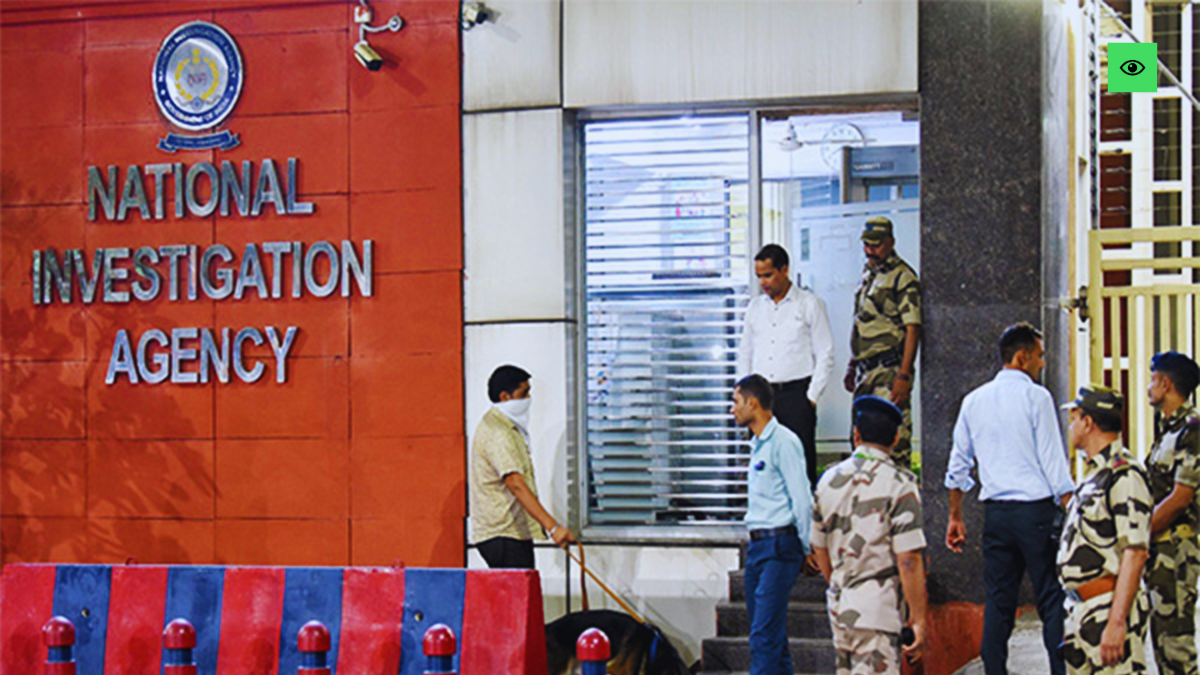
New Delhi, 08.07.26: India’s premier anti-terror agency has widened its investigation into an alleged online extremist network. The National Investigation Agency on Wednesday carried out coordinated searches at 20 locations across multiple states, alleging that the network promoted the ideology of ISIS and AQIS to radicalise individuals and recruit supporters.

The operation marks another significant development in an investigation that has steadily expanded since it was taken over by the NIA earlier this year.
NIA Conducts Multi-State Searches
The National Investigation Agency carried out simultaneous searches at 20 locations spread across several states as part of its ongoing investigation into an alleged online radicalisation network linked to the banned terrorist organisations ISIS and AQIS.
According to investigators, the searches targeted locations identified through technical examination of digital evidence collected during previous phases of the investigation. Officials believe the operation could help identify additional individuals connected to the alleged conspiracy.
The coordinated exercise covered five locations in Uttar Pradesh, four in Andhra Pradesh, three in Maharashtra, two in Delhi, and one location each in Bihar, Rajasthan, Karnataka, Gujarat, Telangana and West Bengal.
The operation was conducted under the investigation registered as RC-01/2026/NIA/VSKP.
Digital Devices Seized for Forensic Examination
Investigators seized multiple digital devices during the searches.
The NIA said the recovered electronic equipment will undergo forensic analysis to determine whether it contains communications, digital records or other material relevant to the investigation.
Digital evidence has become the backbone of modern counter-terror investigations. Smartphones, laptops, cloud accounts and encrypted messaging platforms often provide investigators with timelines, communication patterns and links between suspects that conventional evidence cannot easily establish.
Officials indicated that forensic experts will now examine the seized material to identify possible contacts, recruitment channels and additional evidence linked to the alleged network.
Probe Began With Andhra Pradesh Investigation
The investigation originally began in March after Vijayawada Police searched the residence of the principal accused, Rehmatullah Sharif Mohammad.
According to investigators, the search led to the recovery of material allegedly connected to AQIS, also known as Al-Qaeda in the Indian Subcontinent, and ISIS, the terrorist organisation that calls itself the Islamic State.
Given the suspected interstate and larger national dimensions of the case, the investigation was later transferred to the National Investigation Agency.
The NIA’s Visakhapatnam branch formally registered its own FIR on May 13 and has since continued the probe under central jurisdiction.
The agency has so far arrested 11 accused along with one juvenile in connection with the investigation.
Officials believe the arrests represent only part of the suspected network. The latest searches are aimed at identifying additional associates, supporters and individuals who may have assisted the alleged conspiracy through digital communication or logistical support.
Investigators continue to examine evidence gathered during previous operations alongside newly recovered material.
According to the NIA, the investigation focuses on an alleged online ecosystem used to spread extremist propaganda and recruit vulnerable individuals.
Investigators claim the accused circulated violent jihadi content through online platforms with the objective of influencing potential recruits and encouraging support for extremist ideology.
The agency further alleges that the suspects remained in digital contact with foreign handlers who promoted anti-India narratives and encouraged the expansion of extremist networks.
Authorities are examining whether the alleged network functioned through encrypted communication channels, private groups and social media platforms to avoid detection.
Unlike conventional criminal investigations that rely heavily on physical evidence, this case has largely progressed through technical and digital analysis.
Officials said Wednesday’s search locations were selected after examining electronic devices recovered during earlier operations.
Investigators also relied on connectivity analysis involving the arrested accused. Such analysis helps agencies establish communication links, identify shared contacts and map interactions between individuals over extended periods.
This approach enables investigators to understand the organisational structure of an alleged network rather than focusing solely on individual suspects.
Security agencies across the world have shifted significant resources towards monitoring online radicalisation.
Extremist organisations increasingly rely on digital platforms instead of traditional physical networks to distribute propaganda, communicate with supporters and identify potential recruits.
Indian security agencies have repeatedly warned that online radicalisation presents a growing challenge because recruitment efforts often occur through encrypted applications, anonymous identities and international digital infrastructure.
The current investigation reflects that evolving threat landscape, where forensic analysis of electronic evidence plays a central role in uncovering suspected extremist activities.
The NIA has made it clear that the investigation remains active.
Officials are examining whether additional individuals knowingly participated in the alleged recruitment effort or assisted in disseminating extremist material.
The forensic examination of the seized devices is expected to provide fresh leads regarding communications, financial links, recruitment patterns and the broader organisational structure of the alleged network.
Investigators are also attempting to determine the overall scale of the alleged conspiracy and identify every individual who may have played a role.
As the digital evidence is processed, further action may depend on the findings emerging from forensic experts and investigators analysing the recovered material.
For now, Wednesday’s nationwide operation represents another step in the NIA’s continuing effort to investigate what it alleges was a coordinated online radicalisation campaign linked to banned terrorist organisations operating against India’s national security.
Terrorism thrives on secrecy, while democratic institutions rely on due process. India’s challenge is to preserve both national security and constitutional safeguards without compromising either. — @shiven3197
Ref: ANI

Any Comments?