
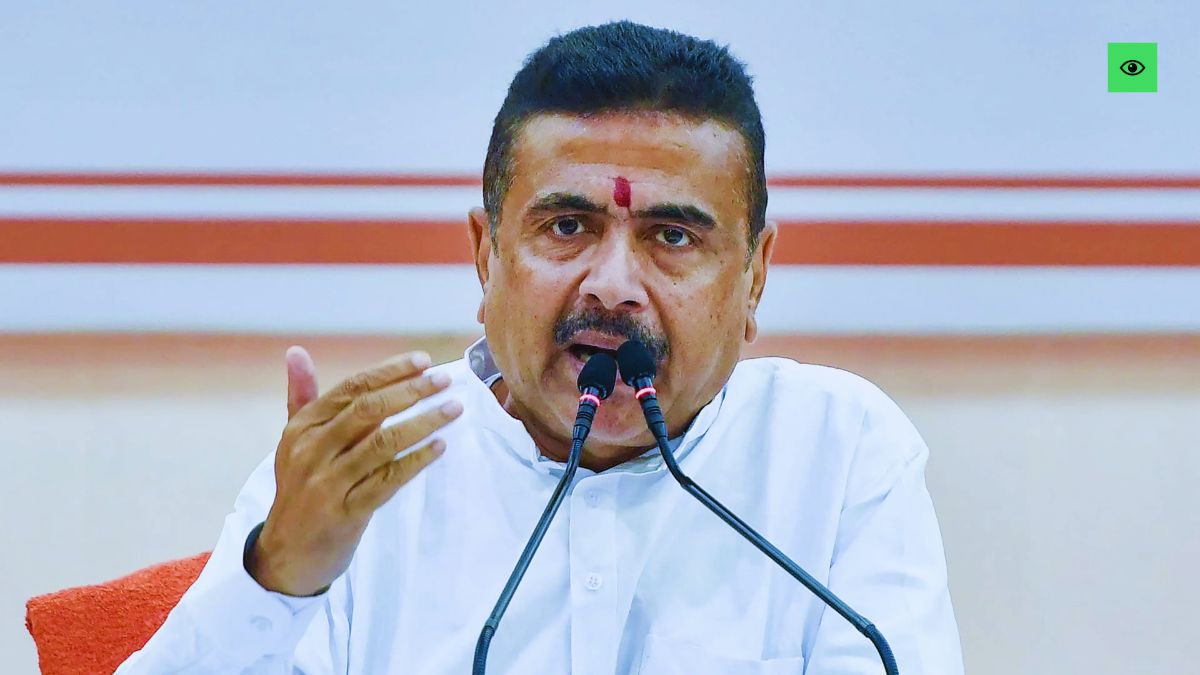
WEST BENGAL, 5th Sept 2026: West Bengal is preparing for a major overhaul of its school education system, with CM Suvendu Adhikari announcing model schools, sports centres, infrastructure upgrades and tighter rules on mobile phones.
CM-Shri Model Schools to Come Up in Every District

West Bengal will establish two CM-Shri model schools in every district, taking inspiration from the Centre’s PM-SHRI scheme.
The announcement was made by Chief Minister Suvendu Adhikari at a Teachers’ Day event at the New Town convention centre. Under the proposed system, meritorious students entering Class 6 will be admitted through examinations.
The schools are expected to have highly qualified teachers, modern digital laboratories and improved facilities. The broader objective, according to the Chief Minister, is to create model institutions that can raise the standard of school education across the state.
That means two CM-Shri institutes in every district. Simple arithmetic, but a potentially significant expansion of model-school infrastructure.
The government has also said the state’s education system needs a wider reset, particularly in infrastructure, staffing and learning conditions.
Education reform will not stop inside classrooms.
Two centres of excellence for sports will be established in north Bengal, according to Adhikari. Teachers for these centres will be appointed through the School Service Commission.
The Chief Minister said arrangements would be made to enable students from Bengal to participate in national and international sporting competitions.
He also called for traditional Indian sports, including kho-kho and hadudu, to return to schools.
The idea is straightforward. Schools should not be places where students spend the entire day buried in textbooks. Sports, physical development and competitive opportunities also matter.
Adhikari further argued that the withdrawal of NCC from schools had been a major loss and called for NCC to be brought back into schools and colleges.
His reference to developing the physique of a “bratachari” was part of a broader push for physical education alongside academics.
One of the sharper points in the Chief Minister’s address was the need to strengthen basic school infrastructure.
Adhikari said schools need proper facilities to create an environment where students can actually learn. He directed authorities to focus on several practical requirements, including gas-based kitchens for midday meals, reliable electricity, water purifiers and separate toilets for girls.
He also pointed to the shortage of non-teaching staff.
The argument is hardly complicated. Teachers should teach. They should not be spending their time managing midday meals, laboratories or routine school operations.
The government plans to recruit staff for laboratories and other school functions, including personnel responsible for basic administrative tasks.
Adhikari also raised the issue of composite grants, saying schools had not received them for three years.
Libraries and playgrounds were also brought into the discussion. The Chief Minister called for libraries to be decorated properly and playgrounds to be improved.
He also suggested providing musical instruments such as tabla, sitar, harmonium, khanjani and ektara.
His stated goal was to create a school atmosphere similar to that of a Ramakrishna Math.
Teacher Recruitment Under Spotlight
Teacher recruitment remains another major part of the education overhaul.
Adhikari said the School Service Commission recruitment process would be completed within the timelines mandated by the Supreme Court.
He also said greater importance would be given to written examinations rather than oral interviews.
Merit, he stressed, would be the deciding factor in appointments.
The Chief Minister also referred to changes made to the OBC Bill in the Assembly and said those who had been “wrongly marked OBC” had been excluded.
The message was clear: recruitment would be positioned around examination performance and merit, with the government promising to complete the process within the court-mandated framework.
The proposed reforms also extend to what students learn.
Adhikari said the school syllabus would be changed and questioned whether students should be taught more about figures such as Syama Prasad Mookerjee and Matangini Hazra.
He also said the government had made singing Vande Mataram mandatory, adding that the administration would not compromise on certain issues.
This takes the education debate beyond buildings, laboratories and recruitment. Curriculum and the values taught in classrooms are also becoming part of the government’s broader education agenda.
Then came one of the most direct announcements.
Adhikari described mobile phones as a “terrible evil” among school students and argued for restrictions on their use.
He pointed to Gujarat, where students from Classes 1 to 12 are not allowed to have mobile phones, and said Bengal should consider similar reforms.
The Chief Minister acknowledged that such a decision could have political consequences, saying his vote share could fall because of it.
But he argued that some decisions should not be dictated by politics.
That is a blunt position. And it reflects the larger argument behind his education reforms: schools, according to the government, need discipline as much as they need better infrastructure.
Taken together, the announcements point towards a broad restructuring of Bengal’s school education system.
CM-Shri model schools are at the centre of the plan, but they are only one part of it. Sports centres, teacher recruitment, non-teaching staff, digital laboratories, school infrastructure, libraries, playgrounds, curriculum changes and restrictions on mobile phones are all being placed on the same reform agenda.
The challenge now is execution.
Announcements make headlines. Schools change only when teachers are appointed, laboratories function, toilets remain usable, kitchens have reliable fuel, classrooms have power and students actually get the learning environment promised to them.
That is where Bengal’s education reform will ultimately be judged.
Bengal does not need another education announcement that looks impressive on paper and struggles inside classrooms.
CM-Shri model schools are a sensible starting point if they genuinely deliver better teachers, laboratories, infrastructure and academic opportunities. But model schools alone cannot repair an entire education system.
The basics have to work first. Teachers should teach. Schools need functioning toilets, electricity, water, kitchens, laboratories and libraries. Students need space for sports and activities beyond textbooks.
The push for sports centres and traditional games is equally important. Education cannot be reduced to examination scores.
The mobile-phone proposal is tougher, but the underlying concern deserves a serious conversation. Schools exist to educate students, not to become extensions of social media.
The government has made a long list of promises. Now comes the less glamorous part: delivery. That is where reform either becomes reality or becomes another speech.

Any Comments?