
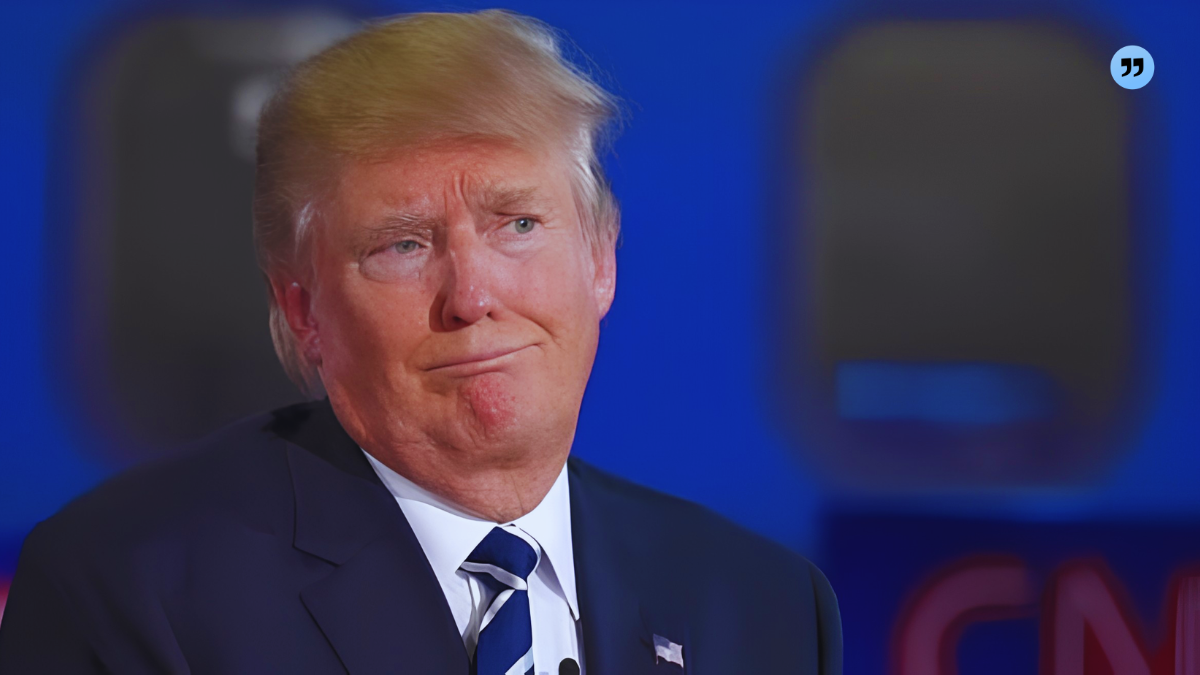
New Delhi, 21.06.26: US-Iran peace talks have officially begun in Switzerland, but diplomacy barely had time to settle before fresh military tensions took center stage. Donald Trump’s warning to Tehran, continued Hezbollah attacks, and Iran’s announcement on the Strait of Hormuz have already placed negotiators under extraordinary pressure.
The First Test Arrives Before Negotiations Gain Momentum
The US-Iran peace talks opened Sunday at the Swiss mountain resort of Buergenstock, marking the first formal negotiations since Washington and Tehran agreed to a memorandum aimed at ending military operations across multiple fronts.
Leading the American delegation is Vice President JD Vance, accompanied by Special Envoy Steve Witkoff. Qatar, which helped broker last week’s memorandum, is facilitating the negotiations at its Swiss-owned resort. Pakistan has also stepped in as a key mediator.
Diplomatic meetings usually begin with confidence-building measures. These talks opened with fresh security concerns instead.
Within hours of delegates arriving, military developments across the region forced negotiators to confront the same crisis they are attempting to resolve.
Trump’s Warning Raises Pressure on Tehran?
US President Donald Trump issued a direct warning to Iran shortly before negotiations formally began.

Writing on Truth Social, Trump demanded that Tehran immediately restrain Hezbollah from launching attacks against Israel. He warned that if Hezbollah continued its operations, the United States would once again strike Iran.
The timing left little room for diplomatic optimism.
Washington’s message appears straightforward. Any lasting understanding with Tehran cannot exist independently of Iran’s influence over regional armed groups.
That position immediately places Hezbollah at the center of negotiations, despite the broader agenda extending well beyond Lebanon.
Lebanon Quickly Becomes the Defining Issue
While the talks aim to improve wider US-Iran relations, developments in Lebanon have rapidly emerged as one of the biggest obstacles.
The memorandum signed last week reportedly called for an immediate and permanent end to military operations, including fighting involving Lebanon.
That commitment is already facing serious strain.
Israel and Hezbollah continue exchanging attacks despite the agreement. Reports indicate that more than 4,000 people have died since Israel launched its military offensive in March.
The Lebanese government and Hezbollah continue insisting that Israel must fully withdraw from Lebanese territory. Beirut believes such an outcome should emerge through the ongoing US-Iran negotiations rather than separate discussions with Israel.
That difference in approach highlights how regional conflicts remain deeply interconnected.
Strait of Hormuz Adds a Global Dimension
Military tensions are no longer confined to land.
Iran announced the closure of the Strait of Hormuz following Israeli strikes in Lebanon, describing the move as a response to what it considers Israeli violations of the ceasefire.
The announcement immediately attracted international attention.
The Strait of Hormuz carries roughly one-fifth of global oil shipments, making it one of the world’s most strategically important maritime corridors. Any uncertainty surrounding the waterway has immediate implications for global energy markets, commercial shipping, and international trade.
However, the situation on the water appears more complicated than Tehran’s announcement alone suggests.
US Central Command stated that 55 commercial merchant vessels successfully transited the Strait on Saturday.
Commercial traffic has therefore not stopped entirely, although uncertainty surrounding future movement remains elevated.
Markets often react as much to uncertainty as they do to confirmed disruption.
Pakistan and Qatar Expand Their Diplomatic Roles
The negotiations have also highlighted the increasingly active roles played by regional mediators.
Pakistan has assumed a visible diplomatic presence throughout the discussions.
Prime Minister Shehbaz Sharif and Field Marshal Asim Munir met Vice President JD Vance, Steve Witkoff, and Jared Kushner in Switzerland alongside the peace talks.
Meanwhile, Qatar continues serving as one of the principal facilitators after helping secure last week’s memorandum between Washington and Tehran.
Their participation reflects the widening scope of the negotiations.
The conflict now stretches far beyond the original questions surrounding US-Iran relations. Regional security, maritime stability, proxy conflicts, and diplomatic coordination have all become intertwined.
Every mediator now faces the same challenge. Prevent today’s crisis from becoming tomorrow’s collapse.
Israel Says Hezbollah Remains the Main Barrier
Israel continues arguing that Hezbollah represents the primary obstacle to lasting peace.
President Isaac Herzog said the Iran-backed organisation continues violating the ceasefire through missile and drone attacks against Israel.
According to Herzog, sustainable peace requires Hezbollah’s disarmament, which he described as Lebanon’s central strategic challenge.
He also reaffirmed that Israel remains in close coordination with the United States while communicating its concerns through diplomatic channels.
Those remarks further reinforce the gap between military realities and diplomatic aspirations.
Negotiators may be discussing peace inside conference rooms, but military calculations continue shaping events outside them.
Diplomacy Is Racing Against Escalation
Peace negotiations often begin with symbolic gestures.
These talks received none.
Instead, delegates arrived as military threats intensified, cross-border fighting continued, maritime tensions expanded, and competing political demands hardened across multiple capitals.
That makes the task ahead exceptionally difficult.
The challenge is no longer limited to rebuilding trust between Washington and Tehran.
Negotiators must also ensure that battlefield developments do not outpace diplomatic progress.
Every fresh strike, every political warning, and every new escalation risks narrowing the already limited space available for compromise.
Switzerland may be hosting the negotiations, but the success or failure of these talks will ultimately depend on decisions made in Washington, Tehran, Jerusalem, Beirut, Doha, and Islamabad.
The conference rooms may be quiet.
The region surrounding them is anything but.
Every missile launched, every public threat issued, and every strategic waterway pulled into the conflict raises the cost of compromise. Diplomacy cannot operate in isolation from military realities. If every stakeholder expects negotiations to deliver peace while simultaneously escalating pressure on the battlefield, the process becomes self-defeating. Sustainable agreements require political discipline, not just diplomatic meetings. — @shiven3197

Any Comments?